
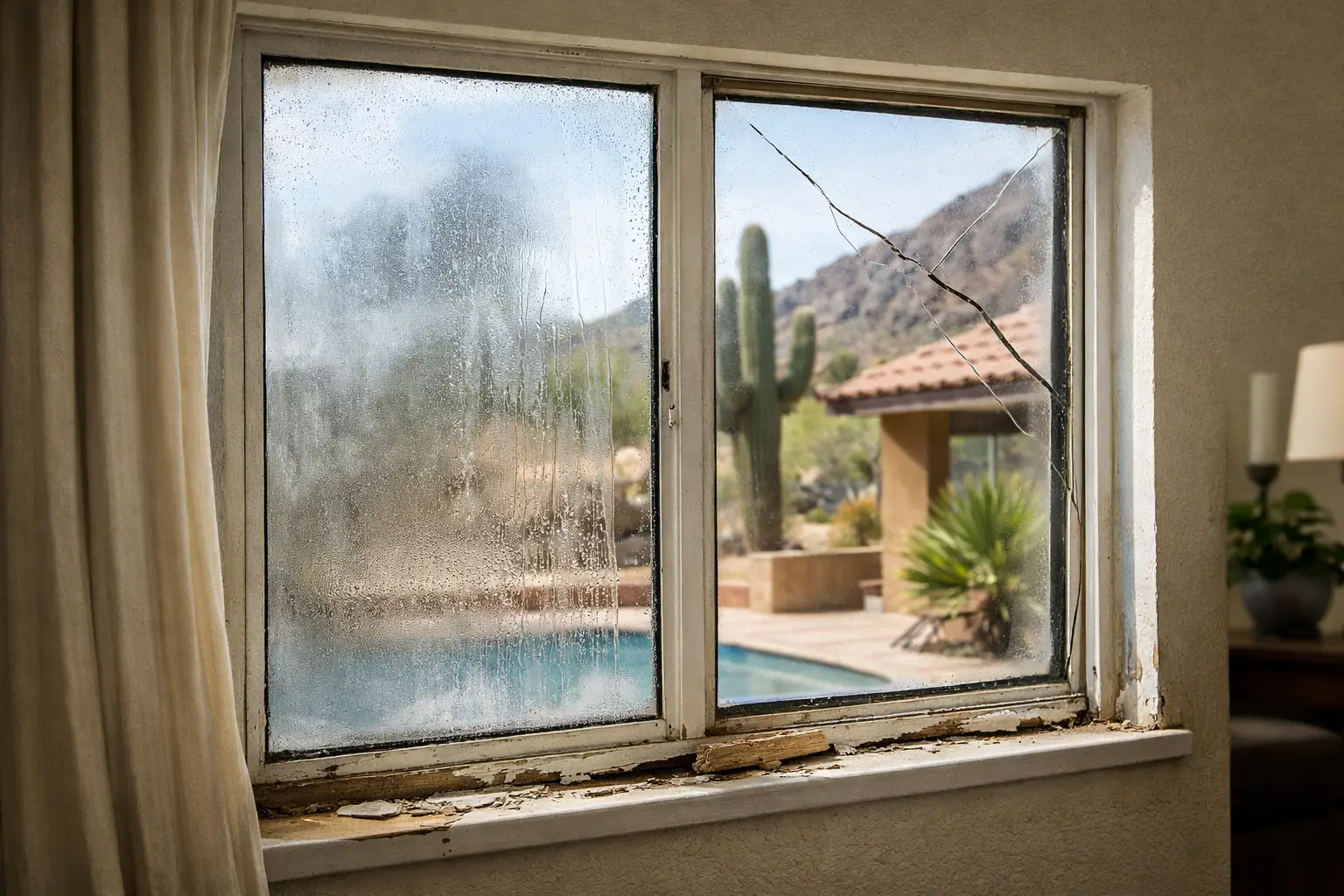
A Phoenix home can feel the effects of failing windows long before a window stops functioning entirely. During a hot afternoon, rooms near aging openings may become noticeably warmer, the AC may run longer, and outside noise may feel closer than it should. Recognizing the signs of failing windows early gives you time to plan a thoughtful replacement project rather than reacting after moisture, security, or framing concerns become more extensive.
Why Aging Windows Matter More in Arizona
Windows are not simply a finishing detail. They are part of your home’s exterior envelope, working with insulation, weatherproofing, framing, and exterior finishes to manage heat, light, wind, and moisture. In Arizona, the combination of intense UV exposure, large daily temperature swings, monsoon rain, and prolonged cooling demand can expose weaknesses in older windows quickly.
A window may still look acceptable from the curb while delivering poor comfort and efficiency inside. Conversely, a minor operation issue does not always mean full replacement is necessary. The key is to look at the full pattern: energy performance, condition of the frame, signs of water entry, security, and how the window fits your plans for the home.
10 Signs of Failing Windows to Watch For
1. Your Cooling Bills Keep Rising
Higher utility costs have several possible causes, including HVAC performance and attic insulation. But if your cooling system seems to run continuously and rooms near windows are consistently hotter, aging windows may be contributing to the problem.
Older single-pane units, worn weatherstripping, loose frames, and poorly insulated aluminum can allow exterior heat to transfer indoors. Modern replacement windows with climate-appropriate frames and high-performance glazing can reduce that heat gain, especially on west- and south-facing walls that take the brunt of Arizona sun.
2. Rooms Feel Hot, Cold, or Drafty Near the Windows
Stand near a window during the hottest part of the day or when the evening cools down. If the area feels distinctly different from the rest of the room, the window may no longer be insulating effectively. You may also notice moving air around the sash or frame during windy conditions.
A draft can come from deteriorated seals, poor fit, or installation gaps around the existing opening. The solution depends on the source. A quality replacement project examines not only the new window but also the condition of the opening, flashing, barriers, and surrounding finishes.
3. The Window Sticks, Binds, or Will Not Stay Open
A window should open, close, and lock without excessive force. If you have to push hard on the sash, lift it unevenly, or use a prop to keep it open, there may be more happening than normal wear.
Heat exposure can affect older components, while movement in the home can leave frames out of square. In established Arizona homes, operation issues may also point to aging wood, compromised framing, or a prior installation that was never properly aligned. A professional evaluation can determine whether the concern is isolated or part of a broader replacement need.
4. You See Condensation Between Panes
Fogging, haze, or moisture trapped between panes indicates that the insulated unit has lost its seal. Once that seal fails, the window’s insulating performance is reduced and the view is permanently diminished.
Condensation on the room-facing side of a window is different. It can be related to indoor humidity, though that is less common in Arizona’s dry climate. Moisture between panes, however, is a clear sign that the window assembly is no longer performing as intended.
5. Frames Show Cracks, Warping, Rot, or Corrosion
Inspect the frame, sill, and trim from both inside and outside. Cracked vinyl, warped sections, deteriorated wood, corroded metal, peeling finishes, and soft areas around the opening all deserve attention.
Cosmetic wear is one thing. Material damage is another. When a frame no longer provides a stable, weather-resistant base, simply placing a new unit into the same opening may not address the underlying condition. Some homes require frame work, vapor barriers, lath, stucco repair, or interior drywall restoration to create a sound finished installation.
6. Water Marks Appear Around the Opening
Discoloration on drywall, bubbling paint, staining at the sill, or exterior cracking around a window can signal water intrusion. In the desert, homeowners sometimes assume water damage is unlikely. Yet monsoon storms can drive rain into weak joints and poorly protected openings with surprising force.
Do not wait for a major leak to investigate. Water that reaches framing can create hidden damage that expands the scope of a future project. The goal is not merely to replace a window, but to restore a properly weatherproofed transition between the opening, exterior wall, and new unit.
7. Outside Noise Is More Noticeable Than It Used to Be
Traffic, landscaping equipment, neighbors, and barking dogs can become much more intrusive when windows lose their seals or no longer close tightly. While no window can eliminate all outdoor sound, properly fitted replacement windows can make a meaningful difference in day-to-day comfort.
Noise reduction depends on several factors, including the window style, frame construction, pane configuration, and the quality of installation. A window selected for a busy street may require a different approach than one chosen primarily for views, ventilation, or architectural character.
8. Locks No Longer Engage Reliably
A lock that is difficult to use may be a symptom of a misaligned sash or warped frame. More importantly, it can affect security. Windows should close squarely and engage their locking hardware without forcing, lifting, or repeated adjustment.
This is especially relevant for ground-floor windows and accessible side yards. New replacement systems can provide updated locking mechanisms, but their effectiveness relies on accurate measurement, secure fastening, and a stable opening behind the finished frame.
9. Your Windows Have Become a Maintenance Cycle
When you are repeatedly dealing with peeling finishes, loose screens, worn weatherstripping, sticking sashes, or deteriorating trim, it may be time to compare the ongoing effort against replacement. Older wood-frame windows can offer a classic appearance, but they require a different maintenance commitment than vinyl, fiberglass, or thermally improved aluminum options.
There is no single best material for every home. Vinyl can be a practical value for many projects. Fiberglass offers strength and stability, while wood-frame options can suit distinctive architectural styles. The right choice should reflect the home’s design, sun exposure, budget, HOA requirements, and long-term ownership goals.
10. The Windows Date the Entire Exterior
Sometimes the clearest sign is visual. Faded frames, mismatched replacements, dated grids, bulky sightlines, or windows that do not complement a remodeled exterior can undermine curb appeal. For homeowners preparing to sell, window replacement can help create a more polished first impression. For those staying long term, it can make the home feel more intentional and comfortable.
Aesthetic improvements should still be paired with performance planning. Changing a window size, adding a new opening for daylight, or creating a more open indoor-outdoor connection may involve structural considerations, stucco modifications, and careful finish restoration. Those details are where a complete installation team adds real value.
Do Not Judge a Window by One Symptom
One sticky window does not automatically mean every opening needs replacement. A single fogged unit, for example, may be isolated, while widespread drafts and failing locks across the home suggest a larger issue. The age of the windows, their original quality, the condition of the frames, and the homeowner’s plans all matter.
A thoughtful consultation should identify priorities instead of forcing a one-size-fits-all answer. Some homeowners begin with the most sun-exposed rooms or the windows causing the greatest comfort concerns. Others coordinate replacement with exterior painting, stucco work, a door upgrade, or a full modernization project.
What a Complete Replacement Project Should Address
The performance of a new window is only as reliable as the installation around it. In stucco homes, removing an existing unit can reveal issues with old block frames, damaged surrounding materials, missing barriers, or prior shortcuts. Addressing those details protects the investment and helps the finished work look like it belongs with the home.
Greco Roman Windows and Doors approaches replacement as a complete construction process, from measuring and product selection through weatherproofing, frame preparation, finish repair, cleanup, and aftercare. Whether a project calls for a straightforward budget-conscious installation or a more extensive opening modification, the workmanship behind the wall is just as important as the window you see from the street.
If your home is showing several of these warning signs, a free in-home consultation can turn uncertainty into a clear plan. The right replacement windows should make your rooms more comfortable, your exterior more refined, and your investment better prepared for the Arizona climate.