
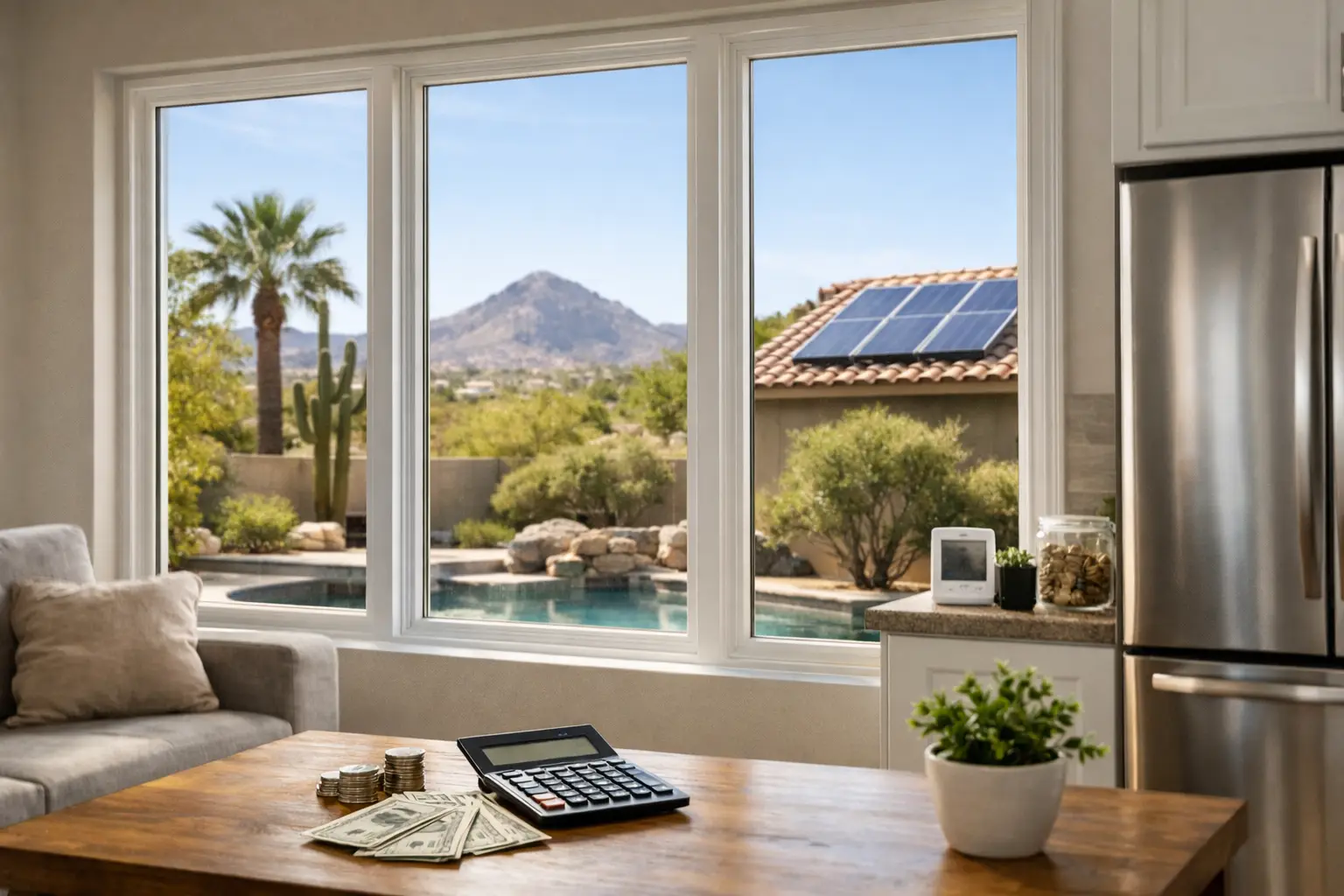
A Phoenix air conditioner can run for long stretches simply because heat is finding its way through old glass, worn weatherstripping, and poorly sealed frames. So, do new windows lower bills? They can, often meaningfully, but the result depends on the existing windows, the replacement system selected, and the quality of the installation surrounding every opening.
For Arizona homeowners, replacement windows are not just a cosmetic improvement. The right products can reduce solar heat gain, ease strain on the cooling system, make rooms more comfortable near the glass, and help protect interior finishes from harsh sunlight. Those benefits are most dependable when the window, frame, insulation, flashing, and exterior repairs are treated as one complete system.
Do New Windows Lower Bills in Arizona?
New windows can lower utility bills when they correct a genuine source of energy loss. Older single-pane windows, loose sliding units, aging aluminum frames, failed seals, and gaps around the perimeter can allow unwanted heat into the home during summer and conditioned air out during winter. In a climate where cooling is a major household expense, reducing that transfer can make a noticeable difference.
The savings are rarely identical from one home to the next. A homeowner replacing original single-pane windows in a 1980s home may see a more substantial change than someone replacing moderately efficient dual-pane units that are still well sealed. A shaded north-facing room also behaves differently from a west-facing family room that absorbs intense afternoon sun.
That is why an honest window consultation should not promise one universal dollar amount. It should identify where the home is losing comfort and energy, then match the window package and installation scope to those conditions.
Why Old Windows Raise Cooling Costs
Glass is only part of the issue. In established Arizona homes, the opening around the window can be just as important as the unit itself. Over time, materials expand and contract under extreme heat. Caulking can deteriorate, weatherstripping can flatten, and older frames can become difficult to operate or seal tightly.
When hot outdoor air enters through gaps, the air conditioner has to remove more heat and moisture from the living space. When sunlight passes through inefficient glazing, it heats floors, furniture, walls, and the air inside. That solar gain can leave rooms feeling warmer even while the thermostat is set low.
Windows with low-emissivity coatings, insulated glass, and climate-appropriate solar control can reduce that heat transfer. Quality vinyl, fiberglass, wood-frame, and thermally improved aluminum options each offer different advantages. The best choice depends on the home’s architecture, opening size, desired appearance, exposure to sun, and budget.
A lower bill is not the only sign that the project is working. Homeowners often notice that rooms hold a more even temperature, the air conditioner cycles less aggressively, and areas near the windows become more usable during the hottest part of the day.
The Numbers Depend on Solar Heat Gain and Installation
A window’s energy performance is influenced by several specifications, particularly U-factor and Solar Heat Gain Coefficient, or SHGC. U-factor describes how readily a window transfers heat. Lower values generally mean better insulating performance. SHGC measures how much solar heat enters through the glazing. In Arizona, a lower SHGC is often valuable for sun-exposed elevations because it helps limit heat gain before it reaches the room.
Those ratings need to be considered alongside visible light. A homeowner may want to brighten a dark kitchen or open a living area to a backyard view. Selecting overly tinted glass simply to limit heat can reduce the natural light that made the project appealing in the first place. An experienced design conversation balances daylight, glare control, privacy, and cooling performance rather than treating every elevation the same.
Installation determines whether those product ratings perform as intended. Even a well-built replacement window cannot compensate for an opening with unaddressed gaps, compromised framing, or incomplete weatherproofing. Proper preparation may include inspecting the rough opening, correcting frame conditions, applying appropriate barriers and sealants, insulating voids, and restoring stucco, drywall, or trim after the unit is secured.
For homes with stucco exteriors, this work deserves particular attention. Cutting corners around lath, foam, tar paper, or exterior finish restoration may leave the home vulnerable to water intrusion and air leakage. A careful installation protects the investment behind the finished appearance.
Which Homes See the Biggest Difference?
The strongest opportunity for lower bills usually comes from homes with visibly aging or underperforming windows. Drafts, rattling panes, faded interiors near sunny openings, condensation between panes, difficulty opening or locking windows, and hot spots near glass are all signs worth investigating.
Large glass areas can also have outsized impact. A wall of west-facing windows, an older sliding door facing a patio, or an expansive great-room opening may bring in substantial heat at the exact time the home is working hardest to stay cool. Replacing those units with appropriately specified products can improve comfort without sacrificing the connection to outdoor living.
Homeowners should also consider the rest of the building envelope. Attic insulation, duct performance, roof condition, shading, thermostat habits, and HVAC efficiency all affect energy use. New windows do not make an inefficient air conditioner new, and they will not solve every comfort concern on their own. They can, however, remove a major source of heat gain and air leakage that forces HVAC equipment to work harder.
Look Beyond the Monthly Utility Bill
A replacement window project has value beyond the energy statement. Better windows can make a home quieter, more secure, easier to operate, and more attractive from the curb. They can also help protect flooring, artwork, cabinetry, and upholstery from excessive ultraviolet exposure.
For owners preparing to sell, updated windows can signal care and modernization to prospective buyers. For those planning to remain in the home, the value is more immediate: a more comfortable bedroom, a brighter remodeled living area, or a patio door that operates smoothly and closes with confidence.
There are trade-offs. Premium glass packages, specialty shapes, larger openings, structural modifications, and comprehensive stucco restoration can raise the initial project cost. Yet choosing the least expensive unit without addressing the installation details may create a disappointing result. The goal is not simply to place a new window in an old opening. It is to create a properly sealed, finished, and durable part of the home.
How to Plan a Window Project That Delivers Results
Start with the rooms that cause the most frustration. Note when they become hot, which direction they face, whether there are drafts or glare issues, and how the windows operate. That information helps guide product selection far better than choosing solely by appearance.
During an in-home consultation, ask about glass performance for each elevation, frame material options, weatherproofing methods, and how the team will handle stucco, drywall, trim, and paint restoration if needed. You should also understand whether the proposal includes removal, haul-away, cleanup, and the final finish work required to make the project feel complete.
Greco Roman Windows and Doors approaches replacements as a tailored construction project, not a one-size-fits-all swap. A well-defined scope gives homeowners a clearer picture of the work, from the window selection through the details that protect the opening after installation.
The most helpful next step is to evaluate the windows you have, not the savings claim you have heard. If your home has hot rooms, aging frames, or windows that no longer seal and operate properly, a free in-home consultation can show where a carefully specified replacement project may improve comfort and reduce unnecessary cooling demand.