
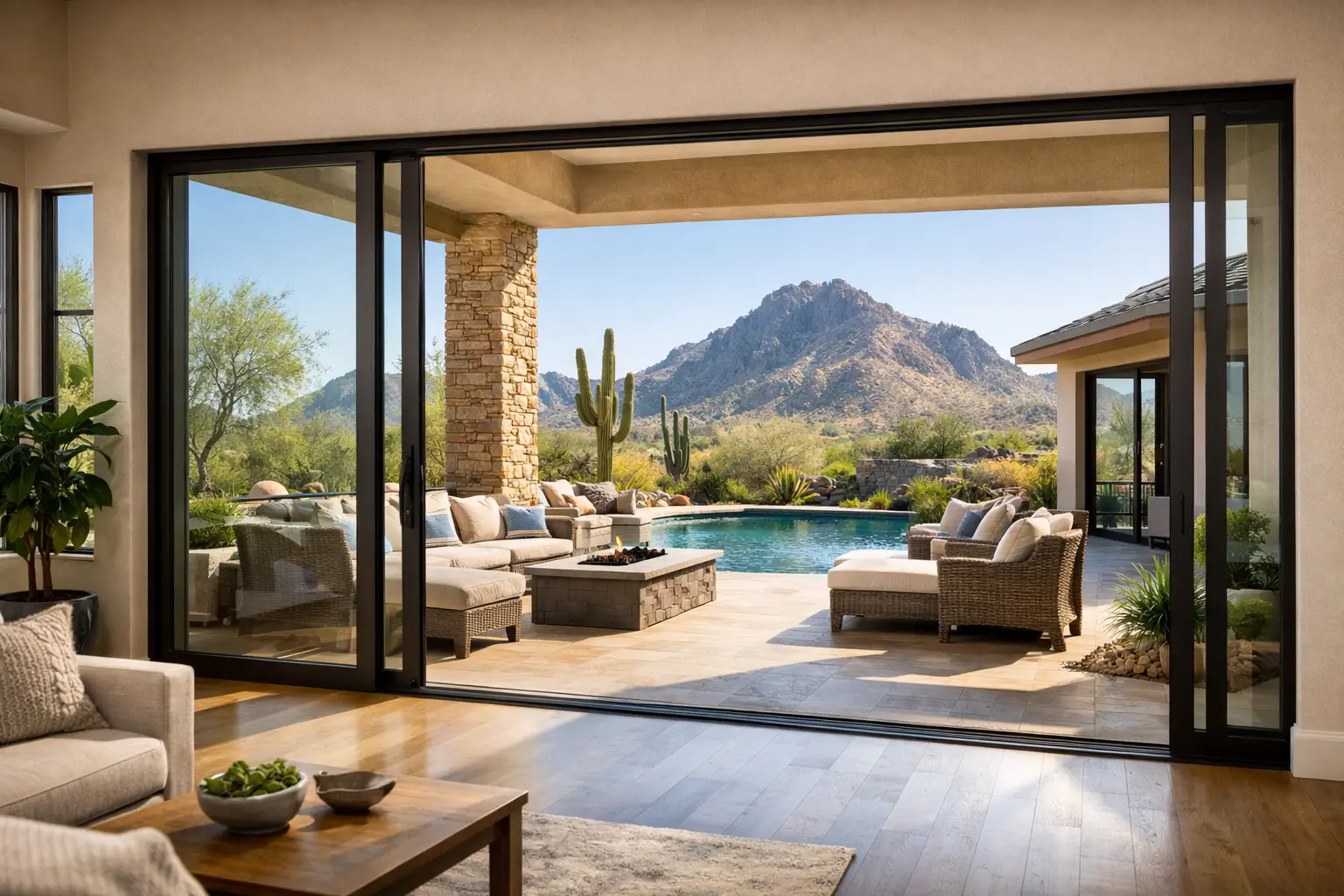
A patio door should not require a hard pull, a shoulder check, or a ritual of lifting the panel just to reach the backyard. For Arizona homeowners, sliding doors often become a daily frustration long before they become a remodeling priority. Heat, sun exposure, worn rollers, aging weatherstripping, and movement in an older opening can turn a once-useful door into a source of drafts, noise, and lost curb appeal.
A well-selected replacement can change much more than the view. It can bring in natural light, create a more comfortable transition to a patio or pool area, improve security, and support lower cooling demand when the product and installation are matched to the home. The key is looking beyond the door panel itself. The opening, framing, exterior finish, drainage, and weatherproofing all affect how the finished system performs.
Why Sliding Doors Matter in Arizona Homes
Many established homes in Phoenix, Scottsdale, Chandler, and Paradise Valley were built with standard patio doors that have reached the end of their useful life. Some are difficult to operate because tracks have worn down or the frame has shifted. Others allow outdoor heat to radiate into living areas, especially on west-facing walls where afternoon sun is relentless.
Replacement sliding doors can help address these concerns, but the right solution depends on the home. A compact two-panel system may be ideal for a secondary bedroom or breakfast nook. A wider multi-panel door can make a main living area feel larger and create the indoor-outdoor connection homeowners want near a covered patio, landscaped yard, or entertaining space.
The visual improvement is immediate, but performance is the long-term value. Quality frames, energy-conscious glazing packages, properly fitted seals, and dependable locking hardware all contribute to a door that feels solid and works as intended year after year.
Choosing the Right Sliding Door Configuration
Not every sliding door project calls for the same style. The best choice should account for the opening size, room layout, traffic flow, architectural character, and the amount of construction work required to achieve the homeowner’s goals.
Traditional two-panel patio doors
A two-panel sliding patio door has one operating panel and one fixed panel. It remains a practical choice for many homes because it provides generous daylight and outdoor access without requiring major alterations. For homeowners replacing an existing door in the same opening, this configuration can offer the strongest balance of cost, performance, and visual impact.
Material selection matters. Vinyl can be an attractive option for budget-conscious projects when paired with a quality installation and appropriate energy features. Fiberglass offers strength and stability, while wood-frame and aluminum-clad options can better complement certain architectural styles. Thermally improved aluminum may also suit contemporary homes seeking slim sightlines and a more modern appearance.
Multi-panel and stacking systems
When the goal is a wider opening and a stronger connection to the outdoors, multi-panel or stacking systems deserve a closer look. These doors can span a substantial section of wall, letting more daylight into the home and providing a more open feel for gatherings.
They also require more planning. A larger system adds weight, places higher demands on the structure, and may require opening modifications, header evaluation, new framing, or finish work. A precise assessment is essential before selecting a door based solely on appearance. The best result is not the largest possible opening. It is an opening that is properly engineered, carefully weatherproofed, and proportioned for the room.
Pocket doors and other large-opening options
A pocket door system allows panels to slide into a wall cavity, leaving the opening largely unobstructed. It can be an exceptional design feature, particularly in homes designed around outdoor living. It is also a more involved construction project than a standard patio door replacement.
Wall conditions, electrical locations, structural requirements, exterior stucco, and interior drywall all need to be reviewed. Homeowners should expect this type of work to involve a coordinated plan rather than a simple swap. The investment can be worthwhile when it supports a larger renovation, improves the flow of the home, and is executed with the necessary attention to framing and finish restoration.
Energy Performance Is More Than the Glass Package
Arizona homeowners naturally ask whether a new door will help with cooling costs. The answer is often yes, but no single feature carries the whole result. A door’s performance comes from the combined effect of the frame material, insulating glass configuration, coatings, weatherstripping, installation quality, orientation, and shade around the opening.
For doors exposed to intense afternoon sun, solar heat control should be part of the conversation. The goal is to reduce unwanted heat gain while preserving useful light and a clear view. A door that looks beautiful in a showroom may not be the ideal choice for a west-facing family room without considering its glazing options and surrounding conditions.
Equally important, the new unit must be integrated correctly with the wall. Gaps around the frame, insufficient flashing details, or incomplete sealing can undermine a high-quality door. Proper foam application, vapor barriers where needed, tar paper, lath, and stucco restoration are not cosmetic afterthoughts. They are part of creating a durable exterior envelope that protects the opening from the elements.
The Installation Details Homeowners Should Expect
A sliding door replacement is often straightforward only when the existing opening is in excellent condition. In older Arizona homes, that is not always the case. Hidden frame damage, uneven subfloors, cracked stucco, inadequate prior sealing, and out-of-square openings can all affect the project scope.
An experienced installation team should inspect the opening before work begins and explain what the project includes. That may involve removing the existing unit, correcting framing, preparing the sill, setting and securing the new frame, insulating gaps, applying weatherproofing layers, and restoring surrounding stucco and drywall. The finished door should operate smoothly, lock securely, and sit cleanly within the architecture of the home.
Cleanup and communication matter here as well. Door work affects an active part of the home, often near kitchens, living rooms, patios, and pool areas. Homeowners deserve a team that protects adjacent finishes, coordinates the schedule clearly, and does not leave them responsible for loose ends after the installation is complete.
Security, Operation, and Everyday Comfort
A patio door is one of the most frequently used exterior openings in a home. It should be easy to open with one hand, stable on its track, and secure when closed. Modern sliding door systems can offer improved locking mechanisms, stronger frames, and more reliable rollers than aging units.
Still, bigger is not always better. A very large panel can be impressive, but it may be heavier and require more care than a smaller system. Households with young children, older adults, or frequent guests may prioritize a low-profile threshold, an easy operating panel, and intuitive hardware. For a quieter bedroom or home office, sound control may carry more weight than maximum opening width.
The right choice comes down to how the household lives. Consider who uses the door, how often it is opened, where furniture will sit, how the sun strikes the wall, and whether the project is intended to support resale or long-term enjoyment. Those answers help determine the most practical system and installation level.
A Better Door Starts With a Complete Plan
The most successful sliding door projects begin with a close look at the home rather than a quick product selection. At Greco Roman Windows and Doors, that means discussing the intended use of the space, evaluating the condition of the existing opening, and recommending a tailored installation approach that fits the budget and construction needs.
For some homeowners, a Silver-level replacement may provide the functional improvement they need. Others may benefit from Gold or Platinum-level work that includes more extensive weatherproofing, opening modifications, new construction-grade details, and complete finish repairs. Each approach should be clear from the estimate forward, with no confusion about what will be addressed and why.
If your current patio door is difficult to operate, brings too much heat into the room, or no longer suits the way you use your home, schedule a free in-home consultation. A careful evaluation can turn an everyday inconvenience into a lasting improvement that feels right every time you step outside.