A window that looks fine from the curb can still be working against your home every afternoon. In Arizona, intense sun, high cooling demands, shifting temperatures, and aging stucco openings can expose the limits of an older window system quickly. Knowing how to choose replacement windows means looking beyond the frame color or a tempting price and considering how the entire assembly will perform in your specific home.
The right choice should make rooms more comfortable, reduce unwanted heat gain, improve operation and security, and suit the architecture of your property. Just as importantly, it should be installed with the care required to protect surrounding finishes and keep water and air out where they belong.
Start With the Problems You Need Windows to Solve
Replacement windows are not one-size-fits-all because homeowners do not start with the same concerns. A south- or west-facing living room that becomes difficult to use in the afternoon needs a different solution than a shaded bedroom with a drafty, hard-to-lock window. Begin by identifying what is not working now.
High utility bills, hot glass surfaces, fading floors and furnishings, exterior noise, condensation, difficult operation, visible frame wear, and dated sightlines are all meaningful clues. A homeowner preparing for resale may prioritize clean, coordinated curb appeal and broad buyer appeal. Someone planning to stay for decades may place greater value on long-term efficiency, structural improvements, and a more customized design.
Be specific during the consultation. Note which rooms feel hottest, where noise enters, which windows stick, and whether you want more daylight or a stronger connection to a patio or landscape. Those details guide product selection far better than choosing by appearance alone.
Choose Frames for Arizona Conditions and Your Priorities
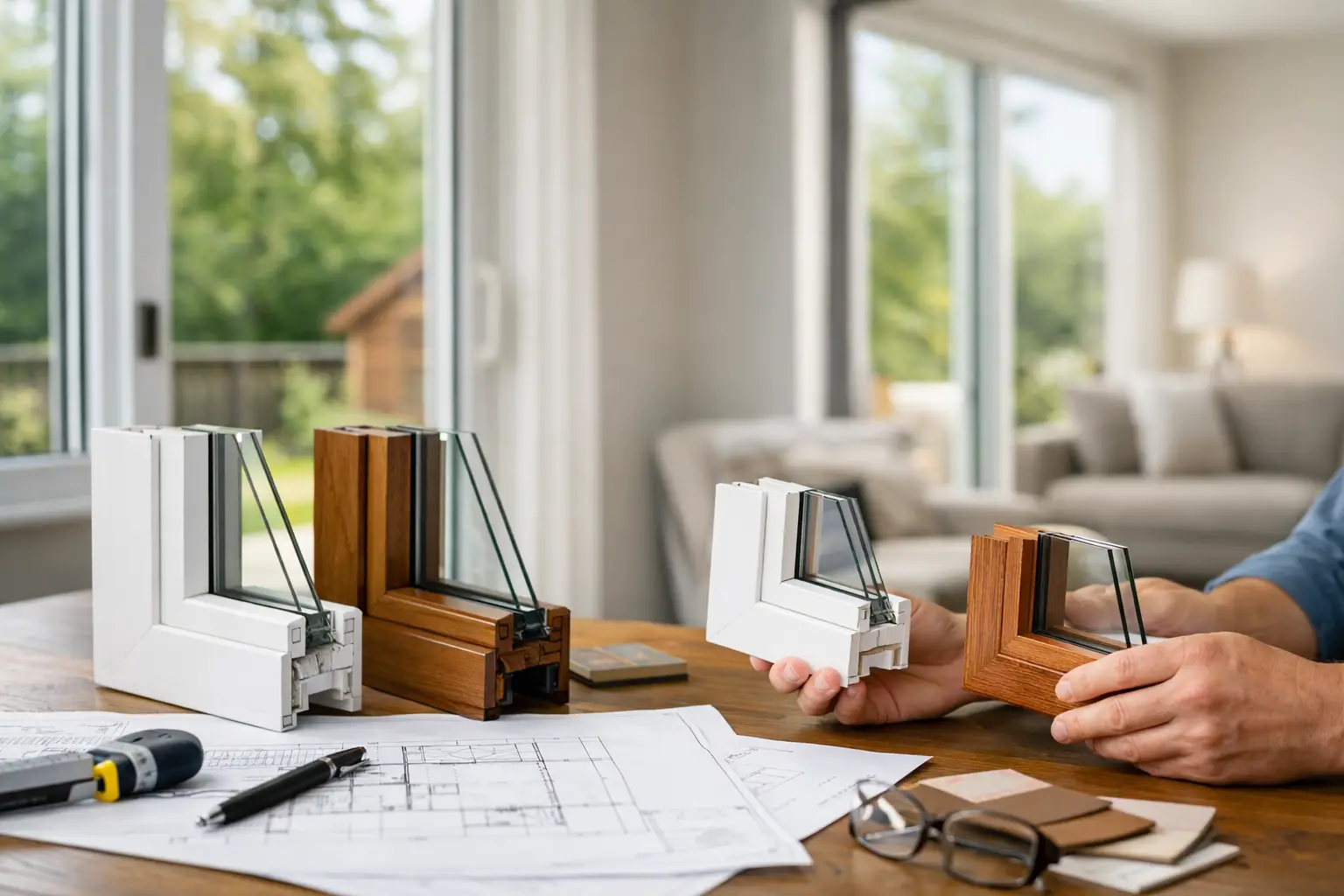
Frame material affects maintenance, appearance, insulation, strength, and cost. There is no single best material for every property. The appropriate choice depends on the home’s style, exposure, budget, and the scope of the installation.
Vinyl windows
Vinyl is a practical choice for many Arizona homeowners because it offers solid thermal performance, low maintenance, and dependable value. Quality matters. A well-built vinyl window with the right glass package can be an excellent fit for established homes where energy savings and affordability are primary goals.
Vinyl may offer fewer custom finish options than other materials, however, and frame profiles can be more substantial. That trade-off is worth discussing if preserving a particular architectural look or maximizing visible glass is a priority.
Fiberglass windows
Fiberglass is valued for its strength, stability, and ability to handle demanding temperature changes. It can provide a refined appearance with narrower profiles and is often a strong option for homeowners seeking a long-term upgrade without the maintenance expectations of traditional wood.
Its initial investment is generally higher than vinyl, but it can make sense for large openings, design-forward remodels, or homes with significant sun exposure.
Wood-frame and thermally improved aluminum windows
Wood-frame windows bring warmth and architectural character, particularly in homes where interior finish quality is central to the design. They require appropriate care, but their visual impact can be difficult to match.
Thermally improved aluminum is another important option, especially when clean lines, strength, and expansive views are desired. Standard aluminum can transfer heat readily, so look for systems designed with thermal breaks and climate-appropriate glazing. For modern homes and larger configurations, that strength-to-profile ratio can be a meaningful advantage.
Evaluate the Glass Package, Not Just the Window Label
For Arizona homes, glass selection often has as much influence on comfort as frame material. The goal is not simply to buy the darkest glass or the lowest number on a brochure. It is to balance heat control, daylight, view quality, and the direction each opening faces.
Low-E coatings help manage solar heat gain while allowing useful light into the home. Solar heat gain coefficient, or SHGC, measures how much solar radiation passes through the window. Lower SHGC values generally reduce heat gain, which is particularly valuable on heavily exposed elevations. A window’s U-factor reflects how well the unit resists non-solar heat transfer, with lower values indicating better insulating performance.
Those figures should be considered together. A very low SHGC may be sensible for a broad west-facing wall, while another room may benefit from a different glass package to avoid making the interior feel unnecessarily dim. This is why a room-by-room recommendation is more useful than a blanket answer.
Also ask how the glass package addresses ultraviolet exposure. UV management can help protect flooring, artwork, upholstery, and cabinetry from the relentless fading that Arizona sunlight can cause over time.
Select Operating Styles That Improve Daily Living
A window should be easy to use, easy to clean where needed, and suited to the room it serves. Fixed picture windows offer large, uninterrupted views and daylight but do not provide ventilation. They work beautifully beside operable units or in locations where airflow is not required.
Single-hung and double-hung windows suit many traditional home styles. Sliding windows can be a practical choice for wider openings and straightforward operation. Casement windows provide a tight closing seal and can direct breezes into the home, while awning windows can allow ventilation during light weather changes without opening the entire sash area.
Think about furniture placement, walkways, exterior landscaping, and cleaning access. A style that performs well on paper may be inconvenient if it conflicts with a patio path or requires difficult exterior access for maintenance.
Measure Performance, Security, and Craftsmanship Together
Energy labels and manufacturer ratings are valuable, but the installed result matters just as much. Look for windows tested to recognized standards and ask about ratings that reflect air infiltration, water resistance, structural performance, and product certification. AAMA certification is one useful indicator that a product has been evaluated to established performance standards.
Security deserves similar attention. Quality locks, reinforced meeting rails, durable hardware, and a secure installation all contribute to peace of mind. A beautiful window is not a complete upgrade if it operates poorly, leaves gaps, or lacks reliable locking performance.
Before making a decision, compare the details that affect ownership over time: warranty coverage, hardware finish, screen construction, finish durability, expected maintenance, and the availability of matching units if a future phase is planned. The lowest initial price can become costly if the product does not fit the climate, the opening, or the homeowner’s long-term plans.
How to Choose Replacement Windows With the Installation in Mind
The condition of the existing opening should shape the project from the beginning. In older Arizona homes, window replacement can involve more than removing an old unit and setting a new one in place. Stucco conditions, block frames, damaged framing, previous moisture intrusion, and nonstandard openings can all require careful evaluation.
A proper installation plan may include frame repairs, new construction-grade weatherproofing, vapor barriers, tar paper, foam and lath, and precise stucco and drywall restoration. These are not cosmetic extras. They help create a finished opening that directs water properly, limits air leakage, and looks intentional when the work is complete.
There are times when a straightforward replacement installation is appropriate, particularly when the existing frame and surrounding conditions are sound. In other cases, a more comprehensive approach is the wiser investment. If you are enlarging an opening, adding a window for natural light, changing a configuration, or modernizing an aging exterior, the project may require structural alterations and coordinated finish work.
Ask who will be responsible for each step. Clear answers about measuring, permitting when required, protection of floors and furnishings, weatherproofing, stucco repairs, cleanup, and post-installation support are signs of a contractor who understands the full scope of the work.
Match the Project Scope to Your Budget and Goals
A thoughtful contractor should help you prioritize rather than pressure you into a single package. A value-focused project may center on efficient vinyl windows in the most exposed rooms. A resale-oriented project may emphasize coordinated exterior appearance, upgraded glass, and dependable operation throughout the home. A full modernization may call for premium materials, enlarged openings, and complete exterior and interior finish restoration.
For homeowners in Phoenix, Scottsdale, Paradise Valley, and Chandler, the details of heat control and installation protection are particularly relevant. Greco Roman Windows and Doors approaches these decisions with tailored installation options that account for budget, HOA considerations, product selection, and the construction realities behind the wall.
The best replacement windows are the ones that continue to feel right after the installation crew has left: comfortable during summer afternoons, secure at night, easy to operate, and finished with the level of care your home deserves. Schedule a free in-home consultation when you are ready to see what your openings, sunlight, and goals call for.