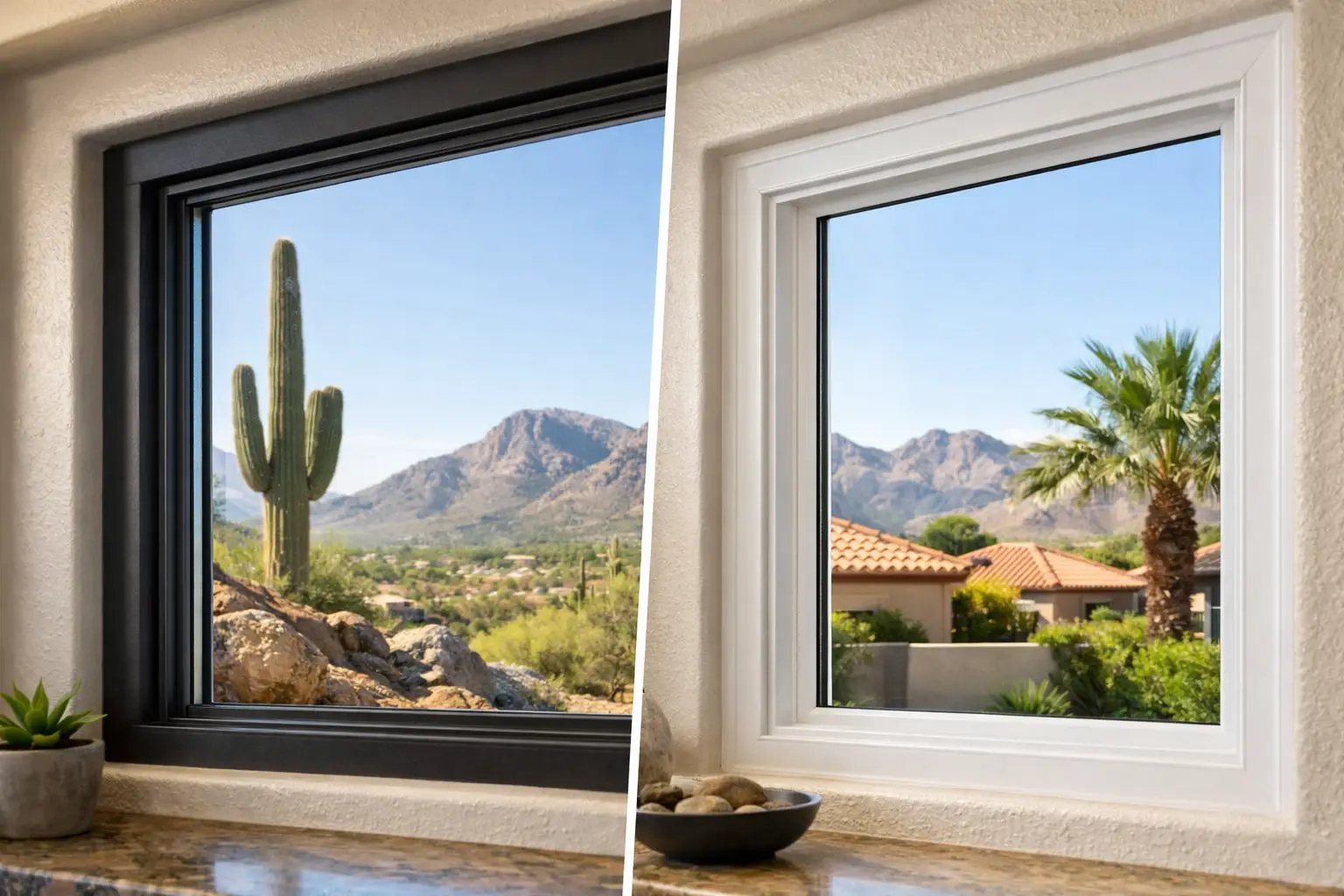
A replacement window can look excellent on installation day and still be the wrong fit for an Arizona home five summers later. In the fiberglass versus vinyl decision, the better material depends on more than the showroom sample or initial price. It comes down to how the frame handles prolonged heat, the size and style of the opening, the look of the home, and the level of performance you expect over time.
For many homeowners, vinyl delivers dependable efficiency and strong value. Fiberglass brings greater rigidity, a refined profile, and the ability to support larger or more design-driven window configurations. Both can be excellent choices when the product is properly specified and the installation protects the opening from heat, moisture, and exterior exposure.
Why Arizona Heat Changes the Window Conversation
Phoenix-area windows face conditions that are not typical of milder climates. Direct sun, intense surface temperatures, daily temperature swings, dust, and monsoon moisture all place demands on the window frame, glass package, seals, and surrounding wall assembly. A frame that performs well in a catalog is only part of the equation. The opening must also be measured accurately, secured correctly, insulated, flashed, and finished without compromising the home’s stucco or interior drywall.
That is why material selection should start with the house itself. A smaller bedroom opening in a practical replacement project has different needs than a wide living-room opening being enlarged for more natural light. The latter may call for a stronger frame and more extensive structural, weatherproofing, and finish work.
Fiberglass Versus Vinyl: The Core Differences
Fiberglass and vinyl are both low-maintenance alternatives to traditional painted wood frames. Neither material requires routine scraping or repainting to protect it from the elements. Their performance, appearance, and cost profile are different enough, however, that homeowners should not treat them as interchangeable.
Fiberglass windows
Fiberglass frames are made from glass fibers and resin. The material is notably rigid and has a low rate of expansion and contraction when temperatures change. That stability helps fiberglass maintain clean sightlines, support larger glass areas, and hold its shape in demanding conditions.
For homeowners considering contemporary picture windows, expansive views, or darker exterior frame colors, fiberglass can be a compelling choice. Its strength allows for slimmer-looking profiles in many product lines, which can mean more visible glass and a more architectural appearance. Fiberglass is also often available in finish options that suit homes where window color and curb appeal are central to the project.
The trade-off is cost. Fiberglass windows generally carry a higher upfront investment than comparable vinyl units. They are often best suited to homeowners who prioritize long-term aesthetics, larger openings, premium design details, or a resale strategy where a higher-end window package supports the overall modernization of the property.
Vinyl windows
Vinyl frames are typically made from PVC and remain one of the most popular replacement-window options for good reason. They offer reliable insulation, low maintenance, and an accessible price point. For a homeowner replacing several aging windows at once, vinyl can provide a meaningful comfort and efficiency upgrade while keeping the project within a more controlled budget.
Quality matters greatly with vinyl. Better products use well-designed multi-chamber frames, durable weatherstripping, reinforced components where needed, and glass packages selected for the home’s orientation. A properly built vinyl window is not a compromise simply because it costs less than fiberglass. It is often the sensible choice for standard-sized openings, rental properties, secondary rooms, and homeowners focused on practical energy improvements.
Vinyl does expand and contract more than fiberglass under extreme temperature changes. High-quality manufacturers account for this movement in their engineering and installation requirements. Still, very large openings, specialty shapes, and certain dark-frame designs may favor fiberglass because of its added rigidity and dimensional stability.
Comparing Comfort, Cost, and Appearance
Energy efficiency is about the whole window
Neither fiberglass nor vinyl automatically guarantees lower cooling costs. The glass package, Low-E coating, insulating gas, spacer system, air sealing, and installation quality all influence real-world performance. In Arizona, solar heat gain is especially important. The right glass can help reduce unwanted heat from direct sun while preserving useful daylight.
Both frame materials can support energy-efficient windows. Vinyl is naturally insulating, while fiberglass performs well because of its stable construction and compatibility with high-performance glazing. Rather than choosing based on a broad claim of efficiency, compare the actual ratings and glass recommendations for each elevation of your home. West-facing windows may need a different approach than shaded north-facing openings.
Initial cost versus long-term priorities
Vinyl is generally the more budget-conscious option. This can make it an excellent fit for a whole-home replacement where the existing openings are in good condition and the goal is better operation, reduced drafts, improved appearance, and lower strain on the cooling system.
Fiberglass costs more, but the premium can be justified when the project calls for larger units, narrow frame profiles, distinctive colors, or a window design intended to remain a focal point of the home for decades. It can also be the stronger candidate when a remodeling project includes opening modifications or a new window placement that changes the home’s exterior composition.
The right question is not simply, “Which material costs less?” It is, “Which package delivers the result this house needs without paying for features that do not add value to the project?”
Design flexibility and curb appeal
Vinyl tends to offer a clean, versatile appearance in common window styles, including single-hung, sliding, casement, and picture windows. It works particularly well for homeowners who want a fresh, consistent look without turning a window replacement into a major design statement.
Fiberglass often appeals to design-conscious homeowners because it can offer a more refined profile and broader finish possibilities. On a Scottsdale contemporary home, a Paradise Valley property with expansive views, or a carefully updated mid-century residence, the frame itself can become part of the architecture. That said, the best-looking window is one that fits the proportions, trim details, and exterior materials already present on the home.
Installation Is the Performance Multiplier
A high-quality window cannot compensate for a poorly prepared opening. This is especially true in homes with stucco exteriors, older framing, previous water intrusion, or windows that have shifted out of square over time. The removal process may reveal damaged framing, inadequate flashing, gaps around the rough opening, or exterior finish work that needs attention before the new unit is installed.
A complete installation should address the condition behind the frame, not just the visible perimeter. Depending on the home and project scope, that can include new construction-grade weatherproofing, vapor barriers, tar paper, foam, lath, stucco repair, interior drywall restoration, and careful trim work. For altered openings or added windows, proper structural framing and exterior integration are essential.
This is where a tailored installation package matters. A straightforward replacement may require a different level of construction work than a project involving block frames, enlarged openings, HOA requirements, or a finish-sensitive resale renovation. Greco Roman Windows and Doors approaches these details as part of the finished window system, with old-world-inspired care for the property rather than a one-size-fits-all installation.
Which Window Material Is Right for Your Home?
Choose vinyl when value, dependable efficiency, and low maintenance are the leading priorities. It is a strong option for many standard replacement projects, particularly when you are upgrading multiple windows and want an attractive, well-performing result at a more approachable investment.
Choose fiberglass when the project benefits from greater frame strength, larger glass areas, slim profiles, premium colors, or a more elevated architectural finish. It can be especially worthwhile for prominent front-facing windows, wide living spaces, and home modernization projects where window design plays a major role in the final appearance.
There is also room for a mixed-material approach. A homeowner may select fiberglass for a large feature window or a wall of glass while using quality vinyl windows in bedrooms and less visible areas. Matching the material to the purpose of each opening can be more practical than applying one product category across every room.
The most useful next step is to evaluate the existing openings, sun exposure, exterior condition, and goals for the home before choosing a frame material. Schedule a free in-home consultation to see how fiberglass or vinyl can be specified around your home’s architecture, comfort needs, and long-term plans.