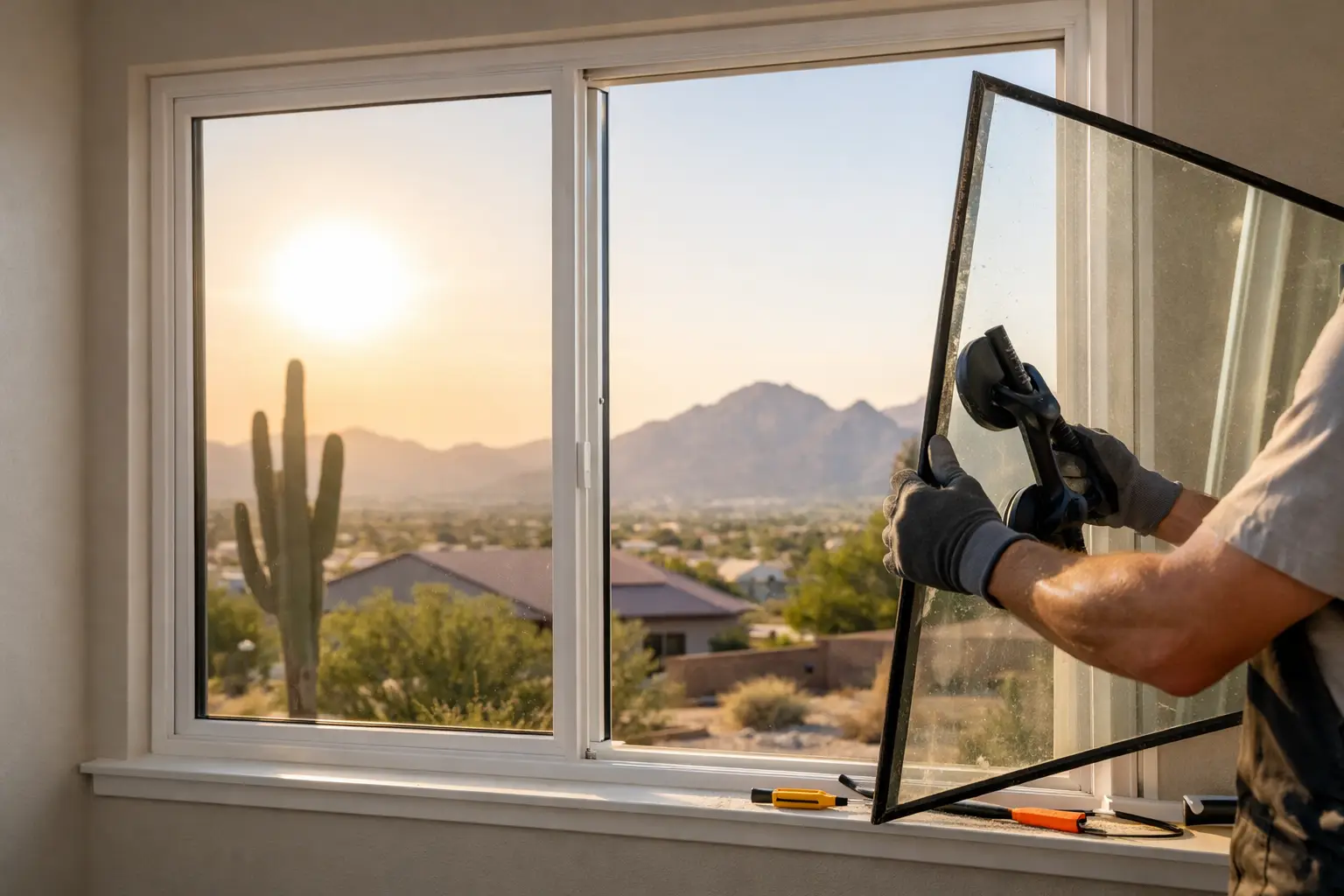
At 4 p.m. in a Phoenix summer, the weak points in a home become obvious. A room facing west stays warmer than the thermostat setting. Sunlight fades flooring and furniture. Older windows feel hot to the touch, rattle in their frames, or resist opening when you need ventilation. This Phoenix window replacement guide is built around the decisions that matter most in our climate: the right product, the condition of the opening, and installation details that hold up after the crew leaves.
Replacement windows are not a one-size-fits-all purchase. The least expensive option can be appropriate for a straightforward opening and a practical budget. But a home with damaged framing, brittle stucco, unusual window sizes, HOA requirements, or plans for a larger opening needs a more complete scope. The goal is not simply a new-looking window. It is a finished exterior and interior that protects the home, operates properly, and looks like it has always belonged there.
Phoenix Window Replacement Guide: Start With the Opening
Before selecting a frame color or comparing glass packages, assess the existing opening. Arizona homes commonly have block frames, wood frames, aluminum frames, stucco exteriors, and previous replacement work that may conceal water intrusion or incomplete flashing. Each condition affects how a new window should be installed.
A basic replacement may fit within a stable existing frame. This can be an efficient choice when the frame is sound, the opening is square, and preserving the existing trim is appropriate. The trade-off is that the new unit may reduce visible glass area, and it will not correct problems hidden behind the old frame.
A full-frame replacement removes the existing unit down to the rough opening. It provides the clearest view of the framing condition and allows the installer to rebuild the weatherproofing system properly. That may include vapor barriers, tar paper, foam, lath, sealants, and finish restoration where the exterior is opened. It is often the better long-term choice for aging homes, failed prior installations, or projects where preserving a polished stucco finish matters.
If you want to add a window, enlarge an opening, or convert a traditional window wall into a larger indoor-outdoor connection, the project becomes structural work as well as window work. Proper header support, framing, permits where required, exterior water management, drywall repair, and stucco integration should be planned as one coordinated scope. Do not evaluate these projects by the unit price alone.
Choose Materials for Arizona Heat and Your Priorities
The right frame material depends on budget, architectural style, opening size, and performance expectations. A quality installation should help you compare materials honestly rather than pushing every homeowner toward the same product.
Vinyl windows
Vinyl is a popular option for homeowners who want dependable thermal performance and a clean finished appearance at a more accessible investment level. Quality vinyl frames can reduce heat transfer and require little routine maintenance. They are well suited to many standard replacement openings.
The limitations are worth considering. Vinyl may not be the best fit for very large openings, specialized architectural profiles, or homeowners seeking a narrow sightline. Color availability can also be more limited than other materials, especially on projects designed around a particular exterior palette.
Fiberglass windows
Fiberglass offers strength, stability, and strong thermal performance. It works particularly well when a home has larger openings or when homeowners want a durable frame that can handle significant temperature changes. Its strength can allow slimmer profiles and more glass than some vinyl designs.
Fiberglass usually costs more upfront, but it can be a sensible investment for a long-term home, a design-forward renovation, or an opening where structural stability and refined proportions are priorities.
Wood and thermally improved aluminum
Wood-frame windows bring warmth and traditional character to homes with a historic or custom look. They can be an excellent choice when interior finish quality is central to the project. They also demand an installation plan that protects the frame from moisture and maintains the exterior envelope.
Thermally improved aluminum is valued for its strength, crisp modern lines, and ability to support expansive glass configurations. Not all aluminum systems perform equally in heat, so look for thermally improved designs rather than evaluating the material by name alone. For contemporary homes in Scottsdale or Paradise Valley, aluminum can be a compelling choice when large views and slim profiles are part of the design.
Look Beyond the Glass Label
Glass packages deserve careful attention in Phoenix, but one rating rarely tells the whole story. Low-E coatings, insulating glass, tint, and solar heat gain performance should be selected for the direction each opening faces and how each room is used.
West- and south-facing elevations often need stronger solar control to limit afternoon heat and glare. Yet the darkest or most reflective glass is not automatically the best answer. It can change the appearance of the home, reduce natural light, and affect how colors look indoors. East-facing bedrooms may have different needs than a shaded north-facing living room.
Ask for a clear explanation of U-factor, solar heat gain coefficient, visible transmittance, and air infiltration. These measurements help compare performance, but installation quality still determines whether the system can deliver on the product’s potential. A premium window with gaps around the frame will not provide the comfort or efficiency a homeowner expects.
Installation Details That Protect the Investment
The most important work often happens where the new unit meets the home. A professional crew should inspect the opening, prepare the substrate, set the window square and plumb, secure it according to manufacturer requirements, and integrate flashing and weatherproofing with the surrounding wall system.
On stucco homes, careful removal and restoration are essential. Cutting too aggressively can leave cracking, mismatched texture, or exposed edges that distract from an otherwise attractive upgrade. Proper repair may involve foam, lath, stucco application, color matching, and a clean seal at the window perimeter. Indoors, drywall, trim, and paint touch-ups should be included in the conversation before work begins, not treated as surprises after installation.
This is also where installation tiers can be useful. A straightforward replacement may only need a focused package with quality setting, sealing, and cleanup. A more comprehensive package can account for full-frame removal, enhanced weatherproofing, exterior and interior finish repair, structural modifications, or HOA-driven appearance requirements. The right scope should follow the condition of the home and the outcome you want, not an arbitrary package label.
Plan for Budget, Resale, and Daily Comfort
A window project should be priced as a complete installed system. The estimate should identify the product line, glass package, installation method, finish work, disposal, and any anticipated framing or stucco work. If a proposal is significantly lower than another, ask what has been omitted rather than assuming the products are identical.
For a homeowner preparing to sell, replacement windows can improve curb appeal, operation, and buyer confidence, particularly when dated frames or visible deterioration make the home feel neglected. The strongest resale decisions usually balance broad appeal with proportional spending. A tasteful vinyl or fiberglass replacement may be more appropriate than an elaborate custom system if the neighborhood and timeline do not support the added investment.
For a homeowner staying for years, comfort often carries more weight. Reduced outdoor noise, easier operation, better security hardware, less heat gain, and a more consistent room temperature can change how the home feels every day. That value is personal, but it is real.
Questions to Settle Before You Sign
A worthwhile consultation should leave you with practical answers. Confirm whether the proposal is an insert or full-frame installation, what condition the existing frames are in, and how the contractor will manage stucco, drywall, and paint if they are disturbed. Ask how the installation will be weatherproofed, whether the selected unit suits the opening size, and who will communicate with you if an unexpected condition is discovered.
Also discuss scheduling and access. Window replacement creates short-term disruption, especially for homes with pets, work-from-home schedules, or rooms that must remain secure at the end of each day. An accountable team coordinates those details, protects floors and furnishings, maintains a clean work area, and provides responsive aftercare once the project is complete.
Greco Roman Windows and Doors approaches these decisions with old-world-inspired craftsmanship and a clear view of the full construction scope, from custom window selection through finish restoration. A free in-home consultation gives you the opportunity to evaluate the opening, the product, and the installation plan together – then start your project with confidence.