
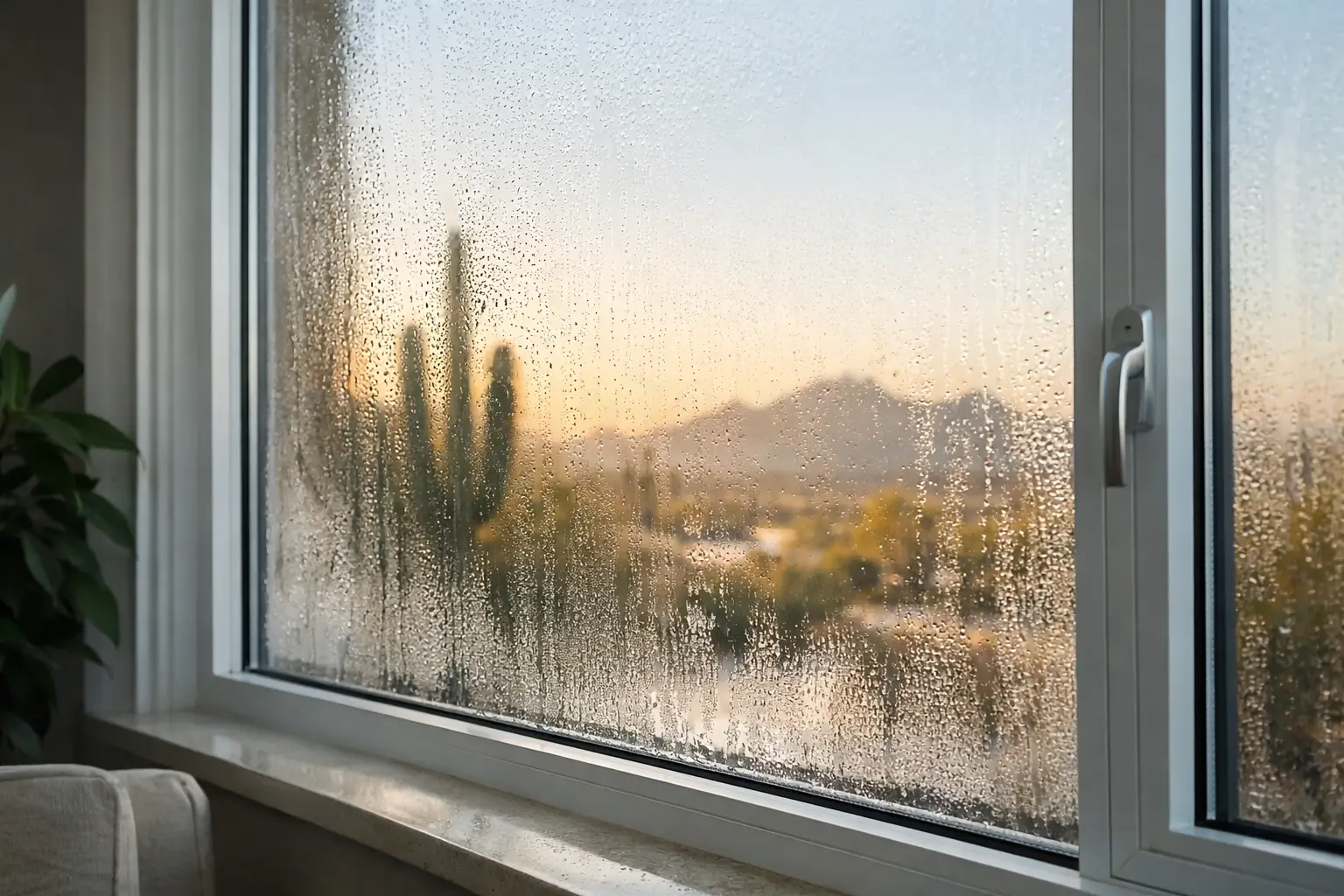
A cool bedroom at sunrise, a warm shower, and a tightly closed house can create an unexpected sight in the desert: moisture collecting on the inside of a window. Window condensation in Arizona homes is not always a sign that a window has failed. It is, however, a useful clue about how indoor humidity, window insulation, airflow, and the surrounding wall system are working together.
For Phoenix-area homeowners, the right response depends on where the moisture appears, how often it returns, and whether it is causing damage around the opening. A small amount of interior moisture on a cold winter morning is different from persistent dampness that stains a sill, softens trim, or develops between the panes of an insulated window.
What Window Condensation in Arizona Homes Means
Condensation forms when warm, humid air touches a surface that is cooler than the air’s dew point. The air can no longer hold all of its moisture, so water collects on that surface. On a window, the interior-facing pane is often the first cold surface moisture reaches during cooler weather.
Arizona’s dry climate can make condensation seem out of place, but indoor air has its own moisture sources. Cooking, showering, laundry, houseplants, aquariums, and everyday occupancy all add water vapor to the home. During winter, overnight outdoor temperatures can fall sharply while indoor spaces remain warm. That temperature difference can make an older or poorly insulated window cold enough for condensation to form.
During monsoon season, outdoor humidity rises considerably. If air conditioning brings humid outdoor air into the home through leaks or frequently opened doors, windows may also show moisture under certain conditions. The pattern matters more than any single occurrence.
Moisture on the room side of the window
Condensation on the interior surface is usually connected to indoor humidity and a cold window surface. Older single-pane windows, aging aluminum frames without a thermal break, and windows with limited insulating performance are more likely to become cold enough for moisture to collect.
It can also occur on newer windows when humidity is unusually high or air circulation is restricted. Heavy window coverings, closed blinds, and furniture positioned directly in front of a window can trap cooler air against the interior surface. In that situation, the window may not be the only issue, but it can reveal a ventilation or airflow concern worth addressing.
Moisture on the exterior surface
Exterior condensation is less common in Arizona, but it can occur when a highly efficient window keeps the inside pane warm while cool, humid outdoor air reaches the exterior pane. This is often seen early in the morning after a humid night.
Exterior moisture is generally not a sign of water entering the home. In fact, it can indicate that the window is insulating effectively. Once outdoor conditions change, the moisture should disappear.
Moisture between the panes
Condensation or a cloudy appearance between panes of an insulated window deserves closer attention. Modern insulated units are sealed at the perimeter, creating a protected airspace between panes. When that seal no longer performs as intended, moisture can enter that space and leave a persistent haze or droplets that cannot be wiped from either side.
This does not automatically mean an entire house needs new windows. Still, it is a practical reason to have the unit and its surrounding frame evaluated. The right solution depends on the window’s age, condition, availability of matching components, overall energy performance, and whether the opening has other installation concerns.
Why Older Arizona Windows Condense More Often
Many established homes in Scottsdale, Paradise Valley, Chandler, and greater Phoenix were built with window systems that made sense for their era but offer limited protection against today’s comfort and efficiency expectations. Thin aluminum frames, aging weatherstripping, single-pane units, and deteriorated perimeter seals can all contribute to colder interior window surfaces.
Air leakage is another factor. When conditioned air escapes around a frame or outdoor air enters through gaps, the temperature around the opening becomes less stable. Homeowners may notice a draft, uneven room temperatures, dusty tracks, or condensation concentrated along one edge of the window. Those symptoms can point to a window issue, an installation issue, or both.
The surrounding construction matters just as much. Arizona stucco exteriors, block walls, and older framed openings often require more than a simple replacement unit. If water management layers, flashing details, or frame conditions are overlooked, a new window may look finished while the opening remains vulnerable to air and moisture movement. Impeccable craftsmanship means evaluating the complete assembly, not simply fitting a new product into an old opening.
When Condensation Is a Concern
A temporary trace of moisture that clears quickly is usually manageable. Persistent condensation is different, particularly when it appears on the same windows repeatedly or leaves evidence around the frame.
Pay attention if moisture is causing peeling paint, swollen wood trim, staining, mildew-like spotting, or deterioration at the sill. Also take note when condensation comes with drafts, difficult operation, rattling frames, elevated utility costs, or noticeable outdoor noise. These issues can suggest that the window no longer provides the insulation, weather resistance, or structural stability the opening needs.
Condensation should also be taken seriously when it occurs near exterior doors or large multi-panel door systems. These openings have more perimeter, more moving parts, and greater exposure to Arizona sun and seasonal weather. A careful assessment should consider the threshold, frame, seals, drainage path, and condition of the surrounding finish.
Improving the Conditions That Cause Condensation
The best approach starts with identifying the source rather than assuming every wet window needs replacement. Indoor humidity can often be reduced by using properly vented bath and kitchen exhaust, keeping moisture-producing activities ventilated, and confirming that the HVAC system is operating as intended. If several windows throughout the home show condensation at the same time, indoor humidity and ventilation deserve particular attention.
When the issue is isolated to certain rooms or windows, the window system itself becomes more likely to be part of the answer. Better-insulated frames, energy-efficient glazing packages, and low-emissivity coatings can keep interior surfaces warmer during cold periods. The appropriate package should also account for Arizona’s intense solar exposure, where controlling heat gain matters for much of the year.
Material selection involves trade-offs. Vinyl can provide strong thermal performance and value for many replacement projects. Fiberglass offers durability and stability through temperature changes. Wood-frame windows can suit distinctive architectural styles but require a higher level of ongoing care. Thermally improved aluminum may be the right design choice where narrow sightlines or larger configurations are priorities. A professional recommendation should balance condensation control with sun exposure, appearance, maintenance expectations, and budget.
Installation Quality Protects the Opening
Even a premium window cannot compensate for a poorly prepared opening. Proper installation includes accurate measurements, sound frame preparation, appropriate shimming and insulation, weatherproofing at the perimeter, and restoration of the exterior and interior finishes. On stucco homes, that may involve careful removal and replacement of surrounding material, tar paper, foam and lath work, and a finish that integrates cleanly with the existing wall.
The details should be chosen for the home’s wall construction and local climate conditions. Vapor barriers, drainage planning, and flashing are not one-size-fits-all additions. They must work together so incidental moisture is directed out rather than trapped in the wall assembly.
At Greco Roman Windows and Doors, the evaluation extends beyond the visible window. A free in-home consultation can identify whether the concern is primarily humidity, aging window performance, an air leak, or a more involved opening and weatherproofing condition. That clarity helps homeowners invest in the right level of work, from a straightforward replacement to a more comprehensive modernization with finish restoration.
If condensation is recurring, document when it appears, which side of the window it is on, and whether it clears as the day warms. Those simple observations give a qualified window professional a far better starting point and help protect the comfort, finish, and long-term value of your home.