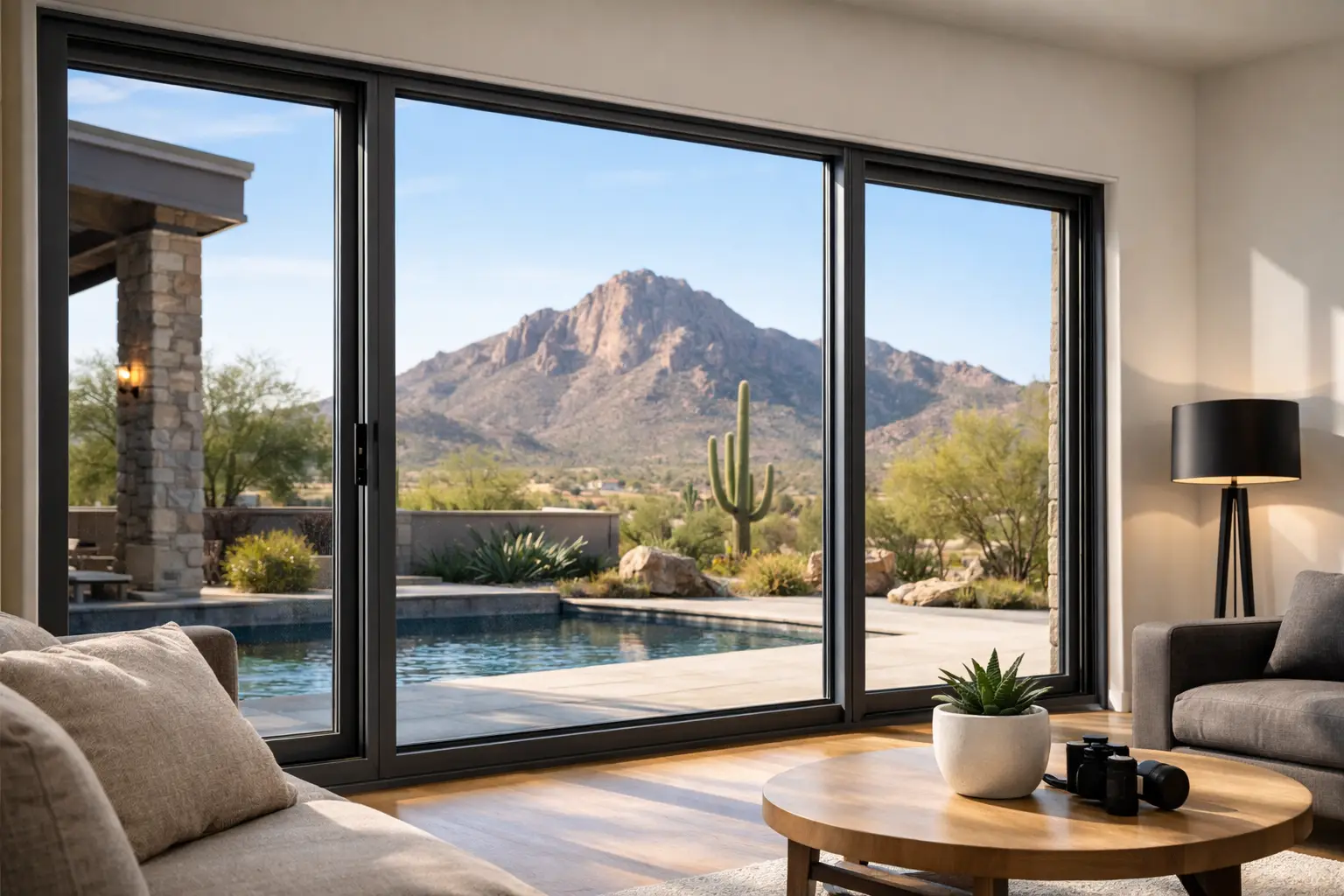
A west-facing window in an Arizona home has a demanding job. It must handle intense afternoon sun, repeated temperature swings, and years of UV exposure without making the room feel like an extension of the patio. Thermally improved aluminum windows Arizona homeowners select are built to meet that challenge with the clean sightlines and structural strength aluminum is known for, while addressing the material’s traditional weakness: heat transfer.
For the right home and the right opening, these windows can be an excellent long-term investment. The distinction matters, though. A high-performing aluminum frame is only part of the result. Proper measuring, weatherproofing, insulation, and finish restoration determine whether the replacement looks refined and performs as intended through Arizona summers.
What Makes Aluminum Windows Thermally Improved?
Standard aluminum is strong, lightweight, and highly durable, but it conducts heat readily. In a hot climate, an uninsulated aluminum frame can carry exterior heat toward the interior side of the window. That can make rooms less comfortable and place more demand on the cooling system.
A thermally improved frame uses a thermal break or insulating barrier within the aluminum profile. This barrier separates the interior and exterior portions of the frame, slowing the path heat takes through the metal. The frame still provides aluminum’s stability and slim profile, but it is better equipped for homes exposed to the desert sun.
The thermal break is not a replacement for quality glass. Window performance is a system: the frame, insulated glass unit, low-emissivity coating, spacers, seals, weatherstripping, and installation all work together. A thermally improved frame paired with glass selected for Arizona sun exposure can offer a meaningful improvement over aging single-pane windows or older metal frames.
Why the frame matters in Arizona
Homeowners often focus on the glass because it is the largest visible surface. Glass is certainly critical, especially on large south- and west-facing openings. Yet frames occupy more of the opening than many people realize, particularly on multi-panel units. If the frame is not designed for thermal performance, part of the benefit of upgraded glass can be lost.
Thermally improved aluminum is especially appealing when a homeowner wants narrower frame lines, larger daylight openings, or a more contemporary architectural appearance. It can suit modern homes, mid-century properties, and renovations where a heavy-looking frame would distract from the view. It also offers dependable rigidity for larger fixed windows and certain expansive configurations where structural strength is a priority.
When Thermally Improved Aluminum Windows Are the Right Choice
There is no single best replacement window material for every Arizona property. Vinyl can be an excellent value-driven choice. Fiberglass offers impressive stability and durability. Wood-frame windows may be appropriate for homes where architectural character is central to the project. Thermally improved aluminum stands out when strength, refined proportions, and a crisp design profile are high on the homeowner’s list.
It is often a strong fit for homes with wide openings, substantial glass areas, or dated aluminum windows that have become difficult to operate and visually tired. It can also make sense when the project calls for matching a contemporary door system or creating a consistent indoor-outdoor design language.
The trade-off is that premium thermally improved aluminum products may cost more than basic replacement options. The right decision depends on the size and exposure of the openings, the home’s architecture, the desired finish, HOA requirements, and how long the owner plans to stay in the property. A careful in-home assessment should compare the complete installed value, not just the visible product price.
Choosing Glass for Arizona Heat and Light
A thermally improved frame performs best when paired with glass designed for local conditions. The goal is not simply to darken the home. It is to manage solar heat while preserving the amount of natural light and exterior visibility that makes a room enjoyable.
Low-E glass coatings help reflect portions of solar energy, reducing the heat that enters through the glazing. Solar heat gain performance is particularly relevant on west-facing elevations, where late-day sun can make a living room, bedroom, or office uncomfortable. Insulated glass units add another layer of separation between exterior and interior conditions.
The right glass package depends on orientation and how the room is used. A shaded north-facing opening may have different needs than a large, unshaded wall of glass facing west. Homeowners should also consider interior fading, glare near televisions or workspaces, and whether privacy glass is appropriate in bathrooms or street-facing rooms. Thoughtful recommendations should account for these details rather than applying the same glass specification everywhere.
Installation Is Where Window Performance Is Protected
Even a well-made window cannot compensate for a poorly prepared opening. Arizona homes often present construction conditions that require more than a simple swap. Older framing, stucco exteriors, block construction, prior water intrusion, and uneven openings can all affect the installation plan.
A complete replacement project begins with precise field measurements and an examination of the existing frame, sill condition, exterior finish, and interior returns. Depending on the home and the desired result, the installation may involve a block frame approach or a more comprehensive removal that exposes the rough opening. The latter can provide an opportunity to correct underlying issues and create a more finished transition, but it also requires skilled reconstruction.
For a full-frame installation, the work may include new construction-grade weatherproofing, vapor barriers, tar paper, foam, lath, and carefully integrated flashing details. The team must then restore drywall, stucco, trim, and paint so the window looks intentional from both sides of the wall. These are not cosmetic afterthoughts. They help protect the opening and preserve the home’s finished appearance.
Greco Roman Windows and Doors approaches this scope with old-world-inspired attention to detail, from protecting the work area to completing the final finish repairs. Homeowners should expect clear communication about what the existing conditions require, especially when an older opening reveals concealed framing or stucco work.
Details That Affect Comfort, Security, and Daily Use
A replacement window should feel better to live with, not merely look newer from the curb. Thermally improved aluminum windows can contribute to more stable indoor comfort near the glass, but the hardware, seals, and configuration matter just as much in everyday use.
Operable units should open smoothly and lock securely. Weatherstripping should create a consistent seal without making the sash difficult to operate. For bedrooms, egress requirements may influence the window style and opening size. For high-traffic areas, homeowners may prefer easy-clean configurations or larger fixed panels that frame a view without adding unnecessary moving parts.
Noise reduction is another common consideration, particularly near busy roads or active neighborhood streets. Insulated glass and a tightly installed frame can help reduce outside sound, although no window eliminates all noise. If sound control is a leading concern, it should be discussed early so glass construction and installation details can be selected accordingly.
Color and finish deserve equal consideration in Arizona. Dark exterior frames can create dramatic contrast and suit contemporary architecture, but sun exposure, finish quality, and surrounding materials should be evaluated carefully. A coordinated window plan considers stucco color, roof tones, trim, exterior doors, and the visual rhythm of the entire facade.
A Better Planning Process for Replacement Windows
The most productive consultation starts with how the home feels now. Are certain rooms hard to cool? Are windows sticking, leaking air, rattling, or obscuring the view with bulky frames? Is the purpose to improve resale appeal, modernize an older elevation, increase natural light, or prepare for a larger renovation? Those answers guide the material, glass, and installation recommendations.
It also helps to establish the desired project scope. A straightforward replacement may be appropriate for some openings. Others may benefit from enlarging a window, adding a new opening, modifying framing, or coordinating the work with an exterior door upgrade. Arizona stucco and finish work require planning, so the best outcome often comes from treating the wall assembly as a whole rather than isolating the window from everything around it.
Installation packages can then be matched to the home’s needs, budget, and finish expectations. The value is not only in the window selected. It is in the accountability of having one experienced team manage measurements, product guidance, installation, cleanup, repairs, and aftercare.
A well-chosen thermally improved aluminum window should bring more than a sharper exterior profile. It should make the room more comfortable at the hours when Arizona heat is most demanding, operate with confidence, and look properly integrated into the home for years to come. Schedule a free in-home consultation before selecting a product, and let the existing openings, sun exposure, and finish requirements shape the solution.