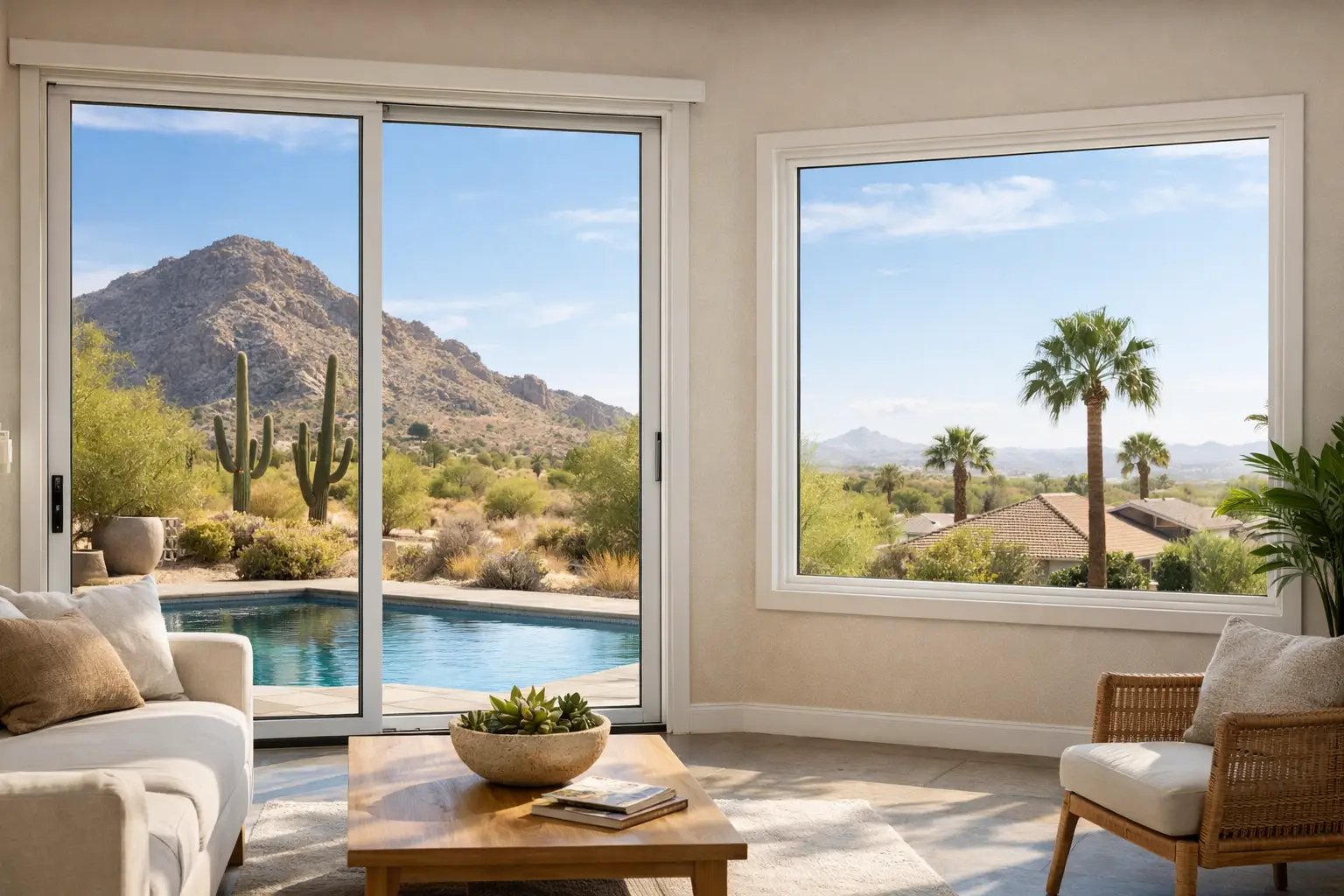
A Phoenix summer can expose every weakness in an older window. Rooms facing west become difficult to use by late afternoon, air conditioners run longer, and flooring, furnishings, and artwork take the brunt of intense sun. The best windows for Arizona heat do more than make a home look updated. They manage solar gain, reduce air leakage, stand up to extreme temperatures, and preserve the finished appearance of the home.
The right answer is rarely a single brand, material, or price point. Window selection should account for a home’s orientation, existing framing, stucco condition, HOA requirements, architectural style, and the homeowner’s priorities. A well-chosen window still needs a precise installation to perform as intended in Arizona’s demanding climate.
What Makes a Window Work in Arizona Heat?
Heat control begins with the complete window system: frame, insulated glass package, weatherstripping, spacers, locks, and installation details. A window may look substantial in a showroom yet deliver disappointing comfort if its frame expands excessively, its glass allows too much solar heat indoors, or gaps remain around the opening.
For Arizona homeowners, the most useful performance figures are U-factor, Solar Heat Gain Coefficient, and air leakage. U-factor measures how readily heat moves through the window. Lower numbers generally mean better insulation. Solar Heat Gain Coefficient, often shown as SHGC, measures how much solar heat passes through the glass. In a hot, sunny climate, a lower SHGC is usually desirable, particularly on west- and south-facing elevations.
Visible transmittance also deserves consideration. Very dark glass can reduce glare and heat, but it can also make a room feel dim. The goal is not to block all daylight. It is to select a balanced coating that protects comfort while retaining the natural light that makes a home feel open.
The Best Windows for Arizona Heat by Frame Material
Vinyl: a practical choice for many replacement projects
Quality vinyl replacement windows are a strong choice for homeowners who want meaningful energy improvement at a sensible investment. Multi-chamber vinyl frames help slow heat transfer, require little ongoing maintenance, and are available in styles suited to many Arizona homes.
Not all vinyl is built to the same standard. In high-heat exposure, frame quality, reinforcement, weld quality, and the manufacturer’s testing matter. Lower-grade products can be more prone to movement or cosmetic wear over time. A carefully specified vinyl window is especially effective for standard replacement openings where budget, efficiency, and a clean finished look are the primary goals.
Fiberglass: stability for demanding exposures
Fiberglass windows offer excellent strength and thermal stability. Because the material experiences comparatively low expansion and contraction, it is well suited to large openings, dark exterior colors, and elevations exposed to prolonged direct sun. It can also provide a slimmer profile than some vinyl options, allowing for generous glass area without sacrificing durability.
The trade-off is cost. Fiberglass often carries a higher initial price, but for homeowners planning to stay in their property or improving a highly exposed façade, its long-term stability can justify the investment. It is a particularly thoughtful option when a project involves custom sizing or a more refined architectural finish.
Thermally improved aluminum: strength with a modern profile
Aluminum remains valuable when a project calls for narrow sightlines, substantial structural strength, or a contemporary design. Traditional aluminum frames conduct heat readily, which is why thermally improved aluminum is the better conversation for Arizona replacement work. Thermal breaks help reduce direct heat transfer through the frame while retaining aluminum’s rigidity and sleek appearance.
This option can work beautifully for large picture windows, modern homes, and openings where frame strength is critical. It should be selected with care, however, because performance varies significantly by product line. The frame’s thermal design and the chosen glass package should be evaluated together, not separately.
Wood-clad and wood-frame windows: character with maintenance considerations
Wood provides natural warmth and can be the right fit for historic, traditional, or high-design homes. It offers good insulating properties, but Arizona sun and dry conditions demand attentive finishing and a properly detailed exterior. For homeowners matching existing architectural details or pursuing a premium interior aesthetic, wood-frame or wood-clad options may be worth considering.
These windows are not typically the lowest-maintenance choice. Their success depends on product quality, protected exterior detailing, and a plan for long-term care. In the right home, though, the visual result can be difficult to match.
Glass Packages Matter as Much as the Frame
A low-E coating is one of the most valuable features in an Arizona window package. The coating is engineered to limit solar heat and ultraviolet exposure while allowing useful daylight into the room. For homes with strong afternoon sun, the right low-E glass can make a noticeable difference in comfort near the window.
Dual-pane insulated glass is the standard starting point for most replacement projects. Depending on orientation and performance needs, homeowners may benefit from enhanced low-E options, tinted glass, or other solar-control configurations. West-facing bedrooms and living rooms often deserve different attention than a shaded north-facing hallway.
Do not assume the darkest tint is automatically best. Excessive tint can alter the home’s appearance from indoors and outdoors and may reduce daylight more than desired. A knowledgeable consultation should compare the actual exposure of each elevation and recommend glass accordingly.
Installation Is Where Window Performance Is Protected
Even a premium replacement window can underperform when it is placed into a compromised opening. Arizona homes often present installation conditions that deserve more than a quick removal and replacement. Older block frames, uneven openings, deteriorated sealant, stucco edges, and prior installation shortcuts can all affect the final result.
A complete installation may require removal of old materials, inspection of the opening, frame corrections, insulation, weatherproofing, and carefully restored exterior and interior finishes. Where appropriate, vapor barriers, tar paper, foam, lath, and stucco repairs help create a properly protected transition between the window and the wall assembly. Interior drywall and trim should be restored with the same attention given to the exterior.
This level of work is especially important when changing window sizes, adding a new window for natural light, or converting an existing opening. Structural modifications, headers, framing, and finish restoration must be planned as one project. The window is only one component of a successful result.
Match the Window Style to How You Use the Room
Fixed picture windows offer expansive views and excellent efficiency because they do not open. They are a smart choice where ventilation is not needed, such as high living room walls or a scenic focal point. Operable windows provide ventilation, but the style should suit the location and daily use.
Casement windows close firmly against weatherstripping and can provide strong airflow when positioned to catch a breeze. Sliding windows are familiar, easy to operate, and often fit wide, horizontal openings common in Arizona homes. Single-hung and double-hung windows suit more traditional elevations, while awning windows can provide ventilation during light rain when properly placed.
Security, ease of cleaning, furniture placement, and window access all influence the right style. A window that looks correct on an elevation but is difficult to reach or operate will not serve the homeowner well over time.
Choose for the Home You Have and the Home You Want
A practical replacement plan can prioritize the hottest rooms first, using quality vinyl windows and targeted solar-control glass. A broader modernization may call for fiberglass or thermally improved aluminum, larger openings, and coordinated exterior finish work. If resale is the immediate priority, consistent sightlines, clean installation details, and a cohesive color selection often matter as much as the performance label.
Greco Roman Windows and Doors approaches these decisions as part of the home, not as a one-size-fits-all product sale. The most effective recommendation considers the existing construction, the sun exposure, the homeowner’s budget, and the level of finish expected after the work is complete.
Before selecting a window, stand in each problem room during its hottest part of the day. Notice where the sun enters, which walls feel warm, how the existing windows operate, and whether the opening itself shows signs of age. Those details create a better starting point for a free in-home consultation and a window plan built to bring lasting comfort to the home.