
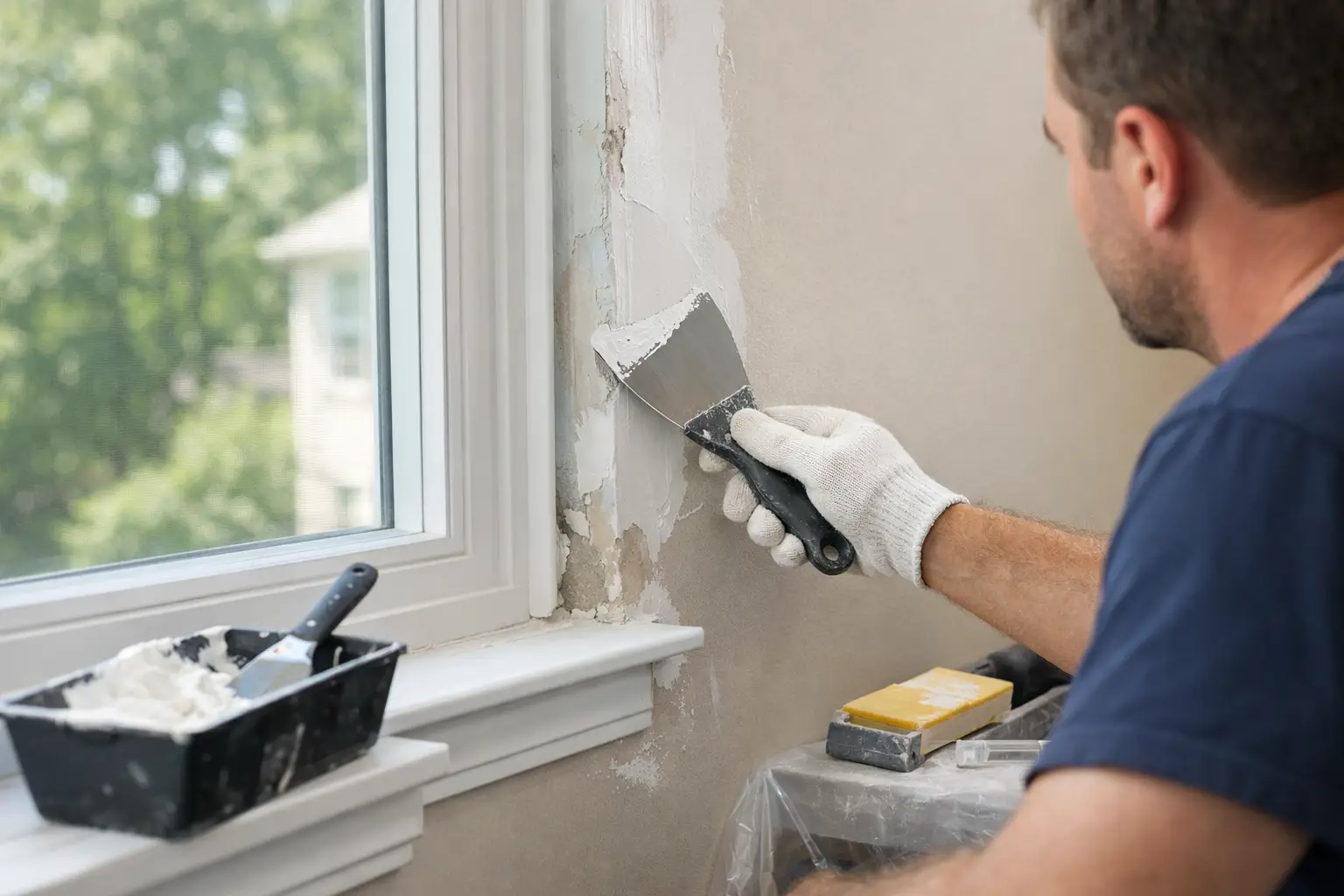
A replacement window can look excellent from the driveway and still leave the room unfinished if the surrounding wall is not restored with equal care. Drywall repair after window replacement is where a project’s craftsmanship becomes visible at eye level: along the jamb, beneath the sill, at the corners, and wherever the old trim concealed years of movement or previous repairs.
For Arizona homeowners, this work is more than a cosmetic final step. A proper interior finish helps complete the air-sealing work around the new unit, restores clean architectural lines, and prevents a high-quality window installation from looking like an interruption in an otherwise polished room. The required scope depends on the home, the window type, and whether the opening is being modified, but the goal is consistent: the new window should look like it belongs there.
Why Window Replacement Can Affect Drywall
Removing an old window is not always a simple exchange of one frame for another. Older homes may have brittle drywall at the perimeter, uneven framing, layers of trim, or previous patchwork that only becomes apparent once the existing unit is removed. In block construction common throughout the Phoenix area, the interior return may also meet the frame differently than it would in a wood-framed wall.
Even when an opening remains the same size, installers may need access to the rough opening to inspect framing, remove deteriorated materials, set the new unit square and plumb, and apply appropriate insulation and sealing materials. That process can disturb a narrow strip of drywall or reveal gaps that were hidden behind casing.
The repair scope becomes more involved when a homeowner chooses a larger window, lowers a sill, converts a window configuration, or adds a new opening for natural light. Structural alterations can require changes to framing, drywall returns, texture, trim, and sometimes the exterior stucco system. These are precisely the situations where installation and finish restoration should be coordinated as one project rather than treated as unrelated trades.
What Quality Drywall Repair After Window Replacement Includes
A finished wall is not simply a patch covered with paint. The strongest results begin before the repair compound is applied. The installer should confirm that the new window is properly secured, that gaps around the frame have been insulated as appropriate, and that weatherproofing responsibilities have been addressed on the exterior side. Drywall should not be used to disguise an unresolved installation issue.
Inside, damaged or loose gypsum board is cut back to stable material. If the removal created an exposed edge or a wider gap, the repair may require new drywall pieces, backing, corner bead, or a rebuilt return. The surface is then taped, coated, feathered, sanded, and prepared to blend into the adjacent wall.
Texture matching deserves particular attention. A smooth contemporary wall, knockdown texture, orange peel, hand-troweled finish, and older textured surfaces each call for a different approach. A patch can be structurally sound yet still stand out under afternoon sunlight if its texture is too heavy, too light, or confined to an obvious rectangle around the window.
The final transition also matters. Depending on the window style and the home’s design, the interior may receive new casing, a drywall return, or a combination of trim and finished jamb extensions. Clean, even reveals around the window create the visual order homeowners expect after investing in custom replacement products.
The difference between a patch and a finished restoration
A basic patch may cover the immediate damage, but a complete restoration considers how the repaired area reads as part of the room. Are the corners straight? Does the sill line remain level? Does the wall texture continue naturally? Has the paint been blended or has the homeowner been clearly advised where painting will be needed?
There are practical limits. Exact paint matching is difficult when existing paint has faded from Arizona sun exposure or when a wall has been touched up many times. In those cases, painting the full wall often produces the most consistent appearance. A reputable project plan should explain that possibility before work begins, not after the repair is complete.
When More Than Minor Drywall Work Is Needed
Small perimeter repairs are common, particularly when existing trim is removed carefully and the new unit fits the opening well. Other conditions call for broader finish work. Water staining, soft drywall, recurring cracks at the corners, deep gaps between the wall and old frame, or out-of-square openings can point to issues that deserve closer inspection.
Cracks do not automatically mean structural failure. Homes settle, materials expand and contract, and older installations can leave stress points around openings. Still, a repair team should determine whether a crack is isolated surface damage or evidence of framing movement, moisture exposure, or an improperly supported opening. Covering it without addressing the cause may lead to a repeat repair later.
A window opening modification is another clear reason to plan for comprehensive interior work. Enlarging an opening may alter the drywall well beyond the original frame line. Adding a header, reframing the sides, or changing the sill height affects the wall assembly, and the finish needs to be rebuilt in a way that looks intentional from every angle.
For homeowners preparing to sell, this attention to detail carries real value. Buyers notice uneven texture, cracked corners, and trim that does not sit flat. They may not know the technical reason behind what they see, but they recognize an unfinished look. A clean window-and-wall transition supports the impression that the property has been maintained with care.
Arizona Conditions Make Installation Details Matter
Extreme heat places real demands on a home’s exterior envelope. Replacement windows can improve comfort and help reduce cooling demands, but the surrounding installation details matter just as much as the product selection. Proper gaps, insulation, flashing practices where applicable, and exterior weatherproofing work together to manage heat, air movement, and moisture intrusion.
Drywall repair occurs on the interior side of that larger system. It should follow, not replace, careful sealing around the frame. When the project includes exterior stucco restoration, experienced coordination is especially valuable. Stucco, lath, foam, tar paper, vapor-management layers, framing, and drywall each have a role. Completing one portion without understanding the next can create delays, uneven finishes, or unnecessary disruption for the homeowner.
This is why the lowest initial installation price is not always the lowest overall project cost. A quote that excludes restoration work can leave the homeowner arranging separate finish trades after the window crew departs. That approach can work for a simple, well-preserved opening, but it may not be the best fit for an older home, a custom window configuration, or a project where a refined final appearance is the priority.
Questions to Settle Before Work Begins
The clearest projects define the finish scope in advance. Homeowners should understand whether interior trim will be retained or replaced, how much drywall disturbance is anticipated, who is responsible for texture matching, and whether painting is included. It is also worth asking how unforeseen damage will be documented if the old window reveals concealed deterioration.
A detailed in-home consultation should also account for the room itself. A bedroom with a smooth painted wall and wide painted casing has different finish requirements than a kitchen with tiled returns or a living room with prominent textured plaster. The window style, wall condition, and desired design should inform the installation plan from the beginning.
At Greco Roman Windows and Doors, complete project planning can include the framing, weatherproofing, stucco, and drywall considerations that surround a replacement window. That approach allows homeowners to select an installation package that reflects the complexity of their home, their budget, and the level of finish they expect.
A Finished Window Should Look Intentional
The best drywall repair does not call attention to itself. It leaves a straight, clean transition around the new window, supports the room’s existing design, and gives the homeowner confidence that the work behind the wall received the same care as the view through it.
Before approving a window replacement project, look beyond the frame and ask how the wall will be restored. A thoughtful answer protects the value of the installation and helps ensure that, once the room is cleaned and the light comes back in, the only thing you notice is the window itself. Schedule a free in-home consultation to discuss a complete, tailored installation plan for your home.