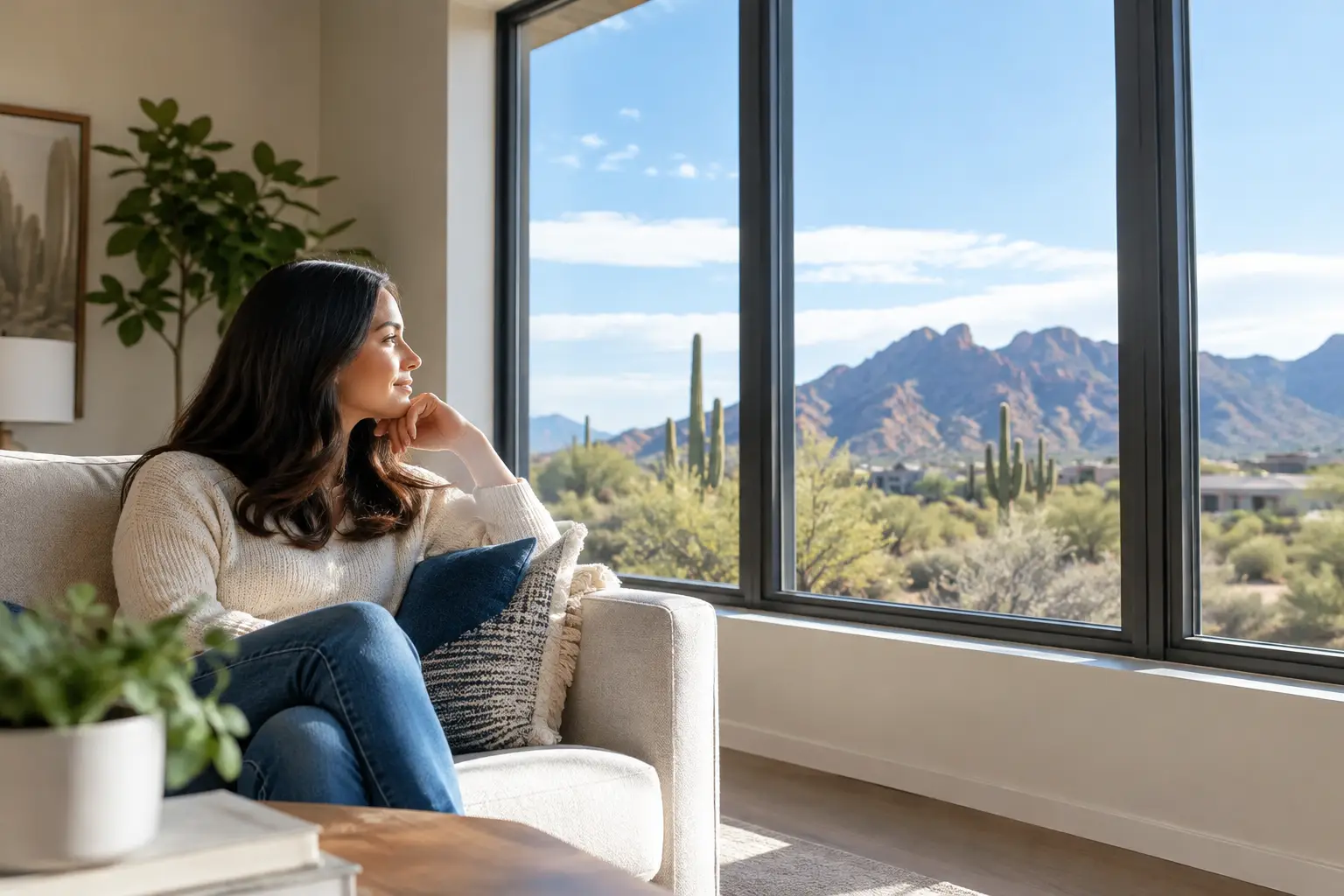
A sunlit room should feel welcoming, not like a slow test of endurance for your hardwood floors, furniture, artwork, and area rugs. In Phoenix-area homes, intense sunlight can change colors noticeably over time, especially near large south- and west-facing openings. Modern windows reduce fading by managing the ultraviolet radiation, visible light, and heat that enter your home – but the right result depends on the glass package, the window design, and the quality of the installation.
Replacement windows are not a promise that fabrics and finishes will never age. They are a practical way to greatly slow the process while improving comfort, cooling efficiency, and the everyday enjoyment of your rooms.
Why sunlight fades floors, fabrics, and furnishings
Fading is not caused by one thing alone. Ultraviolet rays are the most familiar culprit because they break down dyes, pigments, and surface finishes. Yet visible light and solar heat also contribute. That is why a room can experience fading even when the window glass blocks a substantial amount of UV radiation.
Arizona homes face a particularly demanding combination: long periods of bright sun, elevated outdoor temperatures, and large openings designed to capture mountain views or connect living areas to patios. A leather chair, wood dining table, or favorite rug placed near an unprotected window can receive years of concentrated exposure in a relatively short period.
The goal is not to make a home dark. It is to select windows that admit useful natural light while limiting the parts of solar energy most likely to damage interiors and overheat the room.
How replacement windows reduce fading
The most effective replacement windows use insulated glass units with specialized coatings. Low-emissivity, or Low-E, coatings are microscopically thin layers applied to glass that help control solar energy. In a hot climate, the right Low-E glass can reduce heat gain and block a large portion of ultraviolet radiation without making the view feel closed off.
Many high-performance window packages block up to 99 percent of UV rays. That is meaningful protection, but it should be understood correctly. Because visible light and heat still play a role in discoloration, no ordinary residential window can stop fading entirely. The practical benefit is a slower, more manageable rate of change for materials exposed to daylight.
Insulated glass also matters. Two panes separated by a sealed airspace improve thermal performance compared with older single-pane windows. This helps stabilize the temperature near the opening, reducing the punishing heat that can dry, warp, or prematurely age certain finishes and furnishings.
Glass tint, coatings, and light transmission
Not every room needs the same glass. A bright west-facing family room may benefit from a more solar-control-focused coating, while a shaded breakfast nook may call for higher visible light transmission. The best choice balances protection, daylight, exterior appearance, and the way you use the room.
A darker tint can reduce glare and solar gain, but it may also alter the color of daylight indoors. Some homeowners prefer the clearer look of a neutral Low-E coating, particularly in rooms with views or detailed interior color schemes. Others prioritize stronger heat control for exposed elevations. A tailored recommendation should account for orientation, overhangs, landscaping, interior finishes, and the size of each opening.
Laminated glass can provide another layer of UV protection in selected applications. It may be worth considering for rooms with valuable artwork, delicate fabrics, or exceptionally strong direct exposure. It can also support sound reduction and security objectives, depending on the product configuration.
Window performance numbers that matter in Arizona
Window labels can feel technical, but a few ratings give homeowners a useful foundation for decision-making. The Solar Heat Gain Coefficient, or SHGC, indicates how much solar heat passes through a window. Lower SHGC values are often beneficial in Arizona, especially on sun-heavy exposures, because they can help reduce cooling demand.
U-factor measures how readily a window transfers heat. Lower values generally indicate better insulation. While Arizona homeowners often focus on summer performance, a capable insulating package also improves comfort during cooler desert nights.
Visible Transmittance, or VT, describes how much visible light enters through the glazing. A lower number can help moderate brightness and glare, but a window that is too dark for the room may work against the reason you wanted more natural light in the first place.
These ratings should not be selected in isolation. The ideal performance target for a shaded north-facing opening may differ from the best choice for a large west-facing wall of glass. An experienced in-home consultation helps turn product specifications into a window plan that suits the house rather than a generic checklist.
Installation protects performance beyond the glass
A premium window can only perform as intended when it is properly integrated into the home. Older Arizona properties often have block frames, stucco exteriors, aging trim, or previous installation details that deserve close inspection before replacement begins.
A careful installation team evaluates the condition of the opening, frame integrity, flashing details, and weather barrier before placing a new unit. When the scope calls for it, that can include vapor barriers, tar paper, foam, lath, stucco restoration, drywall repair, and finish work. These details help protect against air leakage and water intrusion while creating a polished final appearance.
This matters for fading because uncontrolled gaps and poor seals can create hot spots, drafts, and uneven indoor conditions near the window. More broadly, it matters because the project should preserve the home’s exterior and interior as carefully as it improves its performance. Greco Roman Windows and Doors approaches replacement work with old-world-inspired attention to fit, weatherproofing, and finish restoration, particularly when an opening requires more than a straightforward insert.
Where fading protection makes the biggest difference
Prioritize rooms where sunlight falls directly on valuable or difficult-to-replace finishes. Wood flooring near patio doors, built-in cabinetry beside wide picture windows, upholstered furniture in a great room, and artwork on a sun-facing wall are common pressure points.
South- and west-facing windows often deserve the closest review in Arizona. Morning sun from the east can still be intense, while northern exposures may allow more flexibility depending on shade and surrounding structures. The actual pattern inside your home is more useful than a compass direction alone. Notice where sunlight lands at different times of day and seasons before finalizing the design.
Exterior shading, such as well-designed overhangs, mature landscaping, or covered patios, can complement window performance. Interior shades and draperies add another line of defense, particularly during the brightest hours. They should be viewed as support for high-performance windows, not a substitute for them.
Choosing frames that support long-term comfort
The frame material does not directly block UV rays the way glazing does, but it affects durability, insulation, maintenance needs, and the overall performance of the opening. Vinyl can offer strong value and dependable thermal performance. Fiberglass is valued for strength and dimensional stability. Wood-frame windows can deliver traditional character, while thermally improved aluminum can suit contemporary designs and larger glass areas.
The right choice depends on the home’s architecture, budget, HOA requirements, desired sightlines, and exposure to heat. A high-quality frame paired with the correct glass package is usually more valuable than focusing on one feature alone.
For homeowners planning a broader modernization, this is also an opportunity to reconsider window size, operation, and placement. Adding or enlarging openings can improve daylight and indoor-outdoor living, but it should be planned thoughtfully so added light does not create avoidable glare or fading concerns.
A practical way to plan your replacement project
Start by identifying the rooms with visible fading, uncomfortable afternoon heat, or persistent glare. Photograph the affected areas and note the time of day direct sun enters. During a consultation, discuss the materials you want to protect, whether preserving views is a priority, and how much natural light feels right for each room.
Ask for an explanation of the proposed Low-E coating, SHGC, U-factor, and visible light level rather than choosing solely by frame color or initial price. Also ask how the existing opening will be prepared, sealed, and restored. A detailed scope is especially valuable on stucco homes and older properties, where the surrounding construction can be as important as the replacement unit.
The best window project does more than make a room look updated on installation day. It helps your home stay cooler, protects the finishes you selected with care, and lets you enjoy Arizona sunlight on terms that make sense for the way you live. Schedule a free in-home consultation when you are ready to evaluate the light, heat, and fading concerns specific to your home.