
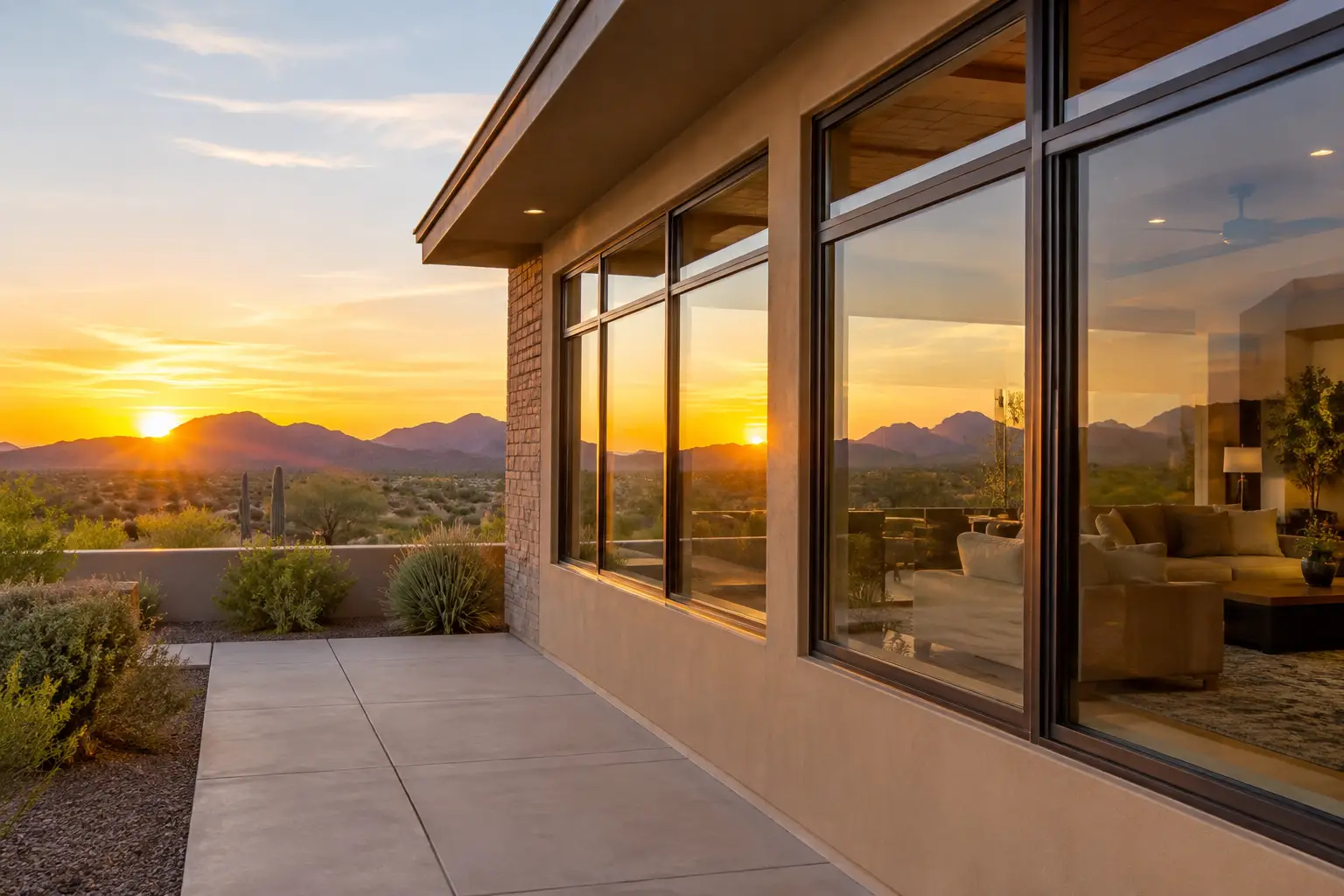
West-facing rooms can become the most difficult spaces in an Arizona home to keep comfortable. By late afternoon, the sun is low, intense, and aimed directly at the glass. The best west facing windows balance solar control, clear views, durable framing, and precise installation so your home feels brighter without becoming harder to cool.
For Phoenix-area homeowners, this choice is not simply about replacing an old window with a newer one. It is about managing intense radiant heat, limiting glare, protecting interior finishes, and ensuring the opening is properly sealed against wind-driven rain and outdoor dust. A well-selected window can improve comfort immediately, but its full value depends on the glass package, frame material, window style, and the condition of the surrounding wall.
Why West-Facing Windows Need a Different Strategy
Morning sun is generally easier to manage because it is less intense and arrives when outdoor temperatures are lower. Western exposure is different. It combines direct sunlight with the hottest part of the day, putting extra demand on your air conditioning system just as your home is trying to hold a comfortable indoor temperature.
That does not mean every west-facing opening should be made smaller or eliminated. West-facing windows can provide beautiful desert sunsets, valuable natural light, and strong curb appeal. The goal is to control unwanted heat gain while preserving the architectural character of the home.
The most relevant performance measurement is solar heat gain coefficient, often shortened to SHGC. A lower SHGC means less of the sun’s heat passes through the window. For many Arizona homes, west-facing glass benefits from a lower SHGC than windows on shaded or north-facing walls. The right number still depends on the home’s design, existing overhangs, nearby trees, interior shading, and how the room is used.
A media room that receives late-day sun may need a more aggressive solar-control package than a formal living room with deep exterior shade. This is why a thoughtful in-home assessment is more useful than choosing a window solely from a brochure.
The Best West Facing Windows Start With the Glass
The insulating glass unit is the primary defense against afternoon heat. Dual-pane insulated glass with a high-performance low-E coating is the standard starting point for most replacement projects. Low-E coatings are engineered to reflect a portion of infrared heat while still allowing useful daylight into the room.
For a west-facing elevation, a solar-control low-E option is often the better fit. It can reduce heat gain and help limit fading on flooring, furniture, artwork, and window coverings. The trade-off is that some stronger coatings slightly reduce visible light transmission or create a subtle exterior tint. A good selection should make the room more comfortable without making it feel unnecessarily dark.
Argon gas between panes can further improve insulating performance. It is not a substitute for the right low-E coating, but it is a worthwhile part of a well-built insulated glass package. In homes affected by street noise, laminated glass may also be worth considering. Its added interlayer can help reduce certain outside sounds while adding another layer of security-conscious performance.
Homeowners should look beyond a single efficiency rating. U-factor measures how readily heat moves through the entire window assembly, while SHGC focuses on solar heat entering through the window. Both matter. On the west side of an Arizona home, a window with a favorable U-factor but excessive solar gain may still leave the room uncomfortable in the afternoon.
Clear Glass Is Rarely the Best Choice on the West Side
Clear, untreated glass allows generous daylight, but it also gives the western sun very little resistance. In a climate with mild summers, that may be acceptable. In the Valley, it often creates glare, hot spots near seating areas, and a noticeable temperature difference from one side of the room to the other.
A neutral low-E coating is usually a more balanced solution for homeowners who value natural color and visibility. If the room receives severe direct exposure, a more solar-selective coating may provide better comfort. The best choice is the one that fits the elevation rather than applying the same glass package to every window in the house.
Choose a Frame That Holds Up to Arizona Heat
The frame contributes to insulation, operation, appearance, and long-term durability. It also needs to tolerate wide temperature swings without compromising the seals around the opening.
Vinyl replacement windows remain a practical option for many homeowners. Quality vinyl frames are low-maintenance, energy-efficient, and available in styles that complement both traditional and modern homes. They can be an excellent value when the existing opening is square, structurally sound, and suited to a straightforward replacement.
Fiberglass frames offer a premium option for homeowners seeking strength, dimensional stability, and a refined painted appearance. Fiberglass performs particularly well in demanding heat because it expands and contracts at a rate closer to glass than many other frame materials. This can support long-term performance where large west-facing openings receive prolonged sunlight.
Thermally improved aluminum is also worth consideration when a home calls for slim sightlines, large expanses of glass, or a contemporary profile. Standard aluminum can transfer heat readily, so the thermal break is essential. Properly specified thermally improved aluminum can deliver modern aesthetics without accepting the drawbacks of older aluminum window systems.
Wood-frame windows remain appropriate for select architectural styles, especially when a home requires a traditional interior finish. They demand careful protection from the elements and attentive installation details, but they can deliver exceptional character in the right project.
Window Style and Exterior Shade Matter Too
A high-performance window works best as part of a complete west-wall strategy. Fixed picture windows provide broad views and few moving parts, making them a strong choice where ventilation is not needed. Casement windows can create a tight weather seal and work well for controlled ventilation. Sliding windows are familiar and practical, though hardware quality and correct adjustment are important for easy operation over time.
Exterior shade can significantly improve results. Existing roof overhangs, covered patios, pergolas, landscaping, and architectural screens reduce direct sun before it reaches the glass. Interior blinds and drapes help with privacy and glare, but they address heat after it has already entered the room. When possible, exterior shade paired with solar-control glass delivers a more effective solution.
This is also the point to consider whether an opening should be resized, divided into multiple units, or redesigned with a door system that improves indoor-outdoor living. Structural alterations require careful planning, particularly in stucco homes where framing, exterior finish restoration, and weatherproofing all need to be managed as one scope of work.
Installation Is What Protects the Investment
Even the best west facing windows will underperform if the installation leaves gaps, weak flashing details, or unaddressed wall damage. Replacement work should begin with an honest assessment of the existing frame, sill, stucco condition, and signs of prior water intrusion.
Some projects are well suited to an insert-style replacement. Others need a full-frame approach that exposes the original opening, allows damaged materials to be corrected, and creates an opportunity to install new weatherproofing components. The appropriate method depends on the existing construction and the homeowner’s goals, not simply on the lowest initial price.
For Arizona stucco exteriors, details around the perimeter matter. Proper flashing, vapor barriers, tar paper, foam and lath, sealants, and stucco restoration help direct water away from the structure while preserving the finished appearance of the home. Interior drywall, casing, paint, and trim may also require skilled finish work after the new unit is set.
This is where an experienced installation team creates a meaningful difference. Greco Roman Windows and Doors approaches replacement as a complete construction project, not merely a product placement. The goal is a finished opening that looks intentional, operates correctly, and protects the home behind the visible frame.
How to Make the Right Selection for Your Home
Start by standing in the room during the late afternoon. Notice where glare lands, which areas become uncomfortable, and whether the heat is concentrated at one opening or across the full wall. Consider how the room is used, whether exterior shading is feasible, and how much natural light you want to retain.
Then compare complete window packages rather than frame samples alone. Ask about U-factor, SHGC, low-E options, visible light transmission, gas fill, warranty coverage, and the installation scope. If the project involves older framing, cracking stucco, or a desire to enlarge an opening, make sure those construction needs are included in the estimate.
A window choice should support the way you live in the home, not force you to keep shades closed through every Arizona afternoon. Schedule a free in-home consultation to evaluate your west-facing exposure and develop a window solution built for comfort, performance, and a polished finished result.