
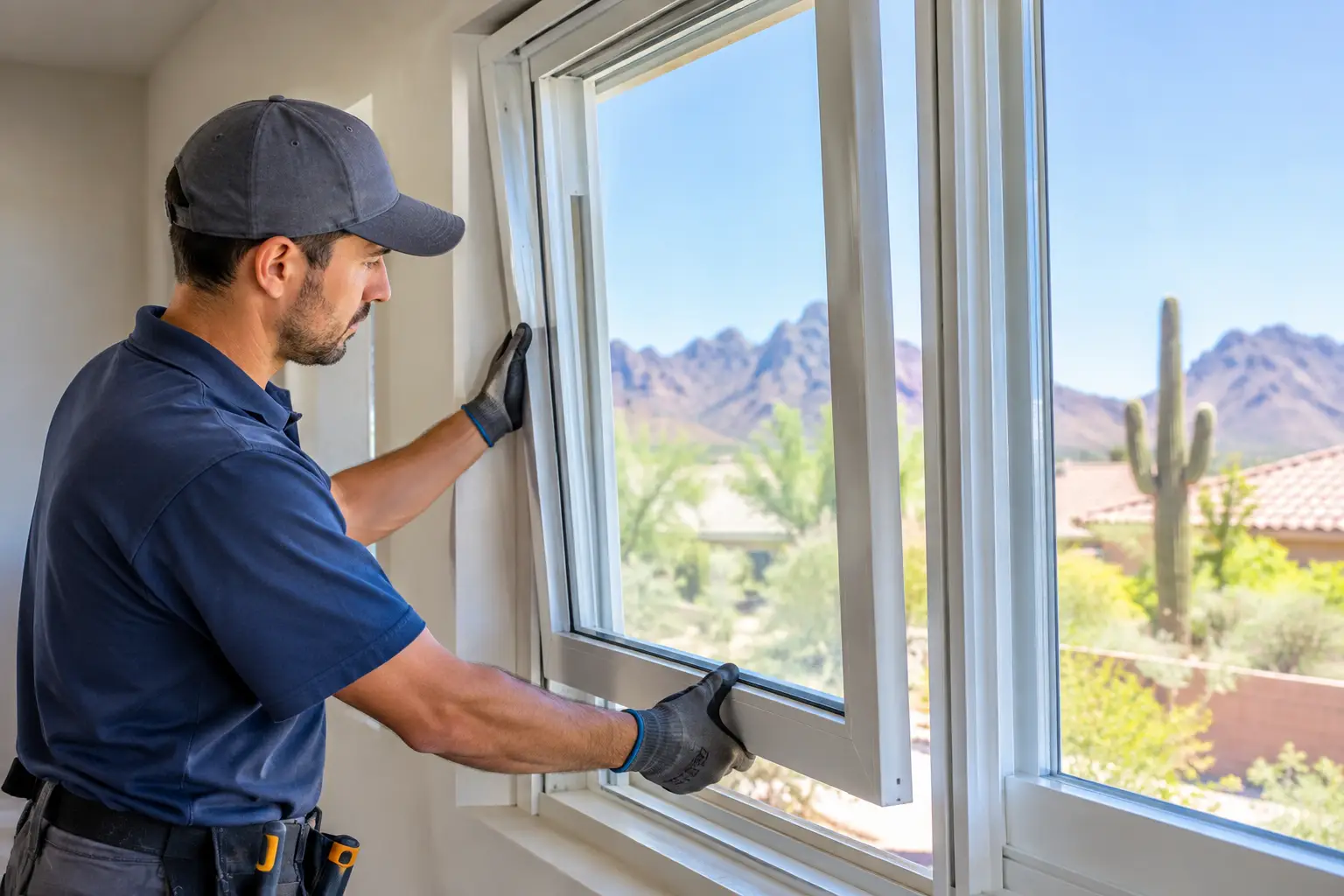
A drafty window in an Arizona home is more than a small comfort issue. When intense summer heat works its way through loose frames, worn seals, or poorly insulated openings, your air conditioner has to work harder to maintain a livable indoor temperature. Knowing how to replace drafty windows starts with identifying whether the problem is the window itself, the installation around it, or an older wall opening that needs more complete attention.
For many Phoenix-area homes, especially those with original windows, the right replacement project improves cooling efficiency, outside noise control, security, and curb appeal at the same time. The lasting result depends on choosing a climate-appropriate window and installing it with careful weatherproofing, proper frame preparation, and finish restoration that respects the home’s existing stucco, drywall, and trim.
First, Find the Source of the Draft
Not every draft means the same thing. Air may enter around an aging sash, through compressed weatherstripping, at a deteriorated frame joint, or through gaps between the window frame and the surrounding wall. Older aluminum windows are often a concern in Arizona because metal readily transfers heat, while aging single-pane units can make rooms feel hot even when no obvious air movement is present.
A professional assessment should look beyond the operating panel. The installer should inspect the exterior sealant, interior trim, wall condition, drainage path, and the structure of the opening. In stucco homes, the visible frame can hide failed flashing or gaps in the weather-resistant barrier behind the finish. Replacing a window without addressing those conditions can leave the home vulnerable to recurring drafts and moisture intrusion.
It also helps to distinguish between a localized concern and a whole-home performance problem. One difficult window may need a targeted replacement. If several windows are hard to operate, rooms heat up unevenly, and cooling bills rise every summer, a coordinated window replacement plan may offer better long-term value.
Choose Replacement Windows for Arizona Heat
The best replacement window is not simply the one with the lowest initial price. It should suit the home’s architecture, sun exposure, budget, and how long you plan to own the property. A window facing harsh afternoon sun needs different consideration than one shaded by a covered patio.
Vinyl replacement windows are a practical choice for many homeowners because they offer strong insulating performance, low maintenance, and a broad range of styles. Fiberglass can provide excellent stability and durability in demanding temperatures. Wood-frame windows may be appropriate for homes where architectural character and interior finish detail are central to the project, while thermally improved aluminum can be an attractive option for contemporary designs and larger glass areas.
Energy performance should be evaluated as a complete system. Look at the frame, insulated glazing package, low-emissivity coatings, solar heat gain control, and air infiltration ratings. In Arizona, reducing solar heat gain is often as important as insulating against cold weather. The right glass package can help limit heat entering sun-facing rooms while preserving the natural light homeowners want.
Style matters, too. Casement windows can seal tightly when closed and may improve ventilation control. Sliding windows are popular and practical, but quality rollers, interlocks, and weatherstripping make a meaningful difference. Picture windows bring in expansive views and daylight, while a carefully planned combination of fixed and operable units can make a dated elevation feel more intentional.
How to Replace Drafty Windows Without Overlooking the Opening
A proper replacement begins with exact measurements and an honest evaluation of the existing opening. Some homes can receive a pocket replacement, where a new unit is installed within a sound existing frame. This approach can be efficient and preserve interior finishes, but it is not the right answer if the old frame is damaged, undersized, poorly insulated, or concealing water-related deterioration.
A full-frame replacement removes the existing unit down to the rough opening. It creates an opportunity to inspect the framing, correct deficiencies, improve insulation, and install new weatherproofing layers before the new window is set. This is often the more complete solution for homes with aging frames, visible exterior damage, significant drafts, or plans for a larger and more modern window design.
For Arizona stucco exteriors, this work requires particular care. Removing a window can involve cutting back stucco, protecting surrounding finishes, installing or repairing tar paper and vapor barriers, integrating flashing, applying foam and lath where needed, and restoring the exterior finish so the completed opening looks appropriate to the home. Inside, drywall, casing, paint, and texture may also need attention.
That construction scope is why homeowners should compare installation methods, not just window brands. A premium window cannot perform as intended if the frame is out of square, perimeter gaps are not properly sealed, or the exterior weather barrier is interrupted. Impeccable craftsmanship is found in those details that disappear once the project is complete.
What a Complete Installation Should Include
A dependable replacement process begins with a clear in-home consultation. The contractor should discuss which rooms are uncomfortable, how the windows operate, the home’s exterior construction, HOA requirements when applicable, and your priorities for appearance, performance, resale, or budget.
Before installation, the team should confirm product selections, field measurements, glass specifications, and opening conditions. During the work, your property should be protected, old materials removed carefully, and each new unit checked for plumb, level, square, and smooth operation. The perimeter then needs insulation and sealing that account for expansion, drainage, and the local climate rather than relying on a quick cosmetic bead of caulk.
A comprehensive project may also include these connected services:
- Structural frame corrections when the opening has shifted or deteriorated
- Stucco, drywall, trim, and paint restoration around the replacement area
- New weather-resistant barriers, flashing details, and vapor barrier integration
- Opening modifications for larger windows, added daylight, or improved indoor-outdoor views
The scope depends on the home. A straightforward replacement in a sound opening may require less finish work, while a major modernization project may involve new window sizes, reframed walls, and carefully matched stucco restoration. Both deserve the same disciplined attention to fit, protection, and final appearance.
Balance Budget, Appearance, and Long-Term Value
Replacement windows are a property investment, so the best choice is rarely one-size-fits-all. A homeowner preparing to sell may prioritize refreshed curb appeal, smooth operation, and a polished finish that supports buyer confidence. Someone planning to remain in the home may place greater value on heat control, quieter interiors, and higher-performing materials that reduce strain on the cooling system over time.
Budget-conscious projects can still receive quality installation and meaningful energy improvements. More extensive projects may justify full-frame work, upgraded glazing, custom colors, larger openings, or architectural window configurations. The key is to receive an estimate that clearly separates the product, installation method, finish restoration, and any structural or stucco work required.
Ask how the installer handles unexpected conditions found after removal. Older homes sometimes reveal damaged framing, inadequate prior weatherproofing, or exterior finish issues that were not visible during the initial inspection. Clear communication about those possibilities protects the homeowner from surprises and helps ensure the finished work is built to last.
Know When It Is Time to Act
A draft is often the first warning sign, but it is not the only one. Consider replacement when windows rattle in their tracks, stick during operation, show visible gaps, allow excessive outdoor noise, or leave rooms noticeably hotter near the opening. Fading furnishings near sun-facing windows and persistent condensation can also point to an underperforming window system.
If your windows are affecting comfort, cooling costs, or confidence in your home’s exterior, a detailed assessment is more useful than another temporary fix. Greco Roman Windows and Doors can evaluate the window, the opening, and the finish work around it, then recommend a tailored path based on your home’s construction and goals. Schedule a free in-home consultation and give your home the careful, climate-ready workmanship it deserves.