
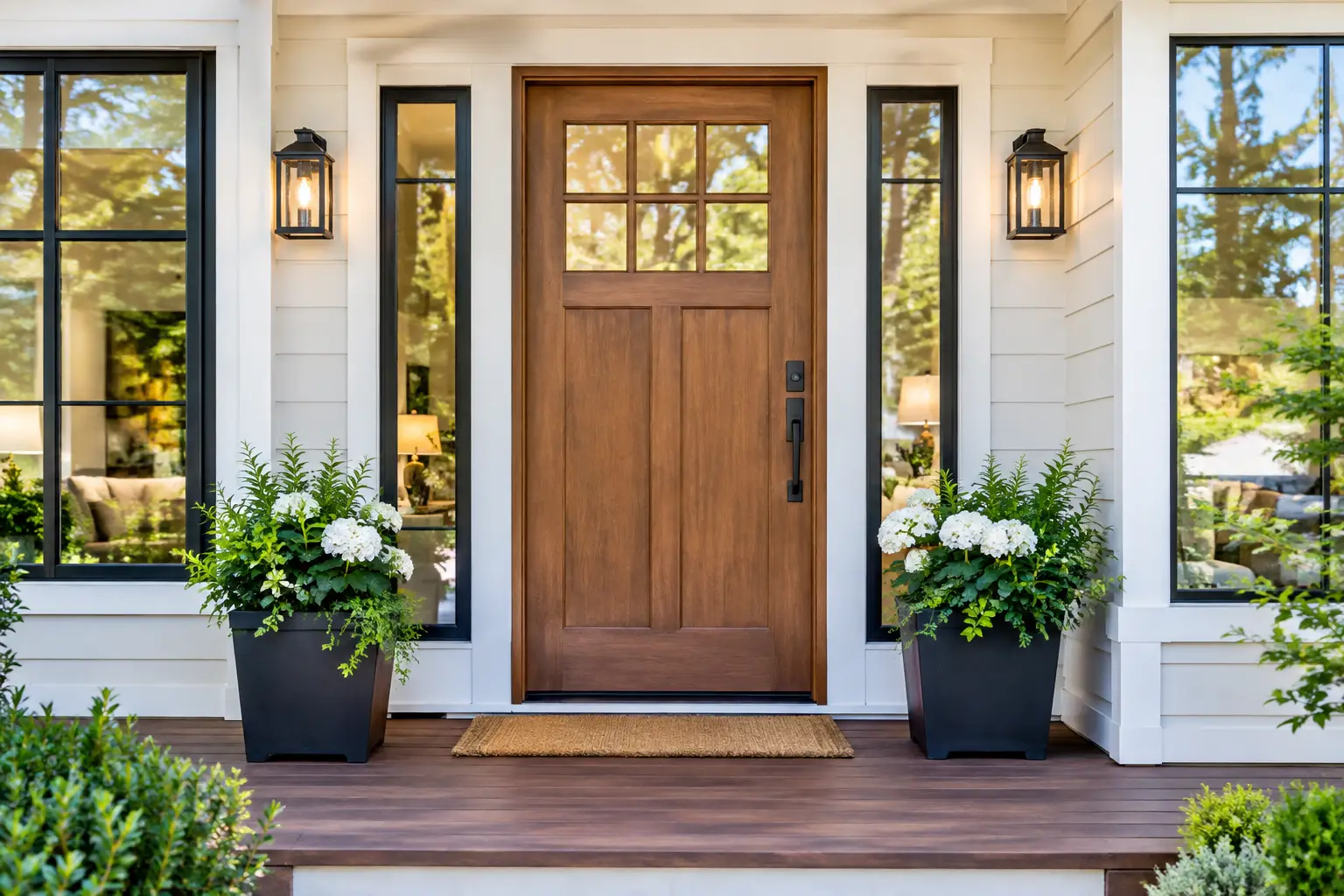
A prospective buyer may spend only a few seconds at the front walk before forming an opinion about the entire property. A faded, hard-to-close, or visibly worn entry door can make an otherwise cared-for home feel dated. Well-chosen entry doors for resale do the opposite: they establish curb appeal, signal security, and suggest that the home has been maintained with care.
For Arizona homeowners preparing to sell in the near future, the goal is not necessarily to install the most expensive door available. It is to make a measured improvement that fits the home, suits the neighborhood, withstands the climate, and presents a polished first impression from listing photos through the final walkthrough.
Why Entry Doors Carry Outsized Resale Value
The front door is a small portion of the exterior, but it sits at the center of nearly every arrival. Buyers see it when they pull up to the home, walk in for a showing, and stand at the threshold waiting for an agent to open the lockbox. If the door sticks, the frame is damaged, or gaps are visible around the perimeter, the concern is not limited to the door itself. Buyers may wonder what other maintenance has been deferred.
A new entry system can help remove that uncertainty. It can improve the visual balance of the facade, provide a firmer and quieter close, strengthen the lock area, and reduce air movement at the opening. In Phoenix-area homes, where intense sun and heat place constant demands on exterior materials, a door that looks straight, operates smoothly, and is properly weather-sealed carries practical value beyond appearance.
That does not mean every replacement produces the same return. Resale value depends on the home’s price point, the condition of surrounding properties, the age of the existing door, and the quality of the installation. A premium door installed poorly can still create draft issues, water intrusion risk, damaged stucco, and an unfinished look. Buyers respond to the complete result, not merely the name on a product label.
Choosing Entry Doors for Resale Without Overbuilding
The best resale-focused door usually feels appropriate rather than extravagant. A modest ranch home with a simple exterior may benefit most from a clean, insulated fiberglass slab in a warm neutral color. A higher-end home in Scottsdale or Paradise Valley may call for a more architectural design, sidelites, a larger pivot-style presentation, or a wood-grain finish that complements stone, stucco, and landscaping.
The key is restraint. A door should provide an upgrade without competing with the home’s architecture. Oversized decorative glass, an aggressive color choice, or an ornate style that clashes with the rest of the exterior can narrow buyer appeal. A classic profile, quality hardware, and a finish that coordinates with exterior trim tend to serve a broader audience.
Fiberglass: A Strong All-Around Resale Choice
Fiberglass entry doors are often a practical choice for Arizona resale projects because they can deliver an upscale appearance with dependable thermal performance. Many designs reproduce the look of stained or painted wood while avoiding some of the movement and maintenance concerns associated with natural wood in prolonged heat and sun exposure.
Fiberglass also offers flexibility. Homeowners can select smooth contemporary surfaces, traditional raised-panel designs, or realistic wood-grain textures. It is particularly useful when a home needs a visible curb-appeal improvement but the seller wants a material built for long-term performance rather than a cosmetic update alone.
Steel: Value, Security, and Clean Design
Steel entry doors can be an excellent fit when security and budget are leading priorities. A properly finished steel door offers a crisp, clean appearance and a solid feel at the threshold. It may be especially appropriate for investment properties, first-time buyer markets, or homes where the existing entry is visibly compromised and the objective is a sensible, durable replacement.
The trade-off is that surface damage and finish quality deserve attention. In Arizona’s climate, the door should have an appropriate factory finish and be protected by a properly designed overhang whenever possible. A lower initial cost is only a value if the completed system is well sealed, aligned, and finished to complement the home.
Wood and Aluminum Options for Distinctive Homes
Wood doors can create an exceptional statement on the right home, particularly where architecture and price point support the investment. Their warmth and detail can be difficult to duplicate. However, homeowners planning a near-term sale should be realistic about upkeep, sun exposure, and the need for a protected entry condition. Wood is not the automatic resale answer for every Arizona property.
Thermally improved aluminum systems may be appropriate for more contemporary homes, especially where clean sightlines and larger glass areas are part of the design. These systems require precise measurement, structural awareness, and careful water management. They are best selected as part of a complete architectural plan, not as a quick swap into an opening that was never designed for them.
The Details Buyers Feel, Even When They Do Not Name Them
A buyer may not ask whether the installer used a vapor barrier or whether the frame was properly flashed, but they notice the results. The door closes without force. The reveal around the slab is even. The threshold feels solid underfoot. The weatherstripping compresses correctly, and no bright line of daylight appears at the edges.
Those details begin behind the visible trim. Older Arizona homes can present uneven framing, deteriorated block frames, cracked stucco, or openings altered by previous work. Installing a new door without addressing those conditions can leave the same underlying problem concealed behind new materials.
A complete replacement approach may include removal of compromised framing, correction of the opening, new construction-grade weatherproofing, tar paper integration, foam, lath, stucco repair, drywall restoration, and finish work. The necessary scope depends on the home, but it should be evaluated before the order is placed. A careful in-home consultation helps prevent surprise change orders and protects the appearance of the finished exterior.
Glass, Light, and Privacy at the Front Entry
Decorative inserts and sidelites can make an entry feel brighter and more welcoming, but glass selection should match the street exposure and the homeowner’s privacy needs. A dark interior foyer may benefit from controlled natural light. A front door that directly faces a busy sidewalk or neighboring home may need obscured, textured, or strategically placed glass instead.
For resale, the safest direction is usually light without overexposure. Clear glass can be attractive in the right setting, while privacy glass often gives buyers more flexibility. Energy-conscious glass selections are also worth considering, particularly on entries with substantial sun exposure. The right configuration can bring visual interest to the facade without creating a hot, glaring entry hall.
Hardware and Color Should Support the Home, Not Date It
Hardware is one of the most touched parts of an entry system. A loose handle, mismatched lockset, or tarnished finish makes a new door feel less complete. A coordinated handleset and deadbolt in a durable finish provides an immediate sense of care and security.
For most resale projects, timeless finishes and colors are easier to live with than highly specific trends. Matte black, satin nickel, and warm bronze hardware can work well depending on the home’s exterior. Door colors such as charcoal, deep blue, black, muted green, and warm stained wood tones can add definition, provided they coordinate with the roof, stucco, trim, and HOA requirements.
Before choosing a dramatic color, consider listing photography. The front door should create a welcoming focal point, not dominate every exterior image. If an HOA governs exterior modifications, verify approved colors, styles, and visible design requirements before work begins.
Plan the Project Around the Selling Timeline
An entry door project should be completed well before photography, open houses, or final staging. Custom doors, specialty finishes, sidelites, and structural modifications can require lead time. Allowing room for measuring, ordering, installation, stucco curing, paint matching, and final cleanup prevents a rushed result.
It is also wise to address related exterior issues at the same time. If the door replacement reveals damaged trim, cracked stucco, or an uneven threshold, handling those corrections as part of the project produces a more credible finished appearance. Buyers are quick to spot a new door surrounded by unfinished repairs.
Greco Roman Windows and Doors approaches entry replacements as complete exterior construction work, not simply a product installation. That distinction matters when resale depends on details that look right, operate correctly, and hold up after the sign goes in the yard.
A front entry should make the next owner feel confident before they ever step inside. Schedule a free in-home consultation early enough to compare materials, confirm the condition of the opening, and choose a door that gives your home a finished, market-ready welcome.