
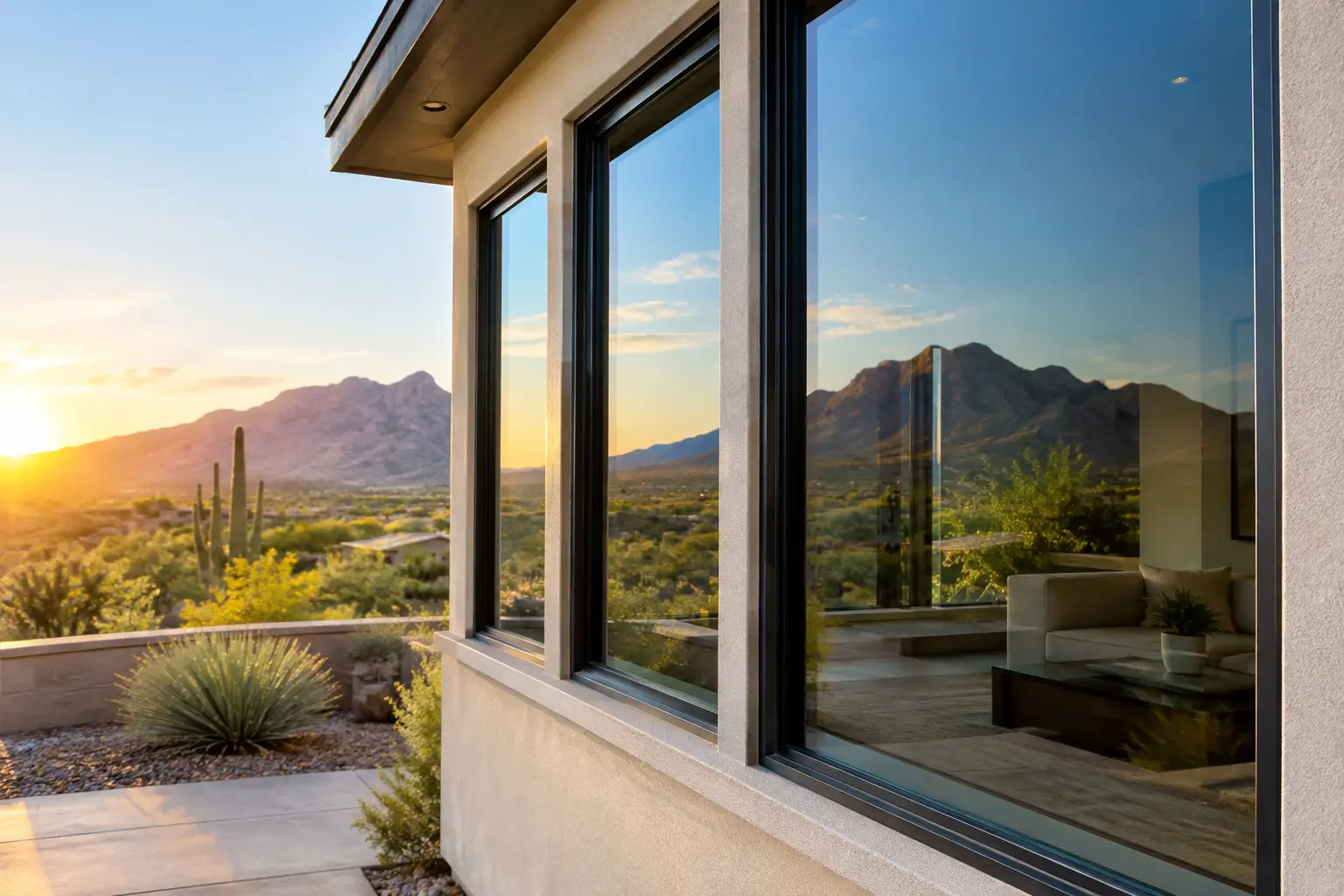
A west-facing living room can feel comfortable at 9 a.m. and unbearable by midafternoon, even when the air conditioner is working hard. In Arizona, the best window coatings are not simply an upgrade for appearance. They are a practical part of managing solar heat, harsh glare, ultraviolet exposure, and the year-round strain placed on a home’s cooling system.
The right coating should work with the window’s glass package, frame material, orientation, and installation method. A coating that performs beautifully on a shaded north elevation may not deliver the same benefit on broad west-facing glass in Phoenix or Scottsdale. That is why homeowners get better long-term results by evaluating window coatings as part of a complete replacement-window plan rather than as an isolated feature.
What Window Coatings Actually Do
Modern window coatings are thin, nearly invisible layers applied to glass during manufacturing. Their job is to manage how much solar energy and ultraviolet light pass through the window while still allowing useful daylight into the home. The quality of the coating, the number of panes, the gas fill, spacer system, and frame all influence the final performance.
For Arizona homes, the most meaningful measurements are solar heat gain coefficient, visible transmittance, U-factor, and UV protection. Solar heat gain coefficient, often called SHGC, measures how much solar heat enters through the window. Lower numbers generally mean less unwanted solar heat, which is especially valuable on sunny exposures. Visible transmittance indicates how much natural light comes through. A very low SHGC may reduce heat effectively, but if the glass is too dark for the room, the interior can lose the open, bright feeling many homeowners want.
U-factor measures how well the entire window resists heat transfer. While Arizona homeowners often focus on summer heat, a sound U-factor still matters for winter comfort and for reducing temperature swings near the glass. Coatings help, but they do not replace careful product selection or disciplined installation.
The Best Window Coatings for Desert Sun
Low-E coatings for balanced energy performance
Low-emissivity, or Low-E, coatings are the leading choice for most replacement-window projects in Arizona. They are designed to reflect portions of infrared energy while allowing a controlled amount of visible light through. In a hot, sunny climate, a solar-control Low-E coating can limit solar heat gain without turning a home into a dim space.
Not every Low-E formula performs the same way. Some are designed for colder regions, where welcoming solar heat can be beneficial in winter. Arizona homeowners typically need a coating formulated for cooling-dominated conditions. This is a critical distinction. A knowledgeable window professional can compare the glass package and performance ratings for each elevation rather than applying one specification across the entire property.
For many established homes, Low-E glass is the strongest all-around choice because it supports lower cooling demand, reduces hot spots near windows, and helps protect interior finishes from sun exposure. It is also available in clear-looking options, which is useful when preserving views, architectural character, and natural light is a priority.
Spectrally selective coatings for bright rooms with less heat
Spectrally selective coatings are a refined category of Low-E technology. They are engineered to admit a generous amount of visible daylight while blocking a larger share of solar heat. This makes them especially appealing for homeowners who want brighter kitchens, great rooms, and patio-facing spaces without the full intensity of Arizona sun pouring into the home.
The trade-off is that higher-performing glass packages can increase the investment. For a home with expansive openings, stacking doors, or multiple west-facing windows, that investment may be justified by comfort and cooling benefits. For a shaded bedroom or a smaller opening, a more moderate glass package may provide the better value.
Tinted coatings and glass for glare control
Tinted glass can reduce glare and visible light, making it useful in sun-heavy rooms where television viewing, computer work, or afternoon entertaining is difficult. Bronze, gray, and other tint options can also complement the exterior palette of a home.
However, tint alone is not necessarily the best answer for solar control. A darker appearance may limit daylight more than a spectrally selective Low-E package, and it can change how exterior colors and views appear from inside. The best approach is often a combination of coating performance and a tint level selected to suit the home’s style, exposure, and interior lighting needs.
Laminated glass for UV protection and added peace of mind
Laminated glass uses an interlayer between panes of glass. Its primary value may include improved sound control and enhanced security characteristics, but it also provides strong UV filtration. That can be particularly worthwhile in rooms with hardwood flooring, artwork, fabrics, cabinetry, or furnishings that receive intense direct sunlight.
Laminated glass is not a substitute for a solar-control coating. It addresses a different set of priorities. In a street-facing room with traffic noise, or in an area where security and fade protection are both important, pairing laminated glass with an appropriate Low-E coating can create a more complete solution.
Match the Coating to Each Side of the House
A home’s orientation should guide the glass recommendation. South- and west-facing openings usually receive the most aggressive sun and often benefit from lower SHGC glass. East-facing windows can bring sharp morning glare, while north-facing windows may need less solar control and may be better suited to a brighter glass option.
This does not mean every elevation needs a different window. Homeowners often prefer visual consistency, and many projects perform very well with one carefully chosen package throughout. But when a home has a large west-facing great room, a sunroom addition, or a bank of patio doors, custom glass selection can make a noticeable difference in comfort.
Exterior shading also changes the equation. Deep overhangs, covered patios, mature landscaping, and nearby structures can reduce direct solar exposure. Conversely, a second-story window above a patio cover may receive intense sun for hours. An in-home consultation should account for these real conditions, not just a product brochure.
Coatings Perform Best With a Complete Window System
The best window coatings cannot overcome a poorly matched frame or an incomplete installation. Heat can enter through the glass, but it can also move through frames, gaps, and improperly protected openings. In older Arizona homes, existing conditions may include deteriorated framing, uneven openings, stucco transitions, or insufficient weatherproofing around the window perimeter.
A quality replacement project considers the full assembly: insulated glass, frame construction, proper shimming and fastening, foam where appropriate, weather-resistant barriers, flashing details, and careful interior and exterior finish restoration. When structural alterations or new openings are involved, that construction scope becomes even more important.
Vinyl, fiberglass, wood-frame, and thermally improved aluminum windows each offer different advantages. Vinyl can be an excellent value for many replacement projects. Fiberglass brings strength and stability, while thermally improved aluminum can suit contemporary architecture and large openings. The glass coating should be specified alongside the frame, not after the fact.
Greco Roman Windows and Doors approaches this work with the same attention given to visible finish details and the layers behind the stucco. That includes assessing whether a straightforward replacement is appropriate or whether the opening needs more extensive preparation, weatherproofing, and finish work to protect the investment.
Questions to Ask Before Choosing a Glass Package
Before approving replacement windows, ask what the proposed SHGC, U-factor, and visible transmittance are for the exact product configuration. Ask whether the coating is intended for hot-climate solar control, and whether the recommendation changes for large west-facing openings or patio doors.
It is also reasonable to ask how the selected glass will look from indoors and outdoors. Some homeowners prioritize the clearest possible view. Others want stronger glare control and a subtle exterior tint. Neither preference is wrong, but the choice should be deliberate.
Finally, look beyond the label. Ratings help compare products, yet installation quality determines whether the window performs as intended over time. A precise installation protects the home from air leakage, water intrusion, and premature finish problems while preserving the clean, polished appearance expected from a modernization project.
A thoughtfully selected coating can make a home feel calmer when the sun is at its strongest, protect the finishes you have chosen carefully, and reduce the pressure on your cooling system. Schedule a free in-home consultation to evaluate your home’s exposures, window conditions, and the glass package that fits the way you live.