
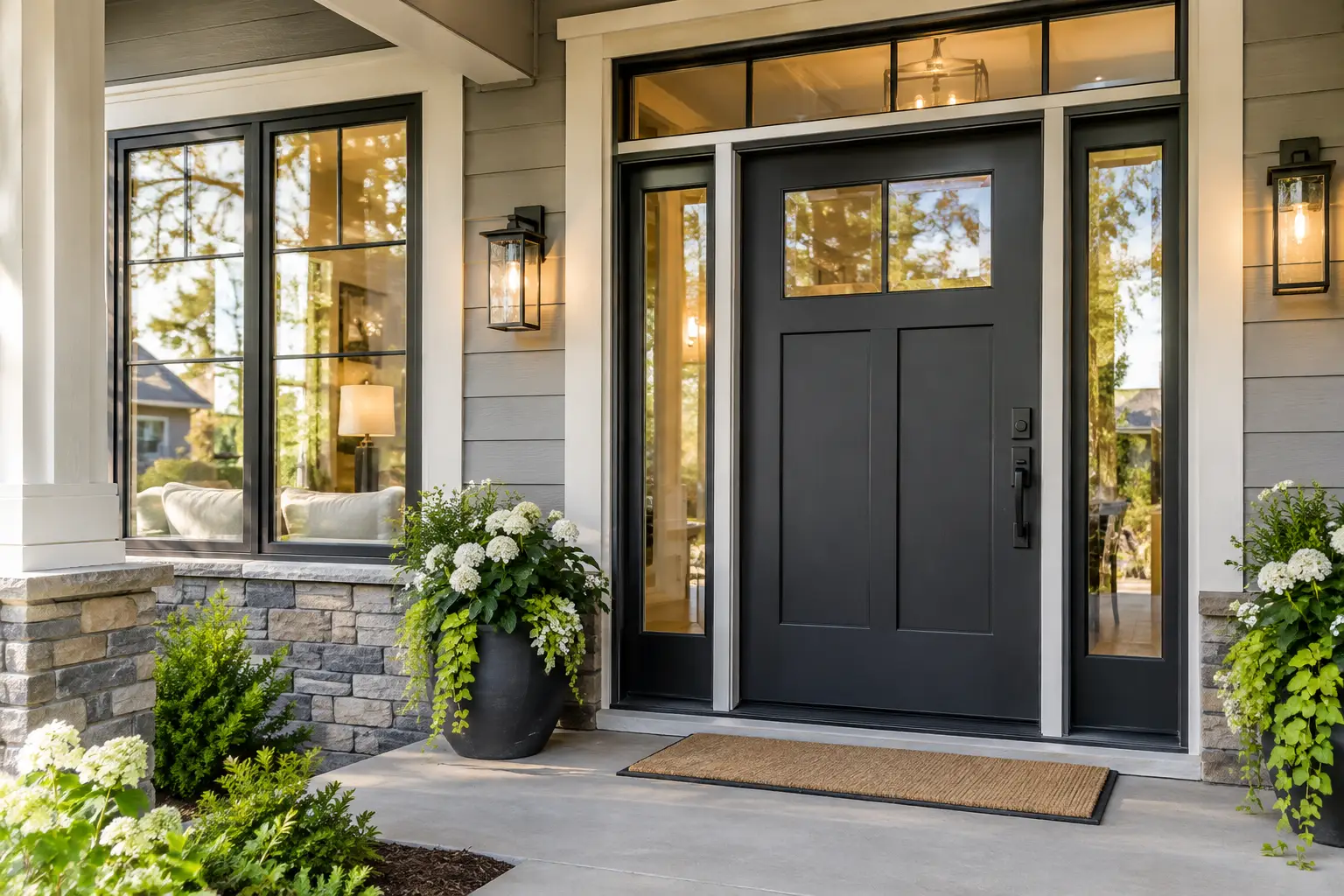
A door can look substantial and still leave a home vulnerable. The weak point is often not the panel itself, but a tired frame, loose strike plate, shallow deadbolt throw, warped threshold, or gaps created by years of Arizona heat. Secure exterior doors for homes must work as a complete system: door slab, frame, hinges, locking hardware, weather seals, and installation all need to perform together.
For homeowners replacing an aging entry, patio, or side door, security should not be treated as an add-on. It should be part of the design conversation from the first in-home consultation, alongside energy performance, operation, curb appeal, and the way the new door fits the existing wall.
What Makes Exterior Doors Secure?
A secure door is built to resist forced entry without becoming difficult to use every day. It begins with a stable, properly fitted door and continues through the hardware anchoring it to the home. A premium lock alone cannot compensate for a compromised jamb, soft wood surrounding a strike plate, or an opening that was never properly squared.
The most dependable exterior door assemblies typically combine a durable door material, a reinforced frame, high-quality locking hardware, and professional anchoring into the home’s structural framing. The goal is not simply to make the door harder to kick or pry open. It is to eliminate the weak links that allow force to transfer into a vulnerable part of the opening.
The frame matters as much as the door panel
The frame carries the locking hardware and holds the door in alignment. If it has rot, separation, damage from prior water intrusion, or movement from settling, the lock may not engage fully even when it appears to work normally.
During replacement, the condition of the existing opening deserves close attention. Older Arizona homes may have block frames, uneven framing, stucco that needs careful removal and restoration, or previous installations that concealed gaps behind trim. Correcting these conditions before a new exterior door is set creates a stronger foundation for both security and long-term operation.
Locking hardware should secure the frame
A deadbolt with a long throw reaches farther into the jamb, helping the lock resist force at the latch side. Reinforced strike plates, installed with long screws that reach solid framing, provide another meaningful layer of protection. For double doors and many sliding or stacking door systems, multipoint locking can secure the panel at several locations rather than relying on one central latch.
Smart locks can add convenience through keyless entry, activity alerts, and remote access. They are useful for busy households and investment properties, but they should be selected as part of a sound mechanical security plan. Electronic convenience does not replace a properly reinforced strike, aligned door panel, and dependable deadbolt.
Hinges and glass areas need thoughtful specifications
Outswing doors place hinges on the exterior side, which makes non-removable hinge pins or security hinges especially valuable. In-swing doors still benefit from heavy-duty hinges that can support the panel without sagging. A door that sags over time may stop engaging its lock cleanly, creating an avoidable security and usability issue.
Doors with decorative or expansive glass can be an excellent choice for natural light and curb appeal. Their security depends on the complete product construction, locking configuration, and how the glass area is positioned within the door system. The right design preserves light and visual connection while maintaining the level of privacy and protection appropriate for the location.
Choosing Materials for Secure Exterior Doors for Homes
There is no single best material for every entry. The right selection depends on the opening, exposure to direct sun, desired appearance, maintenance expectations, budget, and the type of security hardware the door system supports.
Fiberglass is a strong choice for many Arizona entry doors because it can provide a substantial feel, stable performance, and design flexibility without the same maintenance demands as natural wood. Many fiberglass doors can replicate wood grain while accommodating quality locks, reinforced frames, and insulated cores.
Wood brings warmth and architectural character, particularly in custom or historic-style homes. It requires greater attention to finish maintenance in intense sun and weather exposure. When homeowners choose wood, proper overhang protection, finish selection, and regular care help preserve the door’s appearance and fit.
Thermally improved aluminum is often well suited to contemporary door designs and large openings. It offers clean sightlines and strength for certain configurations, including patio and indoor-outdoor living systems. Product quality and installation details matter greatly because large panels require precise alignment to lock, slide, and seal as intended.
Steel entry doors can offer excellent strength and value, though they may not fit every design direction or exposure condition. The best choice is the one that matches the home’s architecture while delivering a stable assembly, reliable locking performance, and durable weather protection.
Security and Energy Efficiency Should Work Together
A door that has gaps around its perimeter can raise cooling costs, admit dust, and make the lock feel loose or misaligned. Those are comfort issues, but they can also signal that the door is not seated properly in its opening.
High-quality weatherstripping, a correctly fitted threshold, and continuous sealing around the frame help control air movement while supporting a firm, consistent door fit. In Phoenix and surrounding communities, that matters through long stretches of extreme heat, monsoon rain, and wind-driven dust.
A properly specified exterior door can also reduce outside noise and make rooms near the entry or patio more comfortable. Security, energy efficiency, and quiet are not separate outcomes when the entire opening is built and installed with care. They often stem from the same disciplined attention to fit, insulation, sealing, and durable components.
Installation Is Where Security Is Proven
Even a well-built door can disappoint if it is installed into an out-of-square opening, attached with inadequate fasteners, or finished without addressing surrounding wall conditions. Installation should begin with measurements that account for the actual opening, the finished floor height, swing direction, threshold needs, and the condition of adjacent framing.
For a replacement project, the work may include removal of the old unit, frame adjustments, flashing and weatherproofing, insulation at the perimeter, and restoration of stucco, drywall, and trim. On more involved projects, an opening may be resized or structurally modified to accommodate a larger door, sidelights, or a new patio configuration. That work calls for careful planning, not a one-size-fits-all installation approach.
Greco Roman Windows and Doors approaches exterior door replacement as a construction project as well as a product installation. Whether a home needs a practical Silver-level replacement or a Platinum-level modernization with new construction-grade weatherproofing and finish restoration, the details around the door receive the same attention as the door itself.
Signs Your Existing Door May Need Attention
A door does not need visible damage to deserve a closer look. Homeowners should pay attention when a deadbolt requires lifting, pushing, or pulling the door to lock. Difficulty latching can point to hinge wear, frame movement, or an alignment issue that should be corrected before it worsens.
Other signs include daylight around the edges, drafts near the threshold, loose hinges, cracked or separating trim, water staining near the opening, or a strike plate that has pulled away from the jamb. A patio door that no longer locks consistently or slides with excessive resistance should also be assessed. These conditions affect daily comfort, but they also reduce the dependable performance expected from an exterior entry.
A Better Way to Plan a Door Replacement
Start by considering how the door is used. A front entry may need a stronger visual statement and enhanced lock hardware. A side door may prioritize privacy, weather resistance, and straightforward access. A patio opening may require a carefully engineered sliding, bi-fold, or stacking system that supports entertaining while securing the home when closed.
Then consider the wall around it. The right project plan addresses framing, stucco, drainage, vapor barriers, finishes, and hardware as needed, rather than treating them as unrelated tasks. This is especially valuable for established homes where hidden conditions are more likely once the old door is removed.
A secure exterior door should feel reassuring without demanding attention. It should close smoothly, lock positively, seal tightly, and complement the home every time you arrive. Schedule a free in-home consultation to evaluate the opening, discuss material and hardware options, and build a door replacement plan around the way your home is meant to live.