
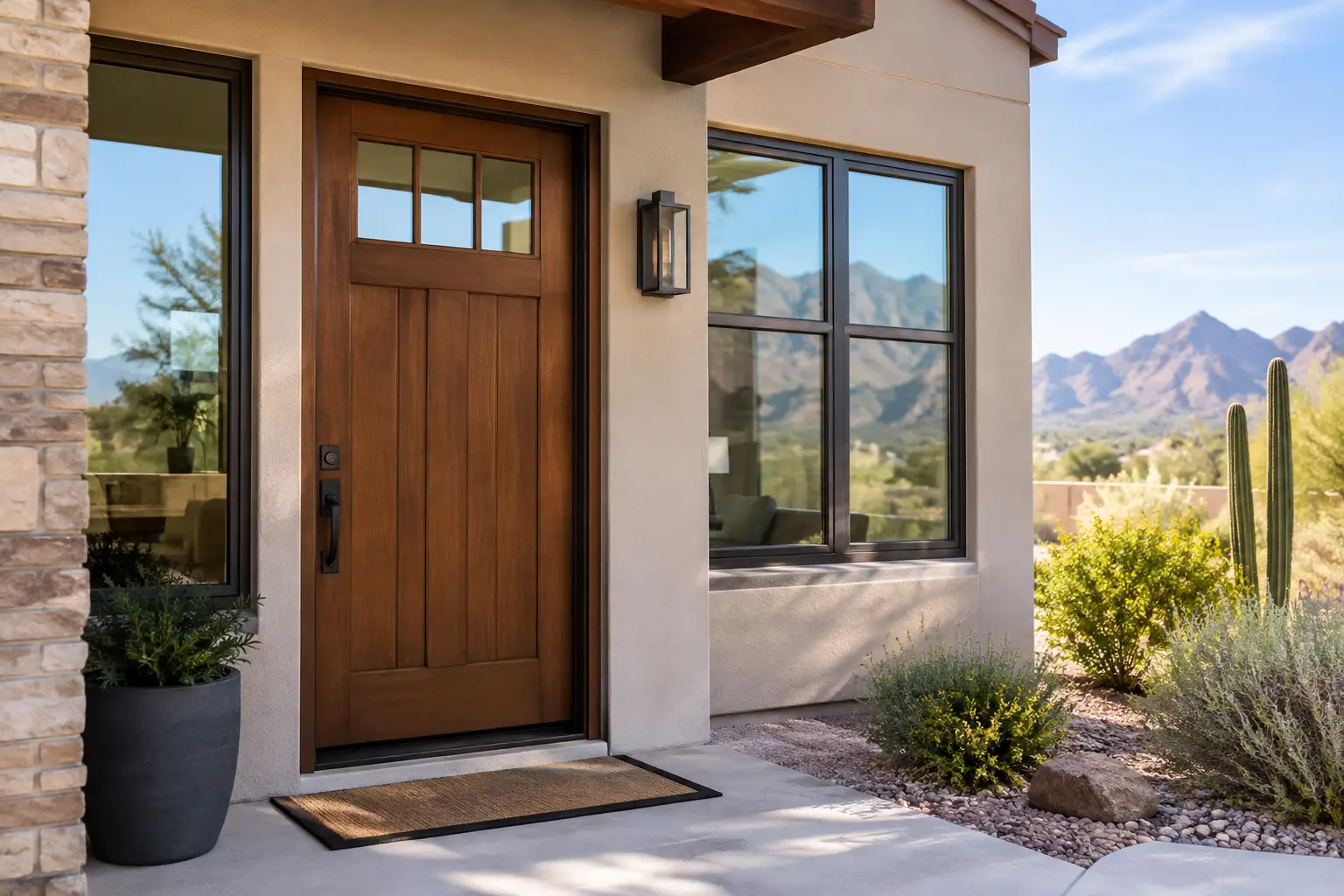
A new exterior door can look exceptional in a showroom and still disappoint after its first Arizona summer. That is why ProVia door ratings deserve more attention than a color sample or decorative glass option. The ratings help show how a specific door system may manage heat, sunlight, wind, moisture, and daily use once it is installed in your home.
For homeowners in Phoenix, Scottsdale, Paradise Valley, and surrounding communities, the most useful question is not simply, “Is this a good door?” It is, “Is this exact door configuration appropriate for my opening, exposure, and goals?” A high-quality door needs the right glass package, frame, weatherstripping, hardware, and installation details to perform as intended.
ProVia Door Ratings Are Not One Overall Score
“Ratings” can sound like a single grade, but exterior doors are evaluated across several separate performance categories. A door may be an excellent choice for energy control yet require a different configuration for a wide, wind-exposed opening. Likewise, a handsome decorative glass design can change the thermal performance compared with a solid-panel version of the same door.
When reviewing ProVia door ratings, focus on the documentation for the precise product, size, glass option, and configuration being quoted. A hinged fiberglass entry door, a steel entry door, and a sliding or hinged patio door are built for different purposes. Their labels and test data should be compared within their own category, not treated as interchangeable.
The most common performance information homeowners will encounter includes:
- U-factor, which indicates how readily heat moves through the door assembly
- Solar Heat Gain Coefficient, or SHGC, which measures how much solar heat enters through the glazed portions
- Visible Transmittance, or VT, which reflects how much natural light comes through the glass
- Air leakage or air infiltration results, which help indicate resistance to drafts
- Structural, water, and wind-related test ratings, often tied to the complete unit and its intended use
These numbers are valuable, but they are only part of the decision. The wall opening, existing framing, exterior finish, sill condition, and installation method all influence whether the door performs well over time.
Energy Ratings That Matter in Arizona
Arizona homeowners feel inefficient doors most directly through uncomfortable rooms, hot interior surfaces near the entry, and cooling systems that work harder than they should. The right energy ratings help narrow the field, especially when a door includes glass.
U-Factor: Lower Usually Means Better Insulation
U-factor measures the rate of heat transfer through a door and its glass. Lower numbers generally indicate better insulating performance. This matters for an entry door that receives intense afternoon sun, but it also matters on shaded sides of the home where indoor cooled air can escape through an older or poorly sealed unit.
A door’s U-factor is affected by the slab material, insulated core, frame construction, glass package, and the amount of glass in the design. A solid fiberglass or steel entry door may produce a different result than a full-view door with decorative glass. Neither is automatically the better choice. The goal is to balance the desired appearance and daylight with thermal control that fits the opening.
SHGC: A Major Consideration for Sun-Facing Doors
Solar Heat Gain Coefficient is particularly relevant in the desert Southwest. SHGC describes the fraction of solar heat admitted through glazing. Lower SHGC values generally reduce solar heat gain, which can be beneficial on west- and south-facing doors exposed to long periods of direct sun.
That does not mean the lowest available SHGC is always the right answer. A north-facing patio door with a covered exterior may prioritize daylight more heavily, while a west-facing entry with large decorative glass may call for stronger solar control. The placement of shade structures, porch overhangs, landscaping, and nearby walls can all change the recommendation.
Low-emissivity glass coatings can help manage solar heat while preserving useful daylight. However, glass selection should be discussed alongside privacy, exterior appearance, and the amount of visible light you want in the space. A rating is a tool for making a thoughtful choice, not a substitute for looking at how your home actually receives sun.
Visible Transmittance: Light Without Excessive Exposure
Visible Transmittance measures the amount of visible light passing through the glazing. Higher VT can make an entry hall, kitchen, or living area feel brighter. Yet a very bright opening can also create glare or increase fading risk for flooring and furnishings when it faces strong direct sunlight.
For homes with darker interior corridors or limited windows near the entry, glass in a front door or sidelites can dramatically improve the feel of the space. The best result often comes from choosing a glass design and coating package that admits enough light without turning the area into a heat-prone sun pocket.
Air, Water, and Wind Performance Are About the Whole System
Energy labels receive most of the attention, but a door is also a moving assembly with seals, thresholds, hinges, locks, and a frame connection to the house. Performance in these areas can be just as meaningful as U-factor, particularly in established Arizona homes with aging frames or uneven openings.
Air Infiltration: Less Unwanted Air Movement
Air infiltration testing measures the amount of air that passes through a closed, locked door system under controlled conditions. Lower values generally indicate better resistance to drafts. This can support indoor comfort, reduce dust intrusion, and help maintain more consistent temperatures near the opening.
If an existing door rattles, whistles during wind, or allows outside dust into the home, the issue may involve more than the door slab. Worn weatherstripping, a deteriorated threshold, out-of-square framing, or gaps hidden behind exterior trim can all contribute. A replacement should be evaluated as a complete assembly, not simply a new panel set into a compromised frame.
Water Resistance: Protection at the Sill and Perimeter
Rain may be infrequent in the Valley, but seasonal storms can drive water toward door openings quickly. Water performance ratings indicate how a tested unit resists water penetration under specified conditions. They do not eliminate the need for proper flashing, sill preparation, exterior integration, and drainage planning.
This is especially important around patio doors, low thresholds, and openings where exterior surfaces slope toward the home. During a professional evaluation, the condition of the sill, stucco transitions, and surrounding wall should be part of the conversation. A well-rated door cannot compensate for an installation that leaves water a path behind the frame.
Design Pressure and Structural Performance
Design Pressure, often called DP, relates to how a door assembly performs under wind pressure and other test conditions. It can involve structural loading, air resistance, and water resistance requirements. The appropriate rating depends on factors such as the product type, opening size, building conditions, and exposure.
Larger panels and expansive glass areas can create impressive indoor-outdoor connections, but they also place greater demands on the frame, track, hardware, and attachment method. For a patio door replacement or a structural opening modification, the discussion should include the full system rather than only the visible door panels.
Do Not Compare Ratings Without Comparing Configurations
A common mistake is comparing a brochure value from one door style to a quote for another. Ratings can change with the size of the unit, the number of panels, glass selection, sidelites, transoms, hardware, and frame options. A product line may offer many combinations, and each combination does not necessarily carry the same performance data.
This is where a detailed estimate makes a difference. It should identify the door series, handing or operating style, glass package, hardware finish, dimensions, and installation scope. If energy performance is a priority, ask which published values apply to the exact configuration being considered.
Homeowners should also distinguish between a product certification and a local installation promise. Labels and test reports confirm that a product was evaluated under defined conditions. Proper performance in your home depends on accurate measurements, sound framing, correct shimming and fastening, perimeter sealing, and a weatherproof transition from the unit to the wall.
Installation Can Protect the Value of a Highly Rated Door
An exterior door is one of the few moving components in your home’s exterior envelope. It must operate smoothly, latch securely, seal consistently, and remain stable through extreme heat. A carefully selected ProVia door can only deliver its intended benefits when the opening is prepared with equal care.
Older homes may have hidden challenges behind the existing frame, including deteriorated wood, uneven masonry, prior water intrusion, cracked stucco, or a threshold that no longer drains correctly. Addressing those conditions during the project is often the difference between a door that merely looks new and one that remains dependable for years.
At Greco Roman Windows and Doors, the evaluation extends beyond product selection. Depending on the project, the work may include frame corrections, proper weatherproofing layers, vapor barriers, foam, lath, stucco repair, drywall restoration, and finish work that respects the appearance of the home. That full-scope approach is particularly valuable when replacing doors in older Arizona construction.
Choosing the Right Rating Priorities for Your Home
There is no single ideal rating profile for every property. A shaded front entry may place more value on security, finish durability, and added daylight. A west-facing door with decorative glass may need strong solar control. A large patio opening may require close attention to structural ratings, water management, and the condition of the surrounding wall.
The most productive next step is to review the actual opening with a professional who can consider both the door and the construction around it. Bring your concerns to the consultation: heat near the entry, rising cooling bills, outside noise, difficult operation, fading interiors, poor curb appeal, or a need for better connection to the patio.
A carefully chosen door rating can point you toward a better product. Careful measurement, weatherproofing, and old-world-inspired installation craftsmanship are what turn that product into a lasting improvement. Schedule a free in-home consultation to discuss the ProVia configuration and installation approach that fit your home, your exposure, and the way you want the space to feel every day.