A replacement window can have high-performance glass and still disappoint if its frame is poorly suited to the home, the climate, or the opening. Window frames do more than hold the sash in place. They influence heat transfer, air infiltration, operation, security, sightlines, and the finished appearance of the surrounding stucco and interior trim.
For homeowners in Phoenix, Scottsdale, Paradise Valley, and Chandler, frame selection deserves the same attention as glass selection. Summer heat places real demands on every component, while established homes can introduce uneven openings, aging wood, block construction, or stucco conditions that need careful correction before a new unit is installed.
Why Window Frames Matter So Much
The frame is the structural perimeter of a window. It supports the glass package, anchors the unit to the wall, creates a weather-resistant connection, and gives the window its profile from both inside and outside the home. A frame that expands excessively, conducts heat readily, or does not fit the opening correctly can limit the benefits of a quality replacement window.
Material is only one part of the decision. The frame depth, reinforcement, drainage design, finish, and installation method all matter. For example, a narrow-profile frame may maximize visible glass and natural light, but a deeper or more substantial frame may be the better choice where structural support, insulation, or a particular exterior detail is needed.
A well-planned project considers the whole assembly: the window, the existing wall, flashing and weatherproofing, insulation around the perimeter, and the restoration work required to leave the home looking intentional rather than patched together.
Choosing the Right Window Frame Material
There is no single best frame for every Arizona home. The right choice depends on the home’s architecture, budget, desired maintenance level, HOA requirements, energy goals, and whether the project involves straightforward replacements or modified openings.
Vinyl frames for practical efficiency
Vinyl window frames are a popular choice for homeowners who want dependable energy performance, low maintenance, and strong value. Quality vinyl does not require painting, resists moisture, and can provide effective insulation when paired with the right glass package and professional installation.
The trade-off is design flexibility. Vinyl is available in a range of colors and profiles, but it may not be the ideal match for every historic, luxury, or highly custom architectural style. Product quality also varies. A properly engineered frame with durable corners, dependable hardware, and a suitable color finish is especially important in prolonged sun exposure.
Fiberglass frames for stability and refined design
Fiberglass frames offer excellent dimensional stability and can suit homeowners seeking a more premium appearance with strong long-term performance. Their stiffness allows for clean, narrow profiles in many designs, helping preserve glass area without sacrificing strength.
Fiberglass can also be an excellent fit for larger openings and homes where a painted finish, wood-like character, or tailored color selection is part of the design plan. It generally costs more than vinyl, but that investment can make sense when the project prioritizes architectural detail, durability, and resale appeal.
Wood frames for authentic architectural character
Wood frames bring warmth and visual depth that are difficult to duplicate. They can be an appropriate choice for homes with traditional detailing, custom interiors, or an existing wood aesthetic that should be preserved. They also offer design flexibility for staining or painting.
Wood requires a homeowner who is prepared to maintain the finish over time, particularly where intense sunlight reaches the exterior. When specified and protected correctly, wood can be a beautiful long-term material. When neglected, it can become vulnerable to moisture intrusion and finish deterioration. The surrounding weatherproofing and exterior detailing are therefore essential.
Thermally improved aluminum for modern lines
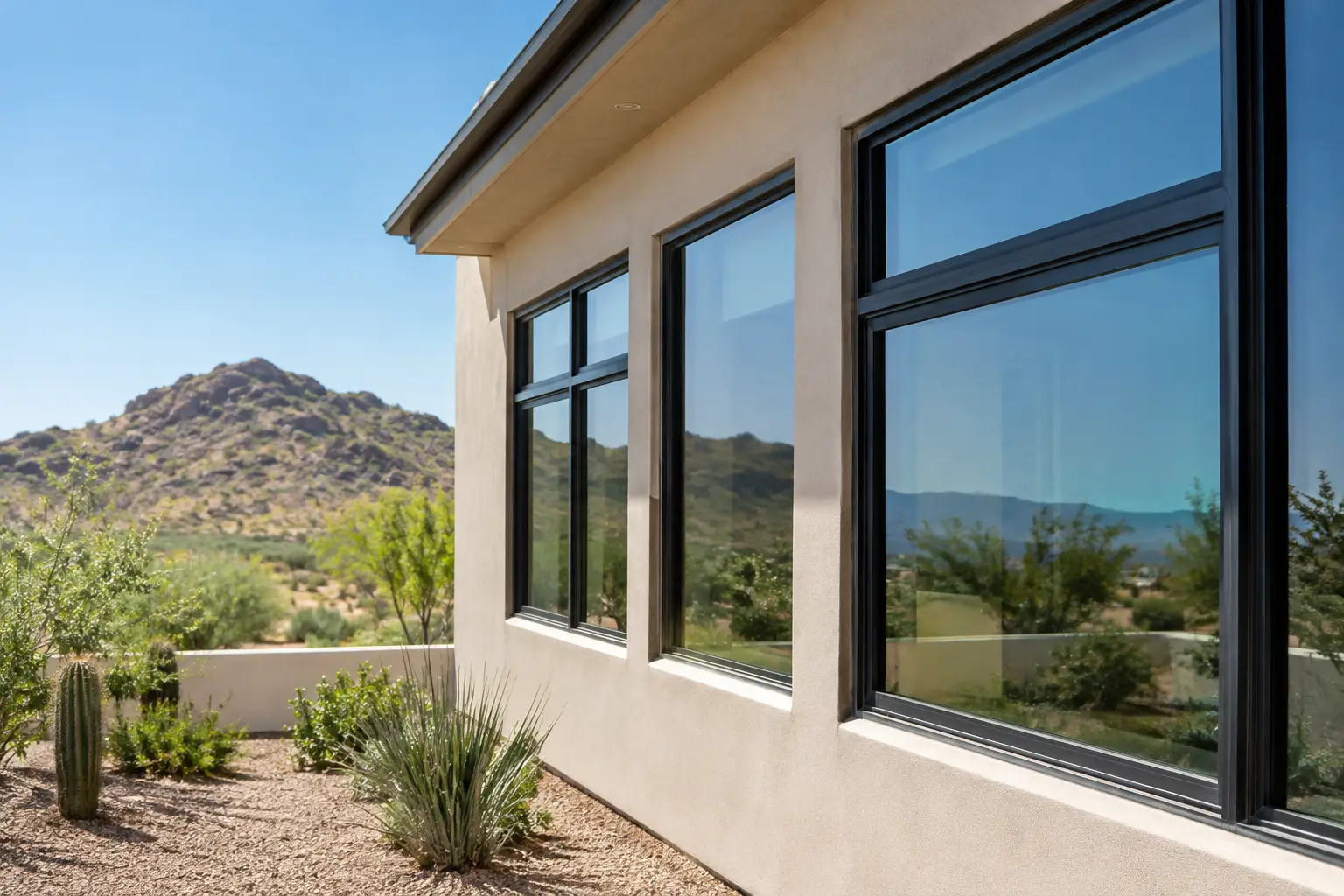
Aluminum frames are valued for their strength, durability, and slim, contemporary appearance. They are often well suited to expansive openings, large fixed windows, and designs that favor crisp sightlines and indoor-outdoor connection.
Standard aluminum conducts heat more readily than insulated materials, which is why thermally improved aluminum frames are an important consideration in Arizona. A thermal break helps reduce heat transfer through the frame. For a modern home or a project with large glass areas, this material can balance structural capability with more thoughtful energy performance.
The Installation Details That Protect Your Investment
A replacement window is only as dependable as the connection between the frame and the house. This is where a full-service contractor makes a meaningful difference. Installing a unit into an existing opening without addressing the condition of that opening can leave hidden issues behind.
Older Arizona homes may have deteriorated framing, gaps around the rough opening, previous water entry, damaged drywall, or exterior stucco that does not meet the new frame cleanly. In some cases, the best path is a block-frame replacement that preserves the existing opening. In others, a full-frame approach is more appropriate because it allows the team to inspect the perimeter, replace compromised material, and rebuild the opening for a more complete weather-resistant installation.
A careful installation can include removal of unsuitable material, perimeter insulation, vapor barriers or tar paper where appropriate, flashing, exterior foam and lath, and stucco repair. Inside, the team may need to restore drywall, trim, texture, and paint-ready surfaces. These details are not cosmetic extras. They help manage air movement, water exposure, and the polished finish homeowners expect after a substantial upgrade.
Match the Frame to How You Use the Room
A sunny west-facing family room has different needs than a shaded bedroom or a front-facing formal living area. Frame decisions should reflect the room’s exposure, function, and visual role in the home.
If a room feels hot in the afternoon, start by considering the full window system, including glazing, orientation, shading, and frame material. If the goal is more daylight, a slimmer-profile frame or a larger reconfigured opening may create a noticeable improvement. If exterior noise is a concern, frame rigidity, compression seals, and precise installation help support the performance of the glass package.
For homes undergoing larger modernization work, window frames can also guide the look of new patio doors, stacking systems, or bi-fold doors. Matching profiles and finishes across openings creates a more cohesive result, especially when rooms open toward a pool, courtyard, or outdoor entertaining space.
Avoid Choosing by Price Alone
The lowest initial quote can be appealing, but it may not account for the work needed to complete the project correctly. A frame upgrade can be worthwhile, but homeowners should also ask what is included around the frame. Does the scope address old trim, stucco disturbance, insulation gaps, and finish restoration? Is the installation method appropriate for the home’s wall construction? Are structural changes included if the opening needs to be enlarged or altered?
A clear estimate should distinguish between the window product and the construction work surrounding it. That helps homeowners compare proposals fairly and choose a package that fits their priorities. A straightforward replacement may align with a value-focused Silver approach, while a complex opening modification or finish-intensive project may call for Gold or Platinum-level planning.
Greco Roman Windows and Doors approaches this process with old-world-inspired techniques and a focus on the details that remain after the installers leave: straight sightlines, secure operation, clean transitions, protected wall openings, and finishes that respect the home.
Questions to Ask Before Selecting Window Frames
Before finalizing a frame material, ask how it will perform on your home’s sun-exposed elevations, what maintenance it will require, and how its profile will look alongside your existing architecture. Ask whether the proposed unit is designed for the size and operation you want, particularly for wide openings or large fixed panels.
It is also wise to ask how the installer will handle the existing opening. A careful answer should cover removal, perimeter preparation, weatherproofing, insulation, exterior repairs, interior restoration, and cleanup. The strongest window frame cannot compensate for an opening that was not prepared with the same care.
The right frame should make daily life easier: rooms feel more comfortable, windows operate smoothly, exterior lines look sharper, and the home is better prepared for Arizona’s demanding climate. Schedule a free in-home consultation to evaluate your openings in person and choose a window solution built around the way your home should look and perform.