
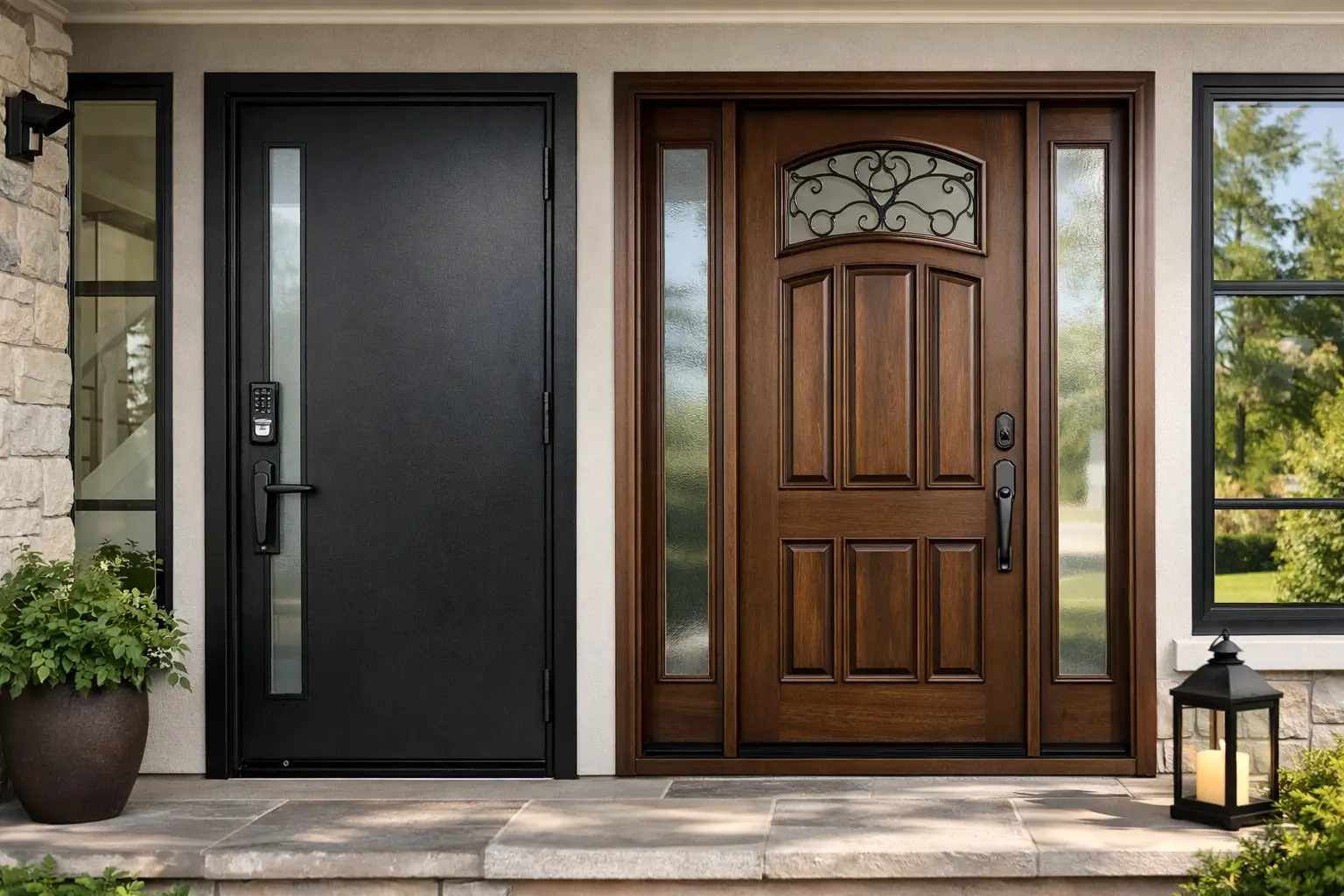
A front door can look substantial and still leave a home vulnerable at its weakest points: the lock, strike plate, hinges, frame, and connection to the surrounding wall. To select entry doors for security, homeowners should look beyond color, panel design, and a promising product label. The right result is a coordinated system, professionally fitted to the opening and built to resist forced entry without compromising the home’s architecture or comfort.
For established Arizona homes, that distinction matters. Years of intense sun, dry air, temperature swings, and normal settling can affect finishes, weatherstripping, existing frames, and the way a door closes. A high-quality replacement door deserves equally careful attention to the opening around it.
Start With the Door Material
Material establishes the door’s basic strength, stability, maintenance needs, and appearance. There is no single best choice for every property. The best selection depends on the home’s exposure, desired design, budget, and the condition of the existing opening.
Steel entry doors are often a strong security-minded choice because the skin resists impact better than many lightweight alternatives. They can also provide an excellent value for homeowners who want a durable, solid-feeling door. However, the quality of the interior core, edge construction, frame, and finish still matters. A thin steel slab installed in a deteriorated jamb is not a complete security upgrade.
Fiberglass doors are especially well suited to Arizona homes. Quality fiberglass can offer impressive durability, resist warping, and recreate the depth and warmth of stained wood grain with less ongoing maintenance. Many fiberglass entry systems are built around a substantial core and can be paired with reinforced frames, making them a practical option for homeowners who want security and refined curb appeal in the same project.
Wood offers distinctive character and remains a compelling choice for historic, custom, and design-driven properties. It does require disciplined finishing and maintenance in high-sun conditions. When selected for a covered entry and installed with proper protection from moisture and heat exposure, a well-built wood door can be both secure and beautiful. The key is to evaluate the entire assembly, not simply choose a material by reputation.
Select Entry Doors for Security as a Complete System
A secure slab is only part of the equation. The frame carries the hardware, holds the hinges, and transfers force into the wall. If the jamb is split, soft, poorly anchored, or out of square, a new door may operate poorly and offer less resistance than expected.
During a replacement project, the existing opening should be evaluated for framing condition, water intrusion history, alignment, and stucco-related complications. This is particularly relevant in Phoenix-area homes, where block construction, aging wood bucks, and exterior finish conditions can call for more than a simple swap. Structural frame work, properly placed fasteners, weatherproofing, and finish restoration help create an entry system that performs as intended.
A replacement can be installed into the existing frame in some situations, but that route is not automatically the best value. If the current frame is sound, square, and correctly sized, it may be appropriate. If it shows deterioration, movement, or poor prior workmanship, a full-frame replacement is often the more accountable solution. It gives the installation team an opportunity to address concealed conditions rather than cover them.
Inspect the Lock Area and Strike Plate
The lock side of an entry door deserves close attention because forced-entry attempts commonly target the latch and deadbolt area. Choose a quality deadbolt with a long throw and solid internal construction. A reinforced strike plate, secured with long screws that reach the wall framing rather than only the jamb, can make a meaningful difference.
Multi-point locking systems are another option, particularly on taller doors, French doors, and certain premium fiberglass or aluminum systems. Instead of engaging in one location, these systems secure the door at multiple points along the frame. They can improve security and help maintain a consistent seal, although they add cost and require precise installation and adjustment.
Smart locks can bring useful access control, especially for families, second homes, and property investors. They should supplement sound mechanical hardware, not substitute for it. Select a model with a reliable physical key override, clear battery alerts, and compatibility with the door’s lock preparation.
Do Not Overlook Hinges and Hardware
For an outswing entry door, hinges sit on the exterior side and need added protection. Security studs or non-removable hinge pins help prevent the door from being lifted free if hinge pins are attacked. In any configuration, hinges should be properly fastened, smoothly aligned, and rated to support the door’s weight. Oversized custom doors and doors with decorative panels can place significant stress on inadequate hinges.
Hardware should also feel intentional. Loose handles, misaligned deadbolts, and a door that must be pushed or pulled hard to lock are signs that something is wrong with the fit or adjustment. Security hardware works best when the door closes cleanly, the latch engages fully, and the weatherstripping compresses evenly without binding.
Consider Glass, Sidelites, and Visibility Carefully
Decorative glass, sidelites, and transoms can transform a dark entry into a welcoming focal point. They are not automatically a security compromise, but their placement and construction should be selected with care. Glass close to a thumb-turn lock can create an obvious concern if someone could break a pane and reach through to operate the hardware.
For glazed entry designs, consider security-conscious configurations such as laminated glass, impact-resistant options where appropriate, obscured patterns, and lock placement that is not easily accessible through a nearby lite. The exact recommendation depends on the door design, location, and whether natural light or privacy is the stronger priority.
Visibility also matters. A well-lit entry, a clear view of the approach, and a door viewer or camera-compatible design can support better awareness of who is outside. These measures do not replace physical door security, but they complement it.
Balance Security With Arizona Energy Performance
A door that is difficult to breach but leaks hot air is not serving the home well. Summer heat can expose weaknesses around an entry system quickly, creating uncomfortable drafts, higher cooling demands, and dust infiltration. Look for an insulated door construction, quality perimeter seals, an adjustable threshold, and an installation approach that addresses the full weather barrier.
Proper flashing, vapor barriers where needed, foam insulation, and exterior sealing are not cosmetic details. They protect the opening and help the door maintain dependable performance over time. When stucco, drywall, trim, or paint must be repaired after the old system is removed, finishing that work correctly is part of protecting the investment.
This is where a lower initial price can become a trade-off. A basic door may be suitable for a rental property or a straightforward budget replacement. A premium system with advanced locking, a reinforced frame, better insulation, and comprehensive opening repairs may make more sense for a long-term residence, a luxury remodel, or a home preparing for resale.
Ask Better Questions Before You Commit
A productive in-home consultation should include more than viewing door samples. Ask whether the existing frame will be retained or replaced, how the strike plate will be reinforced, what condition the surrounding opening is in, and how exterior finishes will be restored. Discuss the direction of swing, preferred lock type, privacy needs, sun exposure, HOA requirements, and whether the new door should coordinate with nearby windows or patio systems.
It is also wise to ask who manages the details once the old door is removed. A complete project may require frame correction, new weatherproofing layers, stucco patching, drywall repair, threshold adjustment, and paint-ready finishing. Homeowners deserve clear answers about that scope before work begins.
Greco Roman Windows and Doors approaches entry door replacement as a tailored installation, with the product, opening condition, finish work, and long-term performance considered together. That level of care is especially valuable when an older Arizona home has hidden frame issues or exterior conditions that need correction.
The most reassuring entry door is not necessarily the heaviest or the most expensive. It is the one chosen for the home’s real conditions, fitted with dependable hardware, anchored into a sound opening, and finished with the same care given to every visible surface. Schedule a free in-home consultation to assess your opening and make a selection that protects both your home and its character.