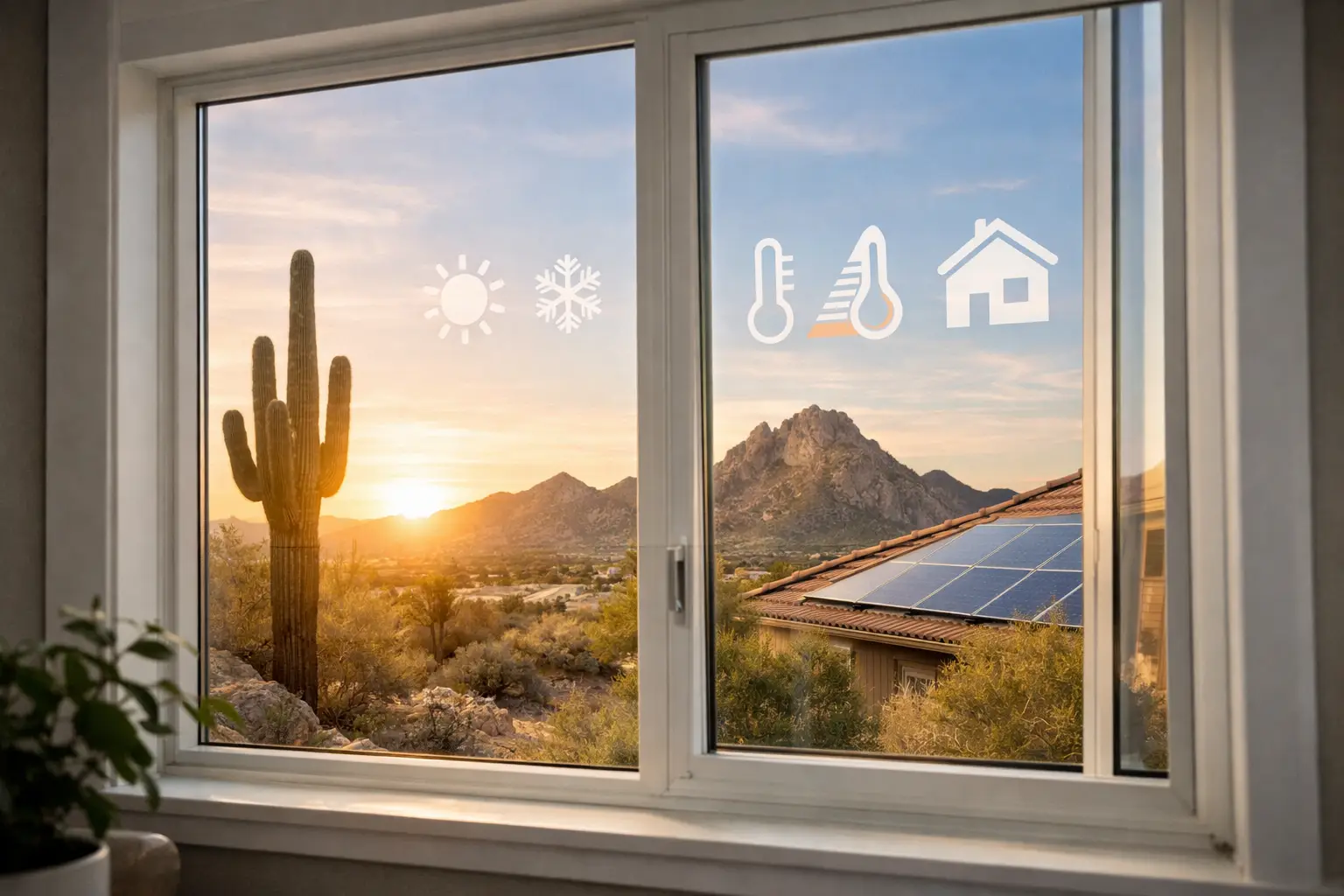
A Phoenix summer exposes weak windows quickly. A room that heats up by late afternoon, a cooling system that runs without relief, and furnishings that fade near sunny openings are not simply inconveniences. They are clues that the existing window system is no longer managing Arizona heat effectively. Phoenix window energy ratings help homeowners compare replacement options, but the label only tells part of the story. The right result depends on the rating, the window design, the direction of the opening, and the quality of installation around the frame.
What Phoenix Window Energy Ratings Measure
Most reputable replacement windows carry a National Fenestration Rating Council, or NFRC, label. This standardized label allows homeowners to compare products using the same measurements rather than relying on broad claims about efficiency. For Arizona properties, the most meaningful figures are U-factor, Solar Heat Gain Coefficient, visible transmittance, and air leakage.
A rating should be treated as a decision tool, not a promise that one window will solve every comfort issue in a home. A large west-facing picture window experiences very different conditions than a shaded bathroom window on the north side of the property. Existing insulation, wall construction, window size, exterior overhangs, and interior shading all influence performance after installation.
U-Factor: How Well the Window Resists Heat Flow
U-factor measures the rate at which heat moves through the complete window assembly. Lower numbers generally indicate better insulation. That assembly includes the frame, spacer system, glazing, and sash, which is why the whole-window U-factor is more useful than a claim based on the center portion of the glass alone.
In Phoenix, homeowners often focus first on solar heat because it is so noticeable. That is understandable, but U-factor still matters. It affects how the window responds during cool desert nights, winter mornings, and long periods when outdoor temperatures differ sharply from indoor conditions. A lower U-factor can support steadier indoor comfort and reduce strain on heating and cooling equipment throughout the year.
The best target depends on the product type and the opening. Premium fiberglass, quality vinyl, wood-frame, and thermally improved aluminum windows can each offer strong performance when properly specified. Material selection should also account for the architecture of the home, desired sightlines, maintenance expectations, and the structural requirements of the opening.
SHGC: Often the Deciding Rating in Arizona
Solar Heat Gain Coefficient, or SHGC, measures how much solar heat passes through a window. It is expressed as a number between zero and one. A lower SHGC means less solar heat enters the home.
For many Phoenix-area homes, this is the rating that deserves the closest attention. Lower-SHGC glazing can make a meaningful difference on unshaded south- and west-facing elevations, where late-day sun can turn otherwise comfortable rooms into hot zones. It can also help protect flooring, artwork, fabrics, and finishes from excessive sun exposure.
Lower is not automatically better in every location. Very dark or heavily tinted glass may reduce heat gain but can also change the appearance of the home and reduce natural daylight. A room with deep overhangs, mature landscaping, or limited direct exposure may not need the same solar-control package as a broad, west-facing great room. The goal is a balanced selection that manages heat without making the home feel dim or visually disconnected from the outdoors.
Visible Transmittance and Air Leakage
Visible transmittance, or VT, indicates how much visible light comes through the glazing. A higher number usually means more daylight. Homeowners who are adding windows to brighten a kitchen, opening a wall for a larger patio door, or modernizing a dark living room should weigh VT alongside SHGC. The right low-E coating can reduce solar heat while preserving a bright, natural appearance, but every coating package involves a trade-off.
Air leakage measures the amount of air that moves through a closed window under test conditions. Lower values are generally preferable. This rating becomes especially relevant when old windows rattle, whistle during wind, admit dust, or leave rooms feeling unevenly conditioned.
Still, air leakage is not just a product issue. A well-built window can perform poorly if gaps around the frame are not properly sealed, if flashing details are incomplete, or if the opening has hidden framing damage. This is where an experienced replacement contractor protects the value of the product selection.
Why Installation Changes Phoenix Window Energy Ratings
The NFRC label reflects the tested window unit. It cannot account for the condition of a 30-year-old opening behind stucco, uneven block construction, deteriorated framing, or an improperly integrated water-management layer. Those details determine whether the installed window can deliver the performance homeowners expect.
A careful installation begins with an assessment of the opening, not an assumption that every existing frame can remain in place. Some projects are appropriate for a block-frame or pocket-style replacement. Others require removal to the rough opening so the team can inspect framing, correct out-of-square conditions, add a vapor barrier or weatherproofing materials, and prepare the wall for a new construction-grade installation.
On stucco homes, the process may include controlled stucco removal, proper integration of tar paper, foam and lath work, and finish restoration. Interior drywall and trim may also need attention after an opening is resized or reframed. These are not cosmetic extras. They are part of building a complete transition between the window, wall, and exterior finish.
For that reason, comparing two windows by label alone can be misleading. A less expensive unit installed with shortcuts may cost more over time through discomfort, water intrusion risk, unfinished repairs, or premature replacement. Conversely, an exceptionally high-rated unit may not justify its added cost in a modest, shaded opening where a well-chosen midrange window would perform admirably. The strongest value comes from matching the product and installation scope to the home.
Choosing Ratings by Exposure and Home Goals
An effective replacement plan starts by looking at the whole property. Window orientation, room use, roof overhangs, landscaping, and the age of the home all matter. A good consultation should identify which openings create the most heat, glare, noise, or operating difficulty rather than applying one specification everywhere.
West-facing bedrooms and family rooms frequently benefit from stronger solar-control glazing. Large glass areas near patios may require a careful balance between heat reduction and the clear views that make indoor-outdoor living appealing. Street-facing openings may place greater importance on noise reduction, privacy, curb appeal, and security in addition to energy performance.
Homeowners preparing to sell may prioritize an updated exterior appearance, dependable operation, and documented quality from recognized manufacturers. Those planning to stay long term may choose upgraded frames, enhanced weatherproofing, or opening modifications that improve daylight and daily comfort. Both approaches can be sensible when the installation scope and budget are clear from the beginning.
At Greco Roman Windows and Doors, that conversation can be tailored through Silver, Gold, and Platinum installation packages. The purpose is not to push every project toward the most extensive option. It is to align the level of construction work, finish restoration, and weatherproofing with the condition of the home, HOA requirements, investment goals, and the homeowner’s expectations for the finished result.
Questions Worth Asking Before You Select a Window
Ask for the whole-window NFRC ratings for the specific product configuration being quoted, including frame color, glass package, and operable style. A rating associated with a brochure image may not match the final window selected for your home.
Also ask how the installer will address the existing frame, exterior weather barrier, insulation around the opening, and stucco or drywall restoration where needed. If a project includes a new or enlarged opening, ask how structural framing and finish matching will be managed. Clear answers reveal whether the proposal accounts for the full construction scope rather than only the visible window.
Finally, consider comfort beyond utility costs. The right replacement windows can reduce glare, quiet street noise, improve security, make operation easier, and give an older home a more finished appearance. Energy efficiency is valuable because it supports how the home feels and functions every day.
A free in-home consultation is the best place to compare the ratings that matter for your specific exposures, room conditions, and renovation plans. Start your project with a window plan built for Arizona heat and finished with the care your home deserves.