
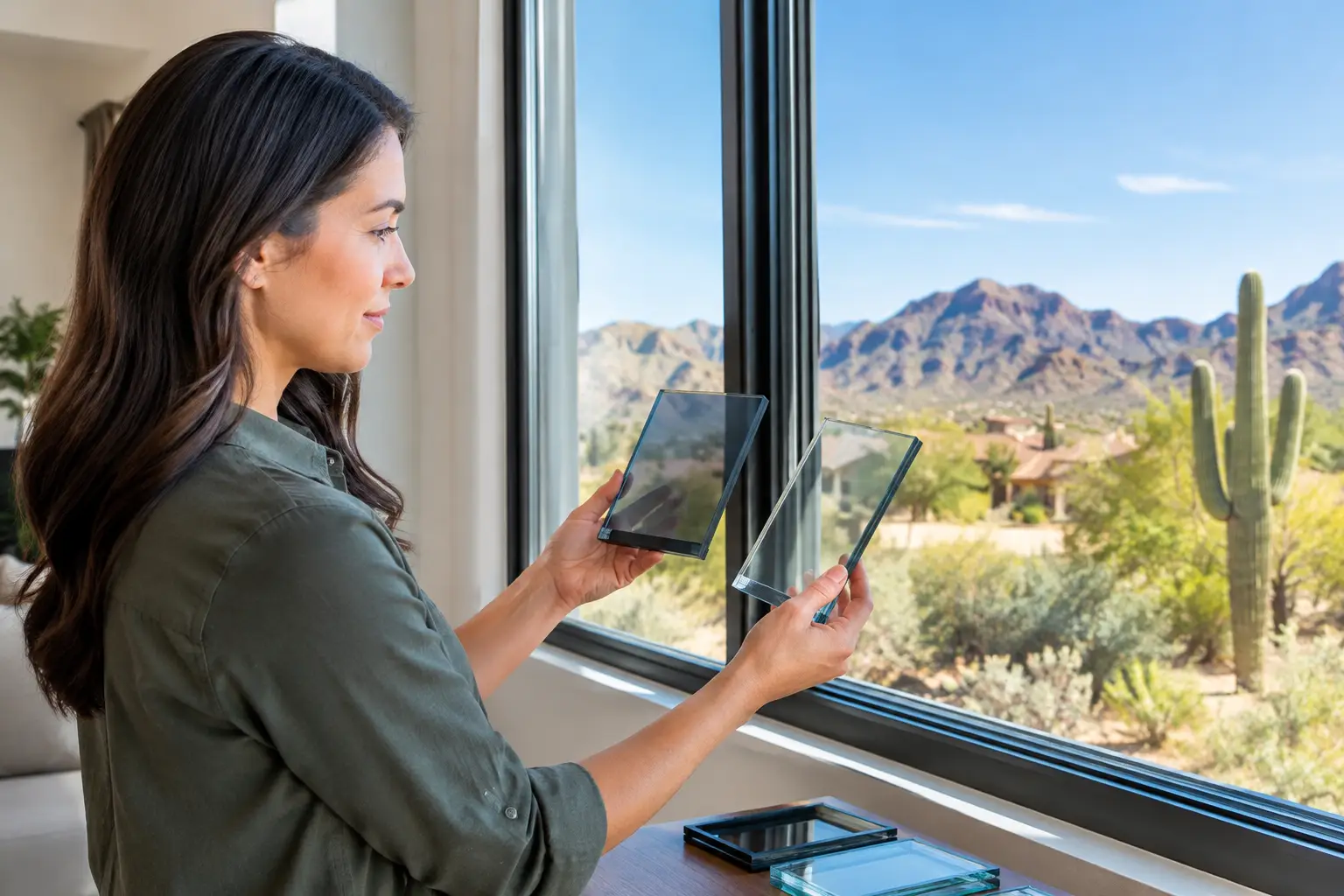
A window can look beautiful in a showroom and still be the wrong performer for a west-facing Phoenix living room. The glass package, or glazing, determines how much solar heat enters the home, how clearly you see outside, how much daylight reaches the room, and how well furnishings are protected from fading. Knowing how to choose window glazing starts with the actual conditions around your home, not simply choosing the darkest glass available.
For Arizona homeowners, the best glazing selection usually balances intense sun control with comfortable natural light. It should also suit the window’s orientation, the room’s purpose, the frame material, and the quality of the installation around the opening.
Start With the Sun Exposure at Each Window
Treating every elevation of the house the same is one of the most common missed opportunities in a replacement project. South- and west-facing windows receive the most punishing direct sun. In the afternoon, west-facing glass can make a family room or bedroom feel noticeably warmer even when the air conditioning is running well.
East-facing windows generally benefit from managing bright morning light, while north-facing windows receive softer, more consistent daylight. That does not mean every window needs a different product, but it does mean one glazing package may not be ideal everywhere.
A thoughtful consultation looks at the room behind the glass as well. A kitchen may benefit from higher visible light transmission for clear working light. A media room, home office, or bedroom may place more value on glare control. Large glass areas facing a pool, patio, or mountain view need to preserve the view while reducing solar gain.
Understand the Ratings That Matter Most
Window labels contain a great deal of information, but homeowners do not need to become building-science experts to make a strong decision. Three measurements are especially useful when comparing glazing options.
Solar Heat Gain Coefficient
Solar Heat Gain Coefficient, or SHGC, measures how much solar heat passes through a window. The lower the number, the less solar heat the glass admits. In Arizona, a lower SHGC is often a priority, particularly on broad west and south exposures.
Low SHGC glass can reduce the burden on your cooling system and make rooms near windows more comfortable during hot afternoons. However, the lowest available number is not automatically the best choice for every opening. Very aggressive solar-control glazing can reduce daylight or alter the appearance of the glass. The right target depends on orientation, shading, and how you use the space.
U-Factor
U-factor measures how readily a window transfers heat. Lower numbers indicate better insulation performance. Although Arizona homeowners focus understandably on summer heat, U-factor still matters. Cool desert nights, winter mornings, and year-round conditioned living spaces all benefit from glass and framing that limit unwanted heat transfer.
Glazing performance is only part of this equation. Spacer systems, multiple panes, frame construction, and careful air sealing affect the window’s overall rating and real-world comfort.
Visible Transmittance
Visible transmittance, often shown as VT, indicates how much visible light passes through the glazing. A higher number generally means a brighter room. This rating helps prevent a common frustration: selecting high-performance glass that controls heat well but leaves an interior unexpectedly dim.
The goal is not maximum brightness. It is useful daylight without excessive glare, fading exposure, or afternoon heat. A well-chosen low-E coating can improve solar control while retaining a clear, welcoming appearance.
Choose Low-E Glass for Arizona Heat and Fading Protection
Low-emissivity, or low-E, coatings are thin, nearly invisible layers applied to glass that help manage heat transfer. For replacement windows in the Phoenix area, a solar-control low-E coating is often one of the most valuable glazing decisions a homeowner can make.
The coating reflects a portion of the sun’s infrared energy, helping reduce solar heat gain without requiring heavily tinted glass. Many low-E packages also filter a meaningful amount of ultraviolet radiation, which can help protect flooring, artwork, upholstery, cabinets, and window treatments from premature fading.
There is a trade-off to discuss openly. Some coatings create a subtle difference in exterior reflectivity or interior light quality. Gray, bronze, and other tints can further reduce heat and glare, but they also change how the window looks from inside and outside. If preserving a bright, neutral view is a priority, clear solar-control low-E glass may be preferable to a darker tint.
Consider Double Pane, Triple Pane, and Gas Fills Carefully
Double-pane insulated glass is a practical standard for many Arizona replacement projects. Two panes separated by a sealed airspace provide better thermal performance than single-pane glass, while supporting a wide range of low-E and tint combinations.
Triple-pane glass adds a third pane and another insulating space. It can improve U-factor and may provide additional sound reduction, but it is not an automatic upgrade in a hot, dry climate. Triple-pane units are heavier, can affect available frame choices, and may offer a smaller return on investment than upgrading the low-E coating, frame, or installation scope.
Argon gas between panes is commonly used to improve insulating performance. It is colorless and does not affect the view. The best choice comes down to the complete window rating rather than one feature in isolation. Ask to compare the performance values for the full unit, not just the center portion of the glass.
Match Specialty Glass to the Room and Opening
Some locations require more than standard insulated glazing. Tempered safety glass is typically used where building code calls for it, including areas near doors and certain low-to-floor applications. When a home has unusually large panes, expansive patio openings, or a design that places glass near walkways, safety requirements should be addressed early in the selection process.
Laminated glass is worth considering when sound reduction, enhanced security, or additional UV filtering is a priority. It uses an interlayer between panes that helps hold the glass together if broken. For homes near busy streets, active neighborhoods, or frequent outdoor activity, laminated glazing can make the interior noticeably quieter, though results also depend on frame quality and perimeter sealing.
Decorative options such as obscure or frosted glass can provide privacy in bathrooms, side-yard windows, and entry areas. These choices should be made with daylight in mind. A privacy glass that looks ideal on a sample may distribute light differently once installed across a larger opening.
Do Not Separate Glass Choice From Installation Quality
Even excellent glazing cannot perform as intended when the window is poorly integrated into the wall. Older Arizona homes may have block frames, stucco finishes, aging flashing conditions, or previous installations that concealed water-management problems. Replacing a window correctly can involve more than setting a new unit into an existing opening.
The surrounding work may include frame preparation, weatherproofing, vapor barriers, tar paper, foam and lath, stucco restoration, drywall repair, and precise finish work. These details protect the investment, help limit air infiltration, and preserve the polished appearance of the home.
This is also why comparing proposals solely by glass type can be misleading. One estimate may include a basic insert approach, while another accounts for opening conditions, structural needs, exterior restoration, and a more complete weather-resistive installation. The glazing should be specified alongside the installation method, not apart from it.
How to Choose Window Glazing Without Overpaying
A good decision begins with priorities. If cooling costs and harsh afternoon sun are your chief concerns, invest first in a strong solar-control low-E package with an appropriate SHGC. If a room feels dark already, protect visible light transmission rather than choosing the darkest coating. If road noise or security is a concern, evaluate laminated glass where it will make the greatest difference instead of applying it indiscriminately throughout the house.
It also helps to request glass samples or view installed examples in natural light. Ask how the selected glazing will look against your exterior color, whether nearby windows will have a matching appearance, and what the full-window NFRC ratings are. For homes with an HOA, confirm exterior tint, reflectivity, and grid requirements before placing an order.
Greco Roman Windows and Doors can help homeowners weigh those choices against their home’s orientation, existing construction, design goals, and budget. A tailored recommendation should explain what each glazing upgrade accomplishes and where it is unlikely to provide enough value to justify the cost.
The right glazing should make your home feel calmer at 4 p.m. in July, brighter when you want daylight, and more protected year after year. Schedule a free in-home consultation before selecting a window package, so the glass, frame, opening preparation, and finished appearance are planned as one complete project.