A narrow sightline can transform a wall of glass into a cleaner, more contemporary feature. But in Arizona, a frame has to do far more than look good. The decision between fiberglass versus aluminum frames affects cooling comfort, glass area, durability, maintenance, project cost, and how successfully the new window or door performs within the home’s existing stucco opening.
For many homeowners, both materials are worthy choices. Fiberglass is valued for thermal performance and dimensional stability, while thermally improved aluminum is often the right answer for expansive openings, modern architecture, and door systems that need exceptional strength. The better selection is not simply the more expensive one. It is the one that fits the opening, the elevation, the home’s design, and the level of installation work required.
Fiberglass Versus Aluminum Frames in Arizona Heat
Phoenix-area homes experience punishing sun, major temperature swings between day and night, wind-driven dust, and long cooling seasons. Those conditions put frame materials to work. A replacement window should limit unwanted heat transfer, support properly selected insulated glass, operate smoothly, and remain securely integrated with the wall assembly for years.
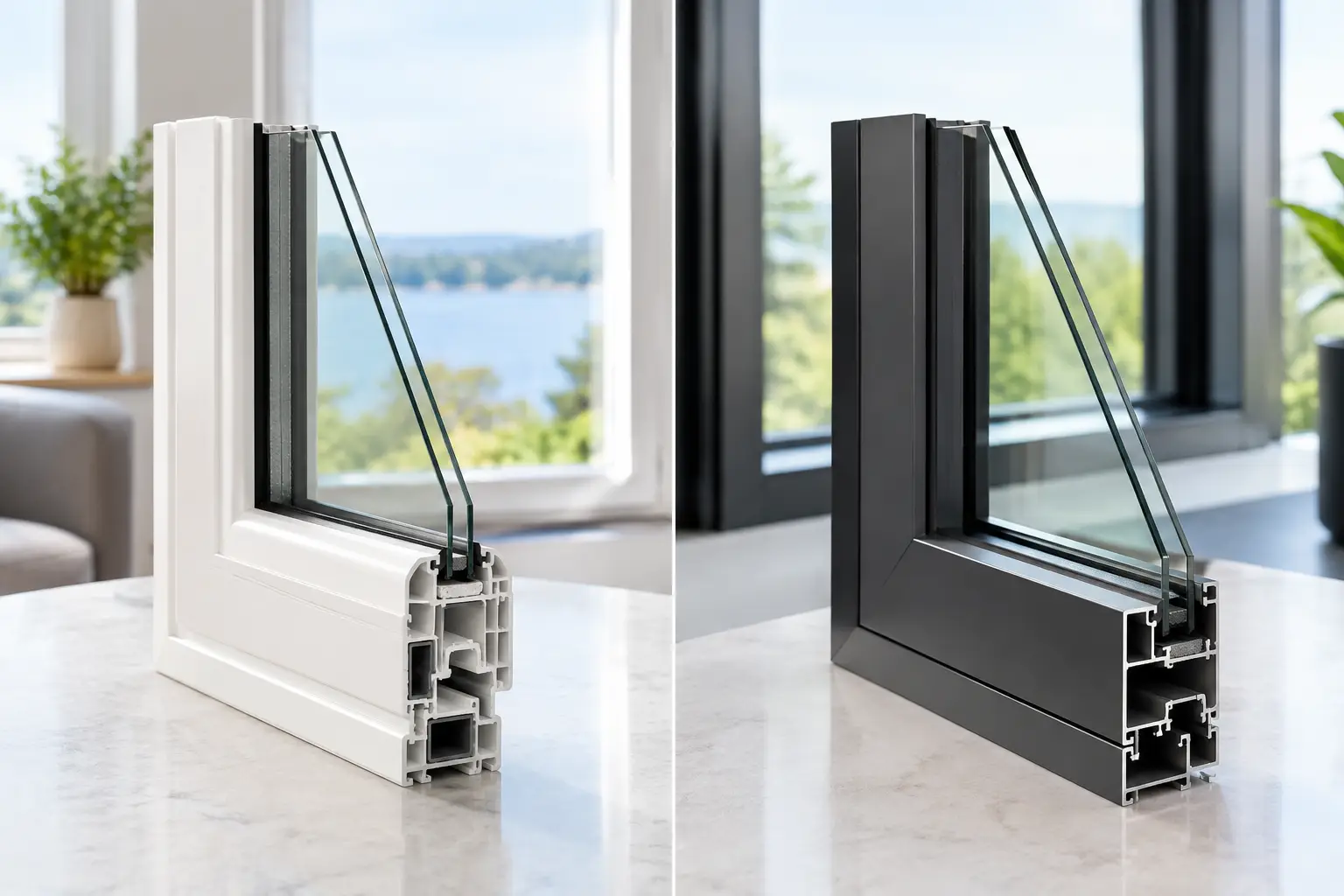
Fiberglass frames are made from glass fibers set in resin. The material expands and contracts at a rate closer to glass than many other frame options. That compatibility can help support long-term seals and create a stable platform for insulated glass units. Fiberglass also does not conduct heat as readily as standard aluminum, which makes it a strong choice for homeowners focused on improving comfort near windows and controlling summer cooling demands.
Aluminum is naturally conductive. Without thermal improvements, exterior heat can travel through the frame more easily than it does through fiberglass. Modern thermally improved aluminum products address this concern with insulating barriers that separate interior and exterior portions of the frame. These systems can deliver substantially better performance than older aluminum windows while retaining the material’s structural advantages.
That distinction matters. Comparing fiberglass to outdated, non-thermal aluminum does not give a homeowner the full picture. The relevant comparison is often fiberglass against a quality thermally improved aluminum system, paired with the right low-emissivity glass package and installed with disciplined weatherproofing.
Where Fiberglass Frames Excel
Fiberglass is often selected for established homes where energy performance, a substantial frame appearance, and low maintenance are priorities. It can be manufactured with a refined painted finish and, in some product lines, a wood-like interior appearance that suits traditional, transitional, and updated desert architecture.
Its thermal qualities are a practical advantage, not just a specification on paper. A better-insulating frame can help reduce the hot-to-the-touch feeling around a sun-exposed window and may contribute to more consistent room temperatures when the whole window system is properly designed. Homeowners replacing aging single-pane units or poorly sealed frames may notice a meaningful improvement in comfort and exterior noise control.
Fiberglass is also stable under heat. Arizona sunlight is not forgiving of materials that warp, soften, or move excessively. A premium fiberglass frame is built to hold its shape, support smooth operation, and maintain clean reveal lines around the opening.
Still, fiberglass is not automatically the best choice for every project. Frame profiles can be thicker than aluminum, depending on the manufacturer and product series. On a large picture window or a wide multi-panel opening, that difference can reduce the visible glass area. Fiberglass products also tend to carry a higher initial material cost, particularly in custom colors, large sizes, or specialty configurations.
Why Aluminum Remains a Strong Architectural Choice
Aluminum has earned its place in Arizona homes for a reason. It is strong, relatively lightweight, and capable of supporting large glass panels with slim, crisp profiles. For homeowners planning broad views, contemporary elevations, stacking doors, or dramatic indoor-outdoor living areas, aluminum can offer a visual result that fiberglass may not match in the same configuration.
The strength of aluminum allows manufacturers to engineer narrow frame sections while maintaining the rigidity needed for sizable openings. That means more daylight, stronger view lines, and a less obstructed connection to a patio, pool area, or mountain view. It is especially valuable when a remodeling project includes structural alterations, such as widening an opening or replacing a conventional patio door with a larger multi-panel system.
Aluminum also performs well in dry conditions when it is properly finished and maintained. Quality coatings resist fading and help preserve a clean appearance under intense sun. Thermally improved aluminum frames are a far better fit for a climate-conscious replacement project than older aluminum systems with little separation between outdoor heat and indoor surfaces.
The trade-off is straightforward: even with a thermal break, aluminum generally will not insulate as effectively as a comparable fiberglass frame. A homeowner prioritizing the lowest possible heat transfer in bedrooms, west-facing rooms, or smaller replacement openings may find fiberglass more compelling. But if the project calls for oversized panels, narrow profiles, and architectural scale, aluminum’s structural capability may justify the investment.
Frame Material Is Only Part of Energy Performance
A frame does not work alone. Glass selection, orientation, air sealing, installation method, and the condition of the surrounding wall all shape real-world performance. Two windows with the same frame material can produce very different results if one has a better glass package or a more complete installation.
For Arizona homes, low-emissivity coatings and appropriate solar heat gain performance are often central to the decision. West- and south-facing elevations may need a glass configuration designed to limit intense solar gain without making interior spaces feel overly dark. A qualified consultation should consider the direction each opening faces, surrounding shade, room use, existing HVAC concerns, and the homeowner’s expectations for visible light.
Air infiltration deserves equal attention. Replacing a window without addressing gaps, failed perimeter sealant, or deteriorated backing materials can leave performance on the table. This is why a complete scope may include foam insulation, vapor barriers, tar paper, lath, and stucco restoration where conditions require it. The visible frame is only the finished edge of a much larger weather-management system.
Matching the Frame to the Home and Project Scope
Fiberglass is often a natural fit for homeowners who want a premium replacement window with strong thermal characteristics, lasting color, and a substantial look. It works particularly well in bedroom windows, living room picture windows, and homes where comfort and energy efficiency take priority over ultra-thin frame lines.
Thermally improved aluminum is often the stronger choice for modern homes, large openings, and exterior door systems where slim profiles and structural capacity matter most. It can be especially effective for contemporary patio door designs, expansive glass walls, and projects where the design goal is to maximize the view.
Budget should be part of the conversation, but it should not be the only factor. The least expensive option can become costly if it limits the desired design, fails to address heat exposure, or requires compromises in the opening. Conversely, selecting a premium frame where a simpler product would meet the home’s needs can add cost without meaningful benefit. A careful estimate should clarify where the money is going: product quality, glass package, opening modifications, waterproofing, finish restoration, and labor.
HOA requirements can also affect color, exterior profile, divided-lite patterns, and permitted changes to openings. Before ordering custom products, homeowners should confirm what is allowed and account for review timelines. This is particularly relevant in Scottsdale, Paradise Valley, and planned communities throughout the Valley where architectural standards are closely managed.
Installation Determines Whether the Upgrade Lasts
Even the best fiberglass or aluminum frame cannot overcome a careless installation. Older Arizona homes may have cracked stucco, uneven framing, hidden water intrusion, or openings that were never properly flashed. These conditions need to be identified before a new unit is set in place.
A detail-intensive installation begins with accurate measurements and an honest assessment of the opening. If the project involves changing window size, adding natural light, or converting an opening for a new door configuration, the work may require framing changes, structural planning, exterior patching, drywall repair, and finish matching. The goal is not to make the new unit appear inserted. It is to make it look and perform as though it belongs to the home.
At Greco Roman Windows and Doors, the recommendation starts with the project rather than a predetermined material. A fiberglass replacement may be ideal for one elevation, while thermally improved aluminum is the better answer for a wide door opening elsewhere on the same property. That tailored approach protects both the design intent and the long-term value of the investment.
The right frame should make the home feel quieter, more comfortable, more secure, and more finished without demanding attention every day. Schedule a free in-home consultation to evaluate the opening, compare appropriate frame systems, and build a replacement plan that respects both your home’s architecture and Arizona’s climate.