
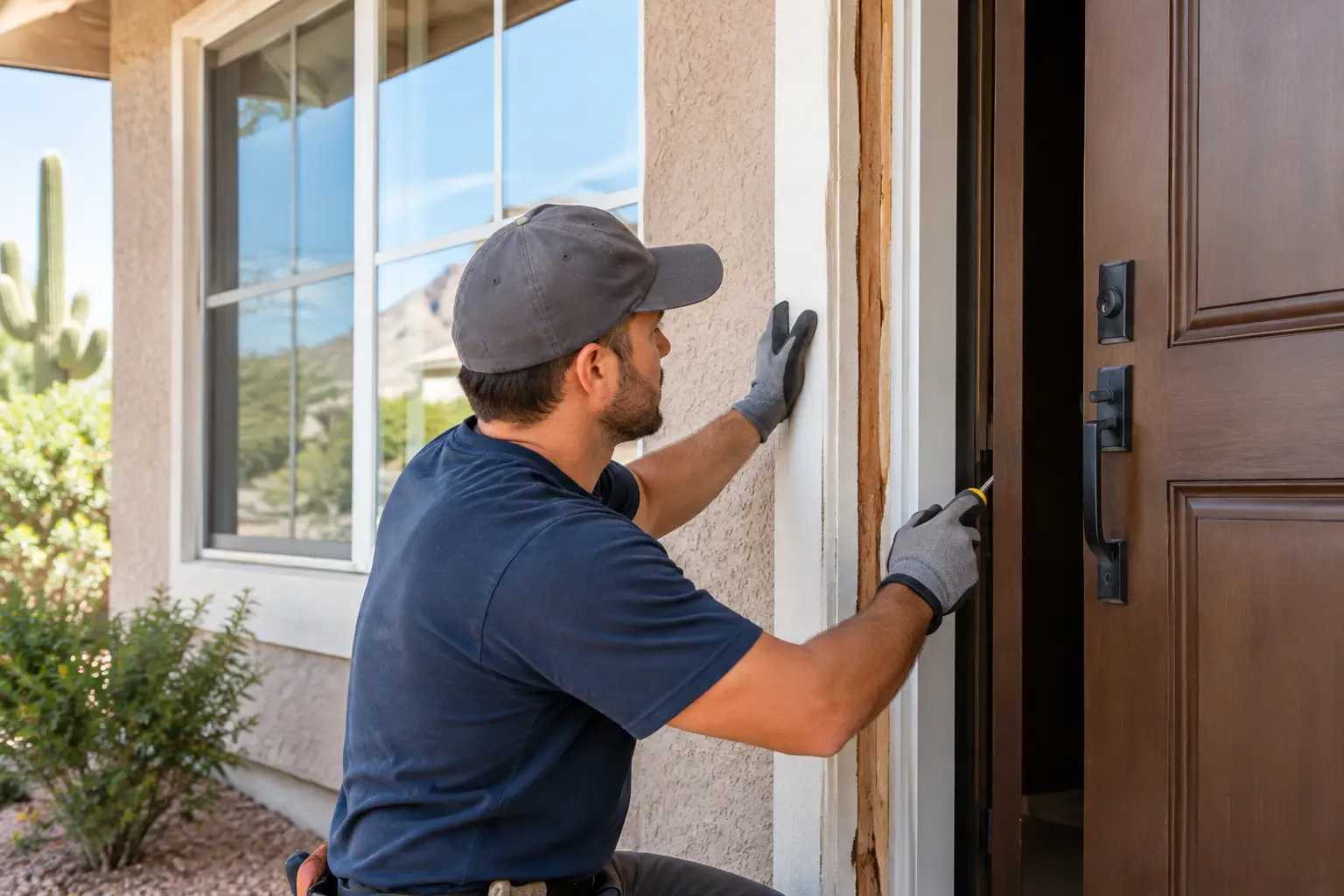
A door can look perfectly acceptable from across the room while the frame behind it is quietly failing. In Arizona, relentless sun, monsoon moisture, settling foundations, and years of hard use can turn a once-tight exterior opening into a source of drafts, security concerns, and unfinished-looking damage. Exterior door frame repair addresses the structure around the door, not just the symptoms homeowners see at the threshold.
For established homes in Phoenix, Scottsdale, Paradise Valley, and Chandler, the right solution depends on what caused the damage and how far it extends. A localized issue may call for targeted frame work and finish restoration. Rot, structural movement, or a poorly installed original unit may make a full replacement and opening rebuild the wiser long-term investment.
Signs Your Exterior Door Frame Needs Attention
The first warning is often a door that no longer operates smoothly. It may scrape the threshold, stick during certain seasons, swing open on its own, or require extra force to latch. Those problems can originate with worn hinges, but they can also point to a frame that has shifted, deteriorated, or lost its proper support.
Look closely at the jambs, sill, trim, and surrounding wall finish. Soft wood, peeling paint concentrated around one area, cracked caulk, separated trim, or staining near the lower corners can indicate moisture exposure. On stucco homes, cracks around the opening deserve a careful inspection as well. They may be cosmetic, but they can also signal movement or a failed weatherproofing detail behind the exterior finish.
Other signs include daylight around the perimeter, visible gaps when the door is closed, loose strike plates, rattling in the wind, and outdoor heat entering around the opening. A compromised frame can reduce the effectiveness of even a quality door slab. It can also weaken the latch area, which matters for everyday security.
Why Arizona Door Frames Fail Differently
Arizona does not have the freeze and thaw cycles that affect homes in colder climates, but the climate still places real stress on exterior openings. Intense UV exposure can dry and crack caulking, paint, wood components, and exposed weatherstripping. High heat causes materials to expand, while cool nights and seasonal shifts create repeated movement at joints.
Monsoon storms add another layer of risk. Wind-driven rain can find its way behind failed sealant, exterior trim, or stucco cracks. If the original installation did not include proper flashing, a vapor barrier, and drainage planning, water can become trapped at the rough opening. The visible deterioration may be limited to a small section of jamb, while the concealed framing and wall materials require more extensive attention.
Older Arizona homes also commonly have block construction, wood-framed additions, past remodels, or openings modified by previous owners. Each condition requires a different approach. A repair that works on a conventional wood-framed wall may not be appropriate for a block frame or an opening with cracked stucco and limited backing.
Exterior Door Frame Repair Starts With the Cause
A lasting repair begins with an inspection of the entire opening. The goal is not simply to cover damaged material with trim or add more caulk. A qualified installer should determine whether the issue comes from water intrusion, sun damage, settlement, incorrect shimming, an undersized header, failed fasteners, or a door system that was never properly fitted.
If damage is isolated and the surrounding structure remains sound, selective repair can preserve the existing opening. This may include removing deteriorated jamb material, rebuilding the affected section, correcting the strike area, replacing exterior trim, and restoring the weather seal. The door must then be checked for plumb, level, square, and consistent reveal around all sides.
When moisture has traveled into the rough opening, a more complete scope is often necessary. The existing door system may need to come out so the team can evaluate framing, replace compromised material, install appropriate flashing and moisture management layers, and rebuild the opening before fitting the new unit. This is more involved, but it resolves the condition behind the finished surface instead of leaving it in place.
Repair or Replacement: Which Is the Better Value?
Repair is usually the better value when damage is limited, the current door is still efficient and secure, and the opening is structurally stable. It can restore operation, improve appearance, and stop a minor issue from becoming a larger construction project.
Replacement becomes more practical when the door is outdated, warped, difficult to secure, poorly insulated, or nearing the end of its service life. It is also the stronger choice when frame damage is widespread or the homeowner wants to alter the opening for a larger entry system, patio door, or improved indoor-outdoor living.
The trade-off is straightforward: targeted repair can reduce immediate cost, while a complete replacement can provide a more comprehensive reset for energy performance, weather protection, and curb appeal. The right decision should be based on the condition of the home, not on a one-size-fits-all recommendation.
What Quality Frame Work Should Include
Exterior door frame work is construction work. The finished result depends on what happens behind the trim as much as what homeowners see after cleanup. Careful installation typically includes removal of damaged materials, inspection of the rough opening, correction of structural issues, proper shimming and fastening, and weatherproofing suited to the wall assembly.
For stucco exteriors, this can involve integrating tar paper or other moisture-resistive barriers with the existing wall system, then completing foam and lath work before the stucco repair. Interior drywall, texture, paint, and trim may also need restoration once the frame has been corrected. Those details are not extras. They are how the repaired opening becomes part of the home again.
The door itself must be installed to operate precisely. The threshold should sit correctly, the sweep should make reliable contact, and the lockset should engage without forcing the door into position. A door that latches only when lifted or pushed is not finished properly, even if the frame looks new.
Materials Matter, But Installation Matters More
Wood frames offer traditional character and can be repaired in many situations, but they require ongoing protection from moisture and sun. Fiberglass and thermally improved aluminum door systems can be strong choices for Arizona homes because they handle heat exposure well and can support a clean, durable exterior appearance. Vinyl may be appropriate for certain applications and budgets, depending on the size and design of the opening.
No material compensates for poor preparation. A premium door installed into a weak, out-of-square, or unprotected opening will still develop operational and weather-related problems. That is why homeowners should evaluate the proposed installation scope, not only the door product and quoted price.
Questions to Ask Before Approving the Work
A clear estimate should explain whether the work addresses only the visible frame or includes the rough opening, moisture barrier, exterior finish, and interior restoration. Ask what caused the damage, what materials will be removed, and how the new weatherproofing will tie into the existing wall.
It is also reasonable to ask how the team will protect nearby stucco, flooring, and furnishings; whether structural corrections are anticipated; and what happens if concealed damage is found after removal. Transparent answers help prevent unpleasant surprises and allow you to compare proposals based on scope rather than price alone.
Greco Roman Windows and Doors approaches exterior openings as complete systems, with careful attention to framing, vapor barriers, finish restoration, and the precise fit of the final door. That level of care is especially valuable when an older Arizona home has a complicated stucco condition or a prior installation that left little room for error.
A damaged frame rarely improves on its own. If your door sticks, leaks air, shows separation around the jamb, or no longer closes with confidence, a professional assessment can clarify whether a focused repair will protect your investment or whether rebuilding the opening will serve your home better for years ahead. Schedule a free in-home consultation before a small perimeter issue becomes a larger wall repair.