
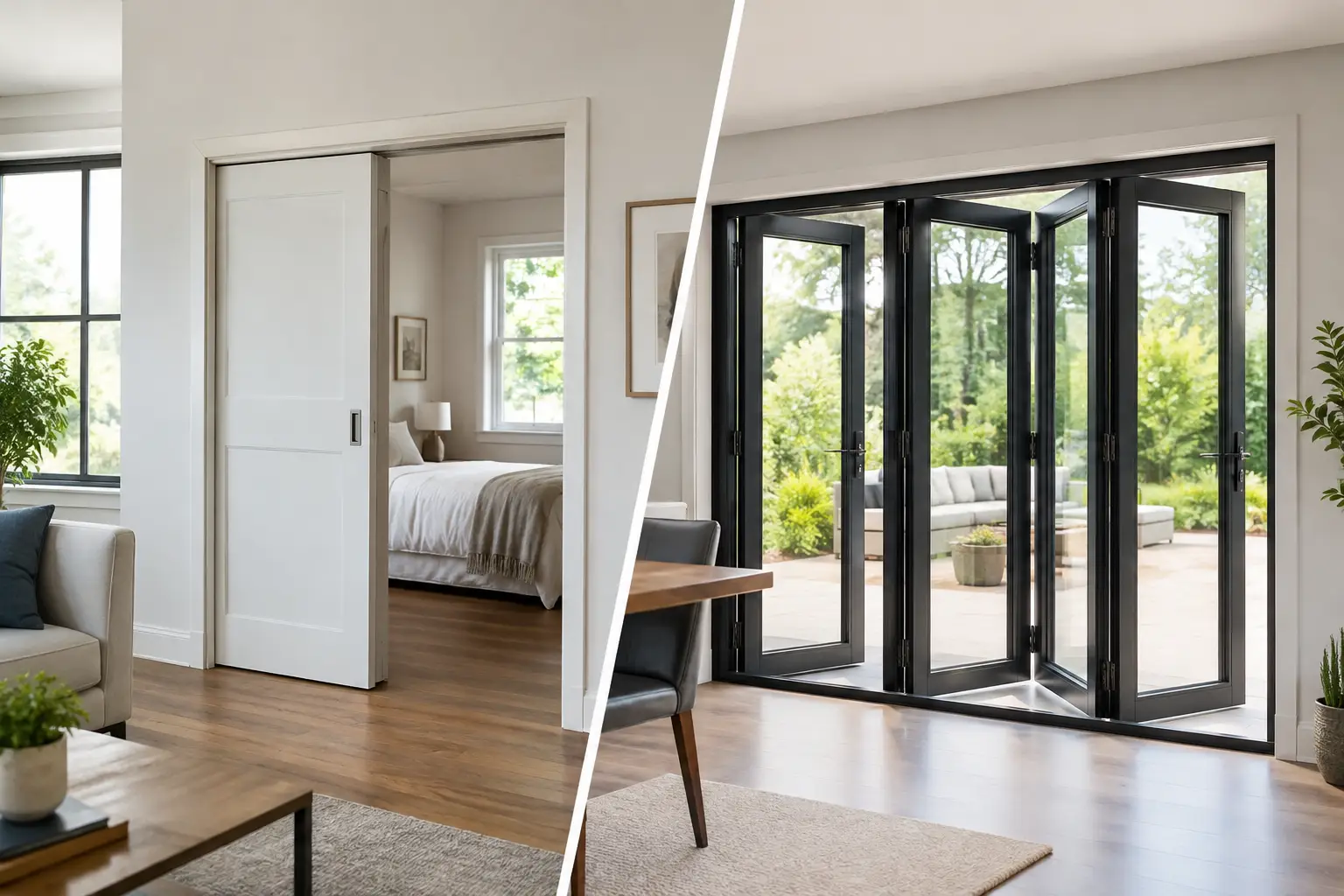
A patio opening should do more than provide a way outside. It should frame the yard, welcome daylight, operate smoothly, and stand up to Arizona heat without becoming a weak point in the home. When homeowners compare pocket versus bifold doors, they are usually choosing between two very different ways to open a wall to the outdoors. Both can be striking upgrades, but the right answer depends on your home’s layout, structure, exposure, and how you plan to use the opening.
Pocket Versus Bifold Doors at a Glance
Pocketing doors slide on a track, with one or more panels disappearing into concealed wall pockets when fully open. The result is a broad, unobstructed transition from the interior to a patio, pool area, or covered outdoor living space. Depending on the system and opening width, panels may pocket to one side or split and pocket in both directions.
Bifold doors, sometimes called folding doors, use hinged panels that fold and stack at one or both sides of the opening. When closed, they create a wall of glass. When opened, the panels gather into a compact stack, leaving most of the opening clear while keeping the folded panels visible at the edge.
The distinction matters. A pocketing system prioritizes a clean, open wall with no door panels in sight. A bifold system prioritizes flexibility, allowing homeowners to open one panel for everyday use or fold back the entire system for entertaining.
When Pocketing Doors Make the Stronger Statement
Pocketing doors are often selected for homes where the outdoor view is part of the architecture. With panels fully concealed, there is no stacked-door bundle interrupting the opening. This can make a family room feel connected to a covered patio or make a poolside entertaining area feel considerably larger.
They work especially well when there is sufficient wall space on one or both sides of the opening. That condition is not as simple as it sounds. The wall must be deep and wide enough to receive the panels, and it cannot contain plumbing, electrical components, cabinetry, or structural elements that conflict with the pocket. In older Arizona homes, determining what is inside the existing wall is a critical early step.
A quality pocketing door installation may require substantial opening modifications. The project can involve reframing, a new header or engineered beam, structural support, exterior weatherproofing, vapor barriers, stucco work, drywall restoration, and finish matching. For the homeowner, that is precisely why installation expertise should carry as much weight as the door system itself.
Pocketing doors also have a practical advantage around traffic flow. When the system is open, there are no panels folding into the patio or taking up usable space at the side of the opening. This can be valuable in a narrow courtyard, beside outdoor furniture, or near a frequently used grilling area.
Consider the wall and the maintenance access
The concealed pocket is visually impressive, but it demands thoughtful planning. The tracks, rollers, drainage paths, and pocket cavity need to be detailed so the system remains serviceable over time. A door should not be treated as a decorative insert in a wall. It is a large moving assembly that must be level, properly supported, protected from moisture, and aligned precisely to operate as intended.
For homes exposed to blowing monsoon rain or intense afternoon sun, sill design and water management deserve special attention. A low-profile sill may create an elegant transition, but it must be paired with appropriate drainage and site conditions. The best choice balances appearance, accessibility, and long-term weather performance.
Where Bifold Doors Offer More Flexibility
Bifold doors are a strong option for homeowners who want a dramatic opening but also want simple day-to-day access. Many configurations include a traffic door, allowing someone to step outside without sliding or folding the full system. That is useful for households with pets, frequent patio use, or a pool area accessed throughout the day.
Because bifold panels stack at the side rather than disappear into a wall, they can sometimes be more feasible where side-wall space is limited or where creating a recessed pocket would add extensive structural work. They still require careful framing and a correctly prepared opening, especially across wider spans, but they do not require a concealed cavity for the panels.
When open, the stacked panels become part of the visual composition. Some homeowners appreciate this framed edge because it gives the patio opening a tailored, architectural look. Others prefer the completely clear opening produced by a pocketing system. Neither is objectively better. It comes down to how clean and minimal you want the open wall to feel.
Bifold doors can also offer versatile ventilation. Opening a single panel brings in fresh air without fully exposing the room to heat, wind, or direct sun. During Arizona’s milder months, folding back several panels can turn a dining room or great room into an indoor-outdoor gathering space.
Understand the threshold and stacking space
The folded panels need somewhere to go. Before selecting a bifold system, consider the location of outdoor furniture, columns, railings, planters, and walkways. A stack that interferes with a passage or blocks a preferred furniture layout can make an otherwise beautiful door less enjoyable to use.
Threshold selection is equally important. A higher-performance sill can improve weather resistance, while a lower threshold can create a smoother transition. The right specification depends on exposure, drainage, floor elevation, and whether the opening sits beneath a well-protected patio cover or faces open weather.
Energy Performance in Arizona Conditions
Large glass door systems are often chosen for daylight and views, but they need to be designed for the desert climate. The frame material, glazing package, low-emissivity coating, tint, insulation values, and orientation all influence comfort near the opening.
For a west-facing wall, reducing solar heat gain may be a higher priority than maximizing visible light. For a shaded north-facing patio, homeowners may choose a different glass package to preserve a brighter view. Frame performance matters as well. Thermally improved aluminum, fiberglass, vinyl, and wood-clad options each have different strengths in terms of appearance, maintenance, expansion, insulation, and budget.
Neither pocketing nor bifold doors automatically perform better simply because of their operating style. Performance depends on the specific system and how it is installed. Proper flashing, foam insulation, water-resistive barriers, and careful integration with stucco are essential to protecting the opening around any large exterior door.
Cost Depends on More Than the Door Unit
It is tempting to compare only the price of the door itself. For a project of this scale, the full scope is what determines the investment. A larger opening may require engineering, reframing, structural support, exterior finish repair, interior drywall work, electrical relocation, flooring transitions, and paint restoration.
Pocketing doors can involve higher construction complexity because their panels must recess into the wall. Bifold doors may reduce that particular requirement, though wide or tall bifold openings can still require significant structural preparation. Product size, panel count, frame material, glass selection, hardware finish, and the condition of the existing opening all affect pricing.
A detailed in-home consultation should identify these conditions before work begins. Homeowners deserve to know whether an attractive design concept will require opening modifications, what finish repairs are included, and how the installation will protect the surrounding home throughout construction.
How to Choose Between the Two
Choose a pocketing door when your priority is the most unobstructed possible opening, your wall layout can accommodate recessed panels, and you want the interior and patio to feel almost continuous. It is particularly compelling for view-focused spaces and high-end outdoor living areas where the open-door appearance matters as much as the closed-door appearance.
Choose a bifold door when you value flexible access, want the option to use one panel as an everyday entry, or prefer not to create wall pockets. It can be an excellent fit for entertaining spaces, patios with adequate room for stacked panels, and homes where a folding configuration better suits the existing structure.
The most successful projects begin with the opening itself, not a catalog photo. Greco Roman Windows and Doors evaluates the framing, wall conditions, stucco, weather exposure, and finish details that determine whether a large door system will look refined and perform reliably. Schedule a free in-home consultation to see what your wall can support, then choose the door that will make your home feel better every time you open it.