
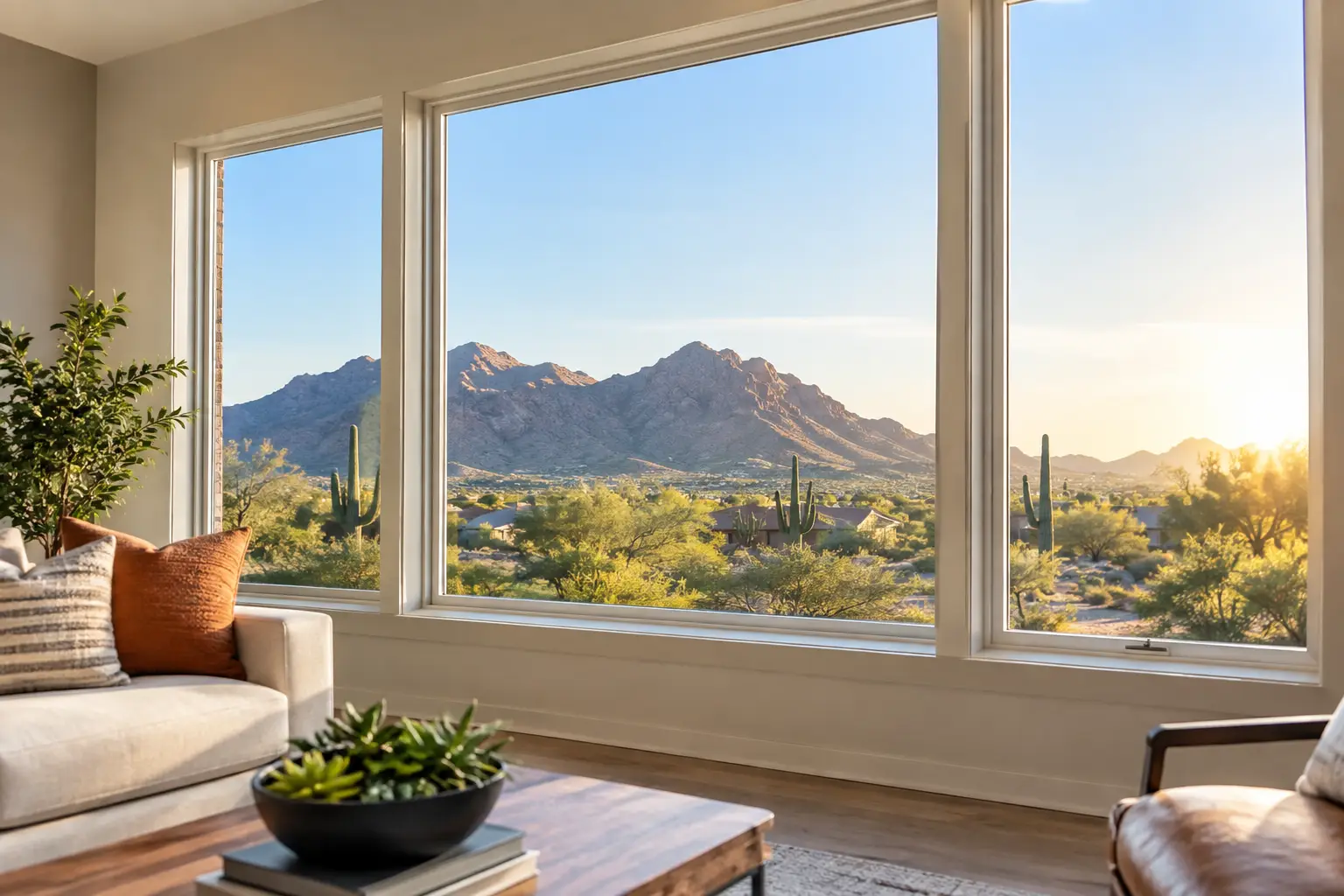
A Phoenix-area window can look excellent on installation day and still disappoint a year later if its frame, glass package, and perimeter sealing were not selected for the heat. Milgard window performance is best judged as a complete system: the window itself, the conditions of the opening, and the workmanship that connects it to your home.
For homeowners replacing aging aluminum windows, drafty sliders, or faded vinyl units, Milgard offers familiar product options across several material categories. The right choice depends on more than a showroom sample. Your home’s sun exposure, wall construction, architectural style, HOA requirements, budget, and plans for resale all affect what performance will mean in real life.
What Milgard Window Performance Means in Arizona
Window performance begins with heat control. Arizona homes face intense solar exposure for much of the year, especially on west- and south-facing elevations. A quality replacement window can help limit solar heat gain, reduce hot spots near the glass, and support more consistent indoor temperatures. It cannot eliminate the impact of direct afternoon sun on its own, but the right configuration can make rooms more comfortable and lessen the burden on the cooling system.
The label values matter, but they need context. U-factor measures how readily heat moves through the window assembly. Lower numbers generally indicate better insulating performance. Solar Heat Gain Coefficient, or SHGC, indicates how much solar heat passes through the window. In Arizona, a lower SHGC is often valuable on heavily exposed walls. Visible transmittance describes how much natural light enters, which matters when a homeowner wants brightness without excessive heat.
The best numbers are not automatically the best selection. A very low SHGC can be appropriate for a sun-baked west elevation, while a homeowner preserving daylight in a shaded courtyard may prefer a different balance. Frame color, overhangs, exterior shade, surrounding hardscape, and room use all deserve consideration during the design process.
Frame Material Changes the Result
Milgard manufactures window lines in materials that serve different project priorities. Vinyl remains a practical choice for many replacement projects because it is cost-conscious, low-maintenance, and available in common operating styles. A well-made vinyl window with an appropriate glazing package can be a strong fit for homeowners focused on efficiency and clean curb appeal.
Fiberglass is often considered when a project calls for a more rigid frame, slimmer sightlines, or a material that handles temperature swings with less expansion and contraction than vinyl. That distinction can matter on broad openings and elevations exposed to prolonged afternoon heat. Fiberglass typically comes at a higher initial cost, so its value is strongest when the home’s design goals, opening sizes, and long-term priorities justify the investment.
Aluminum-frame options can suit contemporary architecture and homes where narrow profiles are central to the look. Standard aluminum is conductive, however, which makes thermal design especially important. Thermally improved aluminum systems can offer a more appropriate solution for Arizona homeowners who want the architectural character of metal frames without accepting the same level of heat transfer associated with older units.
There is no single “best” frame for every home. A practical vinyl replacement may make sense for a rental property or a straightforward bedroom update. Fiberglass or thermally improved aluminum may be better suited to a major modernization, large picture windows, or a home where refined proportions are part of the investment.
Glass Choices Have the Biggest Daily Impact
In an Arizona climate, glass selection often has more effect on comfort than homeowners expect. Low-emissivity coatings help manage solar energy and can reduce the fading effects of sunlight on flooring, fabrics, artwork, and furnishings. Insulating glass units add another layer of thermal control compared with old single-pane windows.
The key is specifying the coating and glass package for each exposure rather than treating every opening identically. A large fixed window facing the setting sun has different demands than a small, protected bathroom window. Bedrooms may benefit from a combination of solar control and sound reduction. A front elevation may require careful attention to tint and exterior appearance so the new windows complement the home rather than looking mismatched.
Noise control is another worthwhile consideration, although it is not guaranteed by thicker or insulated glass alone. Glass construction, airspace, frame quality, operating style, and installation all influence sound transmission. If a home is near a busy street, school route, or active neighborhood corridor, discussing acoustic priorities before ordering is more effective than trying to solve the issue after installation.
Installation Determines Whether Ratings Become Real Benefits
A window’s published performance ratings are earned in controlled testing. Your home has older framing, stucco returns, existing flashing conditions, and openings that may not be perfectly square. This is where the installation standard becomes as important as the product selection.
A proper replacement process begins with accurate field measurements and an honest assessment of the existing opening. In some homes, a block-frame replacement preserves the surrounding finishes and works well. In others, a full-frame approach is the better choice because it allows the installer to address deteriorated materials, improve weather protection, or alter the opening for a new design.
For exterior stucco walls, careful removal and reconstruction prevent a finished window from becoming a weak point in the wall system. Depending on the project, this may involve vapor barriers, tar paper, foam and lath, properly integrated flashing, and detailed stucco restoration. Inside, the work may include drywall repair, trim adjustments, paint-ready finishing, and thorough cleanup.
Foam at the perimeter can help close small gaps, but it is not a substitute for proper flashing, shimming, fastening, and water management. A window must be square, level, plumb, and securely supported so it operates smoothly and so weather seals are not placed under unnecessary stress. These details are easy to overlook after the trim is complete, yet they are central to long-term performance.
Operating Style Affects Comfort and Maintenance
Milgard windows are available in operating styles that can suit both traditional and contemporary Arizona homes. Sliding windows are popular for their simple operation and broad horizontal views. Single-hung and double-hung windows can fit classic elevations, though homeowners should consider how often they intend to use them for ventilation. Casement windows can provide a tight compression seal when closed and may capture breezes effectively, but they require enough exterior clearance to open.
Picture windows offer uninterrupted views and abundant light because they do not need operating hardware. They are often paired with operable side units to create a larger visual statement without giving up ventilation. The right mix depends on how the room is used, where furniture sits, and whether the homeowner wants the window primarily for daylight, airflow, or a view.
Security also deserves attention. Modern replacement windows should have dependable locks, secure hardware, and glazing choices appropriate to the opening location. For ground-level rooms or accessible areas, homeowners may want to discuss operation, egress needs, and security priorities as part of the overall design rather than treating them as separate decisions.
How to Evaluate Performance Before You Commit
The most useful consultation is not a quick product pitch. It should identify the condition of the existing windows, measure key openings, review sun exposure, and clarify whether the goal is lower cooling costs, a quieter bedroom, easier operation, improved curb appeal, or a larger remodeling plan.
Ask to see the specific performance information for the proposed window configuration, not just a general brochure. Confirm the frame material, glass package, color availability, operating style, warranty terms, and expected lead time. If your home has stucco, aging wood framing, or unusual window sizes, ask how the contractor will handle waterproofing and finish restoration.
A lower-cost installation can be appropriate when the openings are sound and the scope is straightforward. A more comprehensive package is often justified when there are damaged substrates, significant exterior finish needs, structural modifications, or resale-driven design goals. The right scope should protect the home, not simply fit a new unit into an old opening.
Greco Roman Windows and Doors approaches replacement work with this full-system perspective, combining manufacturer options with old-world-inspired techniques, clear communication, and attention to the construction details around every opening.
A well-chosen Milgard window should feel like a lasting improvement, not merely a new object in the wall. When the glass package fits the exposure, the frame fits the project, and the installation respects Arizona construction realities, homeowners can enjoy a more comfortable, polished home for years to come.