
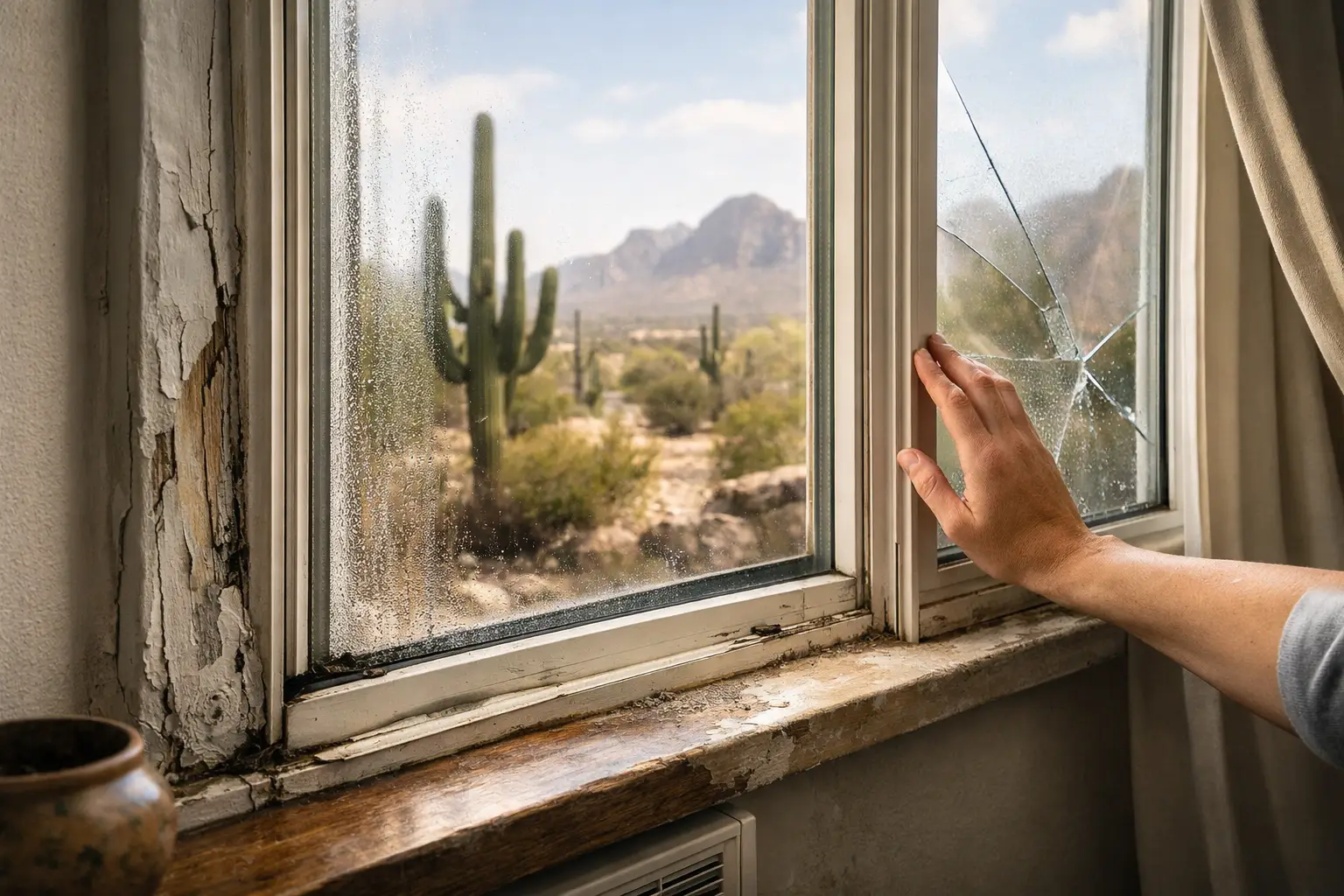
A Phoenix summer can expose a failing window faster than almost anything else in a home. When the afternoon sun turns one room into a hot spot, the air conditioner runs longer, or a sash no longer closes with confidence, the problem is often bigger than comfort. The top signs windows need replacing usually appear gradually, then become hard to ignore once Arizona heat, monsoon weather, and everyday use have taken their toll.
Replacement is not always the answer to every minor concern. A single worn weatherstrip or loose screen is different from a window system that has lost its seal, warped within its opening, or no longer protects the wall around it. The key is recognizing when several symptoms point to an aging window rather than an isolated maintenance issue.
Your Energy Bills Keep Rising While Comfort Drops
A higher utility bill can have several causes, but old or poorly performing windows are often part of the equation. In Arizona, windows endure intense solar exposure for much of the year. When frames, seals, and insulating glass assemblies deteriorate, heat moves into the home more easily. Your cooling system must work harder to maintain the temperature you set.
Pay attention to patterns inside the house. A room that remains noticeably warmer than the rest of the home, cold air near the window during winter evenings, or a persistent draft around a closed sash can signal air leakage. You may also notice that blinds and curtains need to stay closed just to make a room usable in the afternoon.
Modern replacement windows can improve thermal performance, but the product is only one part of the result. Proper flashing, insulation, vapor barriers, and exterior weatherproofing are especially important when an older opening has hidden gaps or compromised materials behind the frame. A window installed without addressing those conditions may look new while leaving the underlying performance issue in place.
The Window Is Difficult to Open, Close, or Lock
A window should operate smoothly and lock securely without excessive force. If you need to push, lift, force, or brace a sash to close it, there may be more happening than normal wear. Heat can cause certain materials to expand and contract over time, while settling, moisture exposure, and aging hardware can affect how the unit sits within its opening.
Sticking windows are also a practical safety concern. In bedrooms, windows may serve as an emergency exit. A window that will not open reliably deserves prompt professional evaluation. Likewise, a lock that no longer aligns or a sash that will not fully engage can weaken both security and weather resistance.
Sometimes adjustment is appropriate. But when operation problems occur alongside drafts, visible frame damage, or water intrusion, replacement is usually the more durable investment. The opening itself should be inspected as part of the decision, particularly on established Arizona homes with stucco exteriors, block frames, or prior remodeling work.
You See Condensation Between Panes or Notice Foggy Glass
Condensation on the room-side surface of a window can occasionally result from indoor humidity. Condensation or haze trapped between panes is different. It commonly indicates that the insulating seal has failed, allowing moisture to enter the space between the panes.
Once that seal is compromised, the window loses a meaningful part of its insulating value and clarity. The view may look permanently cloudy, and the window may no longer perform as designed against exterior heat. In a home with multiple windows of the same age, one failed seal can also be an early warning that others are approaching the end of their service life.
Frames Show Warping, Cracking, Rot, or Separation
Visible damage is among the clearest top signs windows need replacing. Look closely at the corners, exterior trim, interior casing, and the connection between the frame and wall. Cracks, gaps, softened wood, peeling finishes, warping, or areas where the frame has pulled away from surrounding material should not be dismissed as merely cosmetic.
Wood-frame windows can be beautiful and appropriate for certain architectural styles, but they require the right maintenance and protection. Vinyl, fiberglass, and thermally improved aluminum each offer different benefits for Arizona conditions, and the best choice depends on the home’s design, sun exposure, budget, HOA requirements, and long-term goals.
The visible frame is not the only concern. Damage around a window can allow water to travel behind stucco or into wall materials. A complete replacement project may require removal of damaged components, new weatherproofing layers, foam and lath work, stucco repair, drywall restoration, and finish matching. That construction scope is why a careful in-home evaluation matters more than selecting a window from a catalog alone.
Water Stains, Peeling Paint, or Musty Areas Appear Near Windows
Arizona is dry much of the year, but monsoon storms can quickly reveal weak points around aging windows. Stains beneath a sill, bubbling paint, swollen trim, or a musty smell near an opening can indicate that water has entered where it should not. Even if the evidence appears only after heavy rain, the issue deserves attention.
Water intrusion can originate from failed perimeter sealing, improper drainage, deteriorated flashing, or a frame that no longer fits the opening correctly. Simply covering a gap from the exterior may not address the path water has already taken. A professional assessment should identify the condition of the opening, the wall interface, and any repairs needed before the finished surfaces are restored.
Interior Furnishings Are Fading Near Sunny Windows
Sunlight is a valued feature in Arizona homes, especially when it brings mountain views, landscaped courtyards, or a brighter living area. Yet excessive ultraviolet exposure can fade flooring, furniture, artwork, and fabrics over time. If rooms with strong sun exposure show noticeable fading, your windows may not be providing the level of protection your home needs.
Replacement windows with appropriate glass options can help manage solar heat gain and ultraviolet exposure while preserving natural light. The right specification depends on orientation. West-facing windows often face a different heat load than shaded north-facing openings, so one glass package may not be ideal for every elevation of the house.
Outside Noise Is More Noticeable Than It Used to Be
Traffic, neighborhood activity, landscaping equipment, and construction noise can make their way through thin glass, worn seals, and gaps around older frames. No window can eliminate all exterior sound, but a properly selected and installed replacement window can make a noticeable difference in how a room feels.
Noise reduction is often most valuable in bedrooms, home offices, and living spaces near busy streets. It also pairs naturally with energy upgrades because the same gaps that allow sound through may contribute to air leakage. During a consultation, describe when and where noise is most disruptive so the window design can be matched to the room’s use.
Your Home Looks Dated or No Longer Fits How You Live
Not every replacement decision begins with damage. Sometimes the windows are functional, but their style, size, or placement limits the home. Small openings can leave living spaces dark. Outdated grids or frame colors can hold back a renovation. A fixed window may no longer serve a room that needs ventilation, while a narrow slider may not suit a homeowner’s indoor-outdoor living plans.
This is where replacement can become a modernization project rather than a one-for-one exchange. Enlarging an opening, adding windows for natural light, changing configurations, or coordinating new windows with exterior door systems requires structural planning and precise finish work. It also calls for a contractor prepared to manage the full scope, from framing and weatherproofing through stucco and drywall repair.
Choose Replacement Based on the Whole Opening
The right time to replace windows is often when performance, safety, appearance, and repair needs begin overlapping. Waiting until a window fails completely can leave less time to make thoughtful decisions about materials, glass, configurations, and the construction work surrounding each opening.
Greco Roman Windows and Doors approaches replacement as a tailored home improvement project, not simply a unit swap. A free in-home consultation can clarify whether a Silver, Gold, or Platinum installation package best fits your budget, property goals, and the realities behind your existing walls. A well-planned window project should leave your home cooler, quieter, more secure, and finished with the level of care it deserves.