
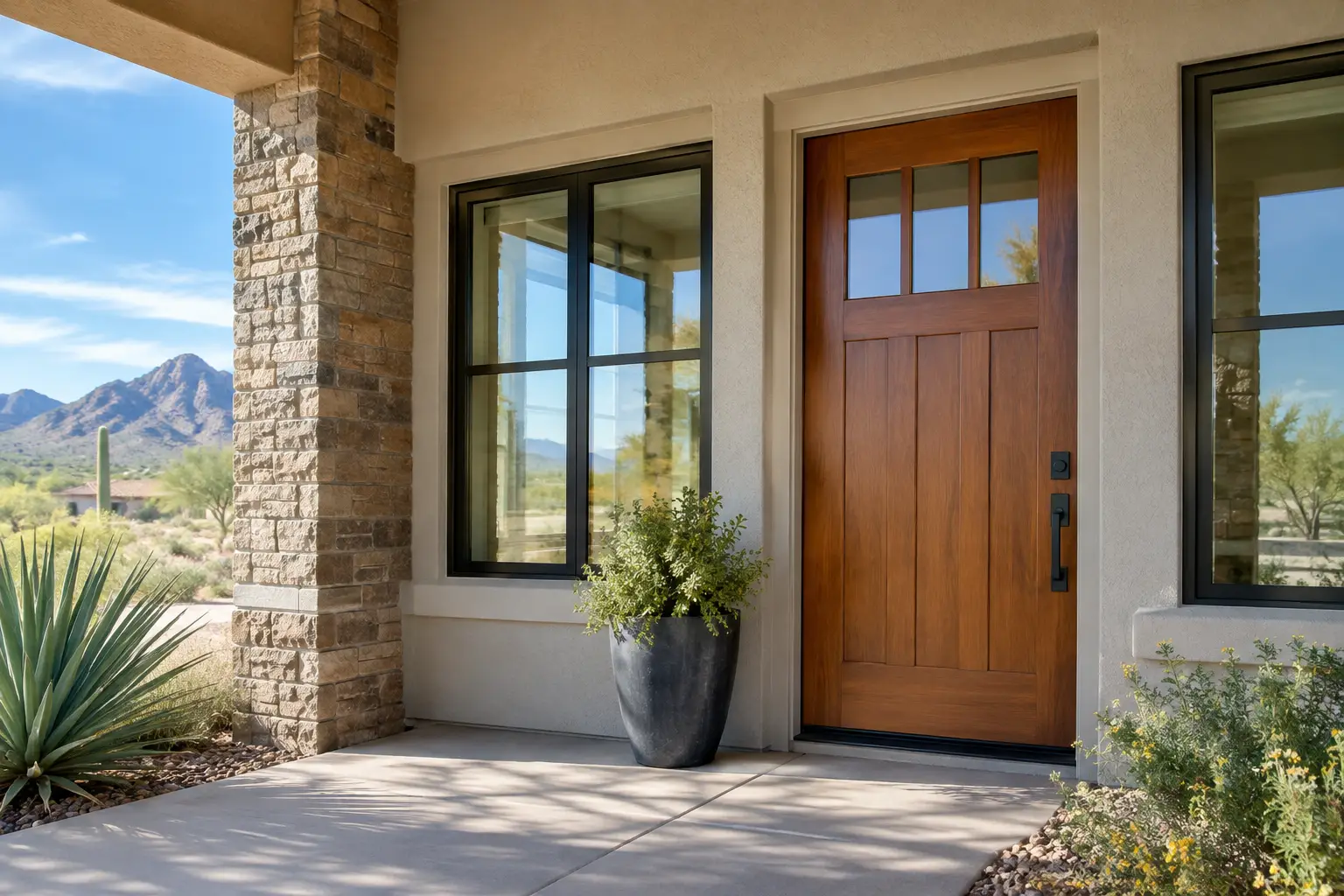
A door that sticks every July, leaks dust at the threshold, or feels loose at the lock is more than an annoyance. It is a weak point in the home’s comfort, security, and finished appearance. The right replacement doors can change how an Arizona home performs every day, but the product is only part of the decision. The opening, surrounding wall, weatherproofing, and final restoration all matter just as much.
For homeowners in Phoenix, Scottsdale, Paradise Valley, and Chandler, door replacement often involves more than removing one unit and setting another in its place. Older homes may have uneven framing, block construction, aging stucco, limited overhangs, or openings that were not designed for the larger glass systems homeowners want today. A well-planned project accounts for those realities before installation begins.
When Replacement Doors Are Worth the Investment
Visible damage is an obvious reason to replace an exterior door, but it is not the only one. Many homeowners live with doors that technically work while creating persistent problems: hot rooms near the entry, rattling in the wind, difficult operation, faded finishes, rising cooling costs, or a dated look that undermines an otherwise updated home.
A properly selected door system can improve insulation, reduce air infiltration, strengthen security, and make day-to-day access easier. It can also reshape the way a home connects to a patio, pool area, or backyard. This is particularly meaningful in Arizona, where indoor-outdoor living is part of how many homeowners use their space for much of the year.
Replacement can be especially worthwhile when the existing frame is soft, out of square, poorly flashed, or visibly separating from the wall. Installing a beautiful new panel into a compromised opening may conceal the issue temporarily, but it does not resolve the source of drafts, water intrusion, or movement. An experienced installer should evaluate the full assembly, not simply measure the old slab.
Choosing Replacement Doors for Arizona Conditions
Arizona’s intense sun, high surface temperatures, monsoon weather, and airborne dust place specific demands on exterior doors. The best choice depends on the location of the opening, the amount of direct exposure, architectural style, desired maintenance level, and budget.
Fiberglass for durability and design flexibility
Fiberglass entry doors are a strong option for homeowners who want a refined appearance with dependable durability. They can be manufactured with convincing wood-grain textures or smooth painted finishes, while resisting many of the expansion and maintenance concerns associated with natural wood in harsh exposure.
They are often a practical fit for front entries that receive heavy sun. Quality weatherstripping, an insulated core, and a properly fitted threshold help the assembly support more consistent indoor comfort. The specific performance still depends on the door configuration and installation details, not the material name alone.
Wood for architectural character
Wood doors bring warmth and depth that are difficult to replicate, especially on homes with traditional, Mediterranean, historic, or highly customized architecture. They can be an excellent choice where design is the highest priority and the entry has sufficient protection from direct weather.
The trade-off is maintenance. Arizona sun can be unforgiving on any finish, so wood requires a realistic plan for refinishing and ongoing care. When properly protected and maintained, it remains a premium option with lasting visual impact.
Thermally improved aluminum for modern openings
For expansive patio openings, narrow sightlines, and contemporary architecture, thermally improved aluminum can be an excellent material. It provides structural strength for larger door panels and glass areas while offering a cleaner, more modern profile than many traditional systems.
Not every aluminum system offers the same thermal performance. Homeowners should look beyond appearance and consider thermal breaks, glazing options, seals, drainage design, and the exposure of the opening. A broad west-facing wall requires a different conversation than a shaded courtyard opening.
Vinyl for practical performance
Vinyl door systems can offer dependable value for certain applications, particularly when budget and low maintenance are priorities. Quality matters here. Frame construction, reinforcement, rollers, hardware, and the overall installation method influence long-term operation far more than a simple material label.
A thoughtful consultation helps determine where vinyl makes sense and where a more structural material may better serve the opening. The goal is not to force every project into one product category. It is to match the system to the home and the homeowner’s plans for it.
The Door Style Should Match How You Live
A front entry door has a different job than a patio system. Entry doors prioritize security, curb appeal, privacy, and a welcoming first impression. Patio doors need to handle frequent traffic, maintain a reliable seal, and create an easy connection to outdoor living areas.
Sliding and stacking doors are ideal when homeowners want broad views and generous openings without swing clearance. Multi-panel stacking systems can transform a wall between a great room and patio, though they may require structural work, header modifications, electrical coordination, and substantial finish restoration.
Bi-fold doors create a dramatic wide-open effect and are often selected for entertaining spaces. They require precise alignment and a properly prepared sill because several panels, hinges, and locking points must operate together. Pocket door systems offer an even more open result by allowing panels to disappear into the wall, but they involve greater construction planning and may not suit every existing layout.
For more conventional openings, hinged French doors or contemporary single-panel patio doors can provide excellent light and access without the cost or structural scope of a large opening expansion. Bigger is not always better. The best configuration is the one that improves circulation, light, views, and function without creating unnecessary complexity.
Installation Details Protect the Investment
An exterior door is a complete weather-management system. The visible door panel is important, but the less visible work around it determines whether the system performs as intended over time.
For many Arizona homes, especially those with stucco exteriors, installation may involve carefully removing surrounding material, assessing the existing framing, and rebuilding the opening to receive the new unit correctly. The work can include block-frame preparation, shimming and fastening, foam insulation, vapor barriers, tar paper, lath, flashing, and proper sill treatment. Once the new system is installed, the area may need stucco repair, drywall work, trim restoration, paint coordination, and cleanup.
These steps are not decorative extras. They help manage air, moisture, dust, and movement at the transition between the door frame and the wall. Skipping them may save time at the start of a project while creating a visibly unfinished result or future performance concerns.
AAMA-certified installation practices and manufacturer requirements also deserve attention. They help ensure the door is supported, flashed, sealed, and adjusted in a manner consistent with its design. This is particularly critical for large, heavy, or multi-panel systems, where minor alignment issues can affect operation and locking.
Plan the Scope Before Selecting the Product
The most productive door consultations begin with the opening and the homeowner’s goals, not a catalog page. Is the priority lowering heat gain at a sun-exposed entry? Increasing security? Enlarging a patio opening? Preparing a property for resale? Replacing a damaged unit while preserving a modest budget? Each objective can lead to a different recommendation.
At Greco Roman Windows and Doors, project scopes can be tailored through Silver, Gold, and Platinum installation packages. A straightforward replacement may call for a practical approach, while a larger modernization project may require opening modifications, upgraded weatherproofing, comprehensive stucco and drywall repair, and finish restoration. HOA requirements, neighborhood architecture, and long-term ownership plans should all be part of the conversation.
Ask for clear information about what happens before, during, and after installation. A complete estimate should address the door system, frame condition, hardware, security features, glass options, wall repairs, weatherproofing, finish work, disposal, and scheduling expectations. That level of clarity lets homeowners compare proposals based on the full scope of work rather than a product price alone.
The right replacement door should feel solid when it closes, operate smoothly, seal reliably, and look intentional from both sides of the wall. Start with a free in-home consultation, bring up the problems you are experiencing, and let the condition of the opening guide the solution. A carefully built door project can make your home more comfortable now while giving it a more polished, valuable presence for years to come.