
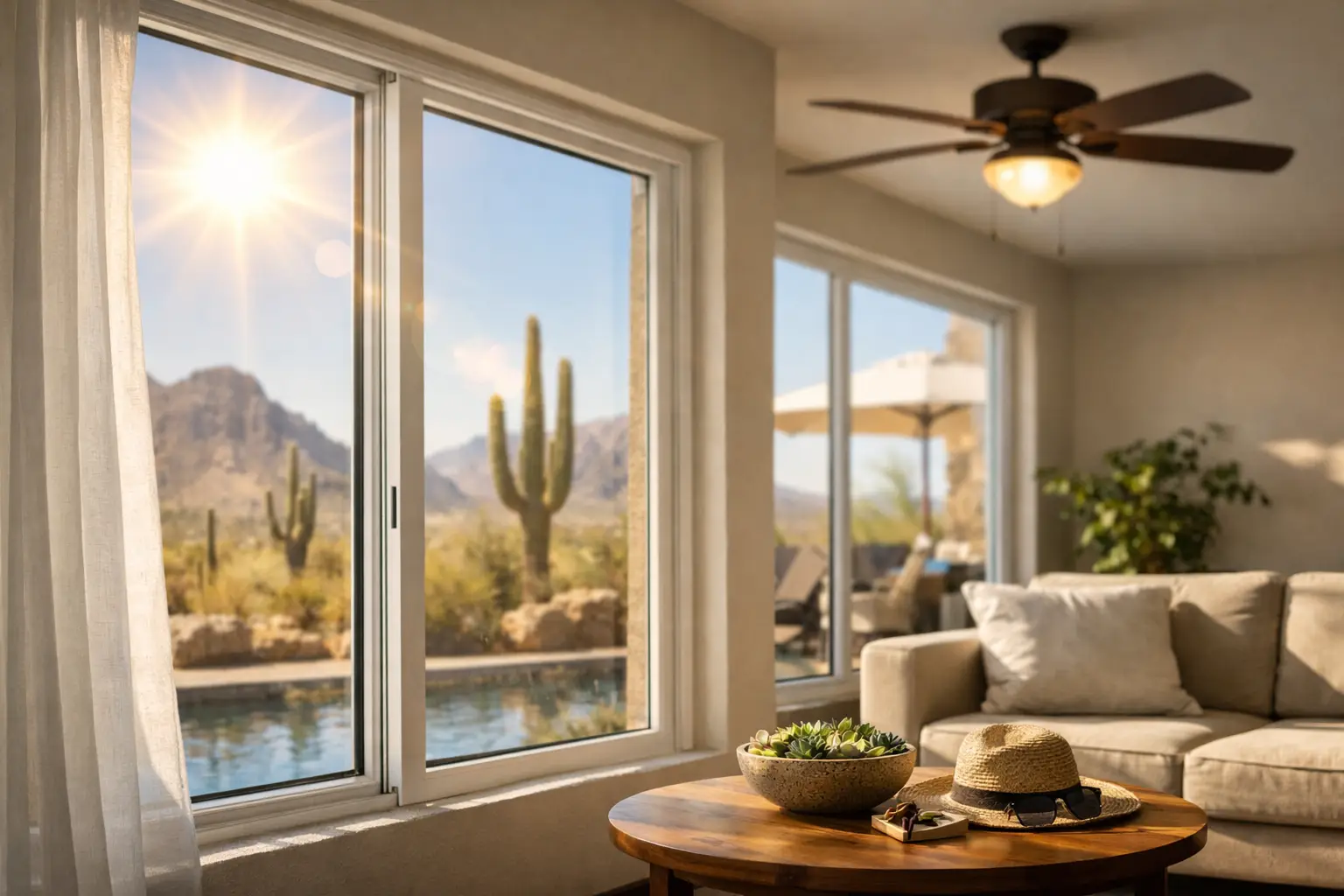
A west-facing room can feel noticeably warmer by midafternoon even when the air conditioner is running. That is the daily reality behind the effort to reduce Arizona window heat gain: intense solar exposure enters through glass, transfers through frames, and finds its way through gaps around an aging installation. The right replacement window strategy can make a home more comfortable without sacrificing daylight, views, or architectural character.
For Arizona homeowners, the answer is rarely one product feature. Glass selection, frame material, window orientation, shading, and installation quality all work together. A beautiful new window with the wrong glass package can still allow excessive solar heat into a room. Likewise, high-performance glass cannot fully compensate for poor flashing, incomplete insulation, or deteriorated framing around the opening.
1. Choose glass with a low Solar Heat Gain Coefficient
Solar Heat Gain Coefficient, often shown as SHGC, is one of the most useful numbers to review when selecting windows for a hot climate. It measures how much solar heat passes through a window. Lower numbers generally mean less heat enters the home.
That does not mean every window needs the lowest possible SHGC. A shaded north-facing window may have different needs than a large, exposed west-facing opening. Homeowners who want strong natural light may also prefer a balanced glass package rather than one that noticeably darkens the view. The goal is to specify glass for the exposure, the room, and how the home is used.
In Phoenix, Scottsdale, Paradise Valley, and Chandler, west and south exposures often deserve the closest attention. These areas can receive punishing afternoon sun, particularly on large picture windows, sliding doors, and rooms with limited exterior shade. A qualified consultation should identify where heat is entering most aggressively before product selections are finalized.
2. Specify low-E coatings for desert sun
Low-emissivity, or low-E, coatings are thin, nearly invisible layers designed to manage heat transfer through glass. In Arizona, the right low-E coating helps reflect a meaningful portion of solar heat while still allowing useful daylight into the home.
Not all low-E glass performs the same way. Glass packages vary by manufacturer, tint, coating placement, and intended climate zone. This is why homeowners should look beyond general phrases such as “energy-efficient windows.” The actual performance ratings matter, especially when replacing large areas of glass or upgrading an older home with single-pane windows.
A thoughtfully selected low-E package can also help protect interior finishes. Excessive sunlight contributes to fading on flooring, furniture, artwork, and fabrics. While no window eliminates all ultraviolet exposure, better glass can reduce the strain on the finishes homeowners have invested in.
3. Match frame materials to the opening and the home
Glass receives most of the attention, but the frame is part of the thermal envelope. It affects insulation, durability, sightlines, maintenance, and the way the complete unit performs in extreme temperatures.
Vinyl replacement windows are a practical choice for many homeowners seeking strong thermal performance and value. Fiberglass can offer excellent stability and a refined appearance, making it well suited to projects where long spans, sun exposure, or a more elevated finish are priorities. Wood-frame windows bring warmth and traditional character, while thermally improved aluminum can be appropriate when slim profiles and contemporary design are essential.
There is no single “best” frame for every Arizona property. A mid-century home undergoing a modern transformation may call for a different solution than a stucco home with established architectural details or an HOA-approved color palette. The right choice balances heat control with the home’s style, budget, maintenance expectations, and structural requirements.
4. Control the toughest exposures with shading and design
The most effective way to stop solar heat is to address it before it reaches the glass. Exterior overhangs, covered patios, shade structures, mature landscaping, and properly designed screens can all reduce direct sun exposure. This is especially valuable for broad west-facing openings.
Window design also matters. A large fixed window may provide a dramatic view, but it has a different heat-management profile than several smaller openings with more wall area between them. When a remodeling project includes altering an opening, adding a new window, or replacing an oversized door system, it is worth considering orientation and shade at the design stage.
Interior shades and draperies can help with glare and comfort, but they are secondary measures because heat may already be inside once sunlight passes through the glass. They work best as part of a larger plan that begins with properly selected windows and exterior conditions.
5. Do not overlook air leakage around the frame
Many homeowners focus on the glass when a room feels hot, but unwanted air movement around the window can be just as frustrating. Aging seals, failed caulking, incomplete insulation, and improperly finished openings can allow hot outside air into conditioned space. They may also invite dust and make the room feel less consistently cooled.
A replacement window is only as dependable as its installation. On Arizona homes, that often means carefully managing the existing opening, whether it involves block frames, older wood framing, stucco conditions, or signs of previous water intrusion. Proper weatherproofing, vapor barriers where appropriate, insulation, and compatible exterior finish work are not cosmetic extras. They protect the performance of the new unit and the surrounding wall system.
This is also where a full-service installation team makes a meaningful difference. If a project requires frame repair, opening modifications, foam and lath, tar paper, drywall restoration, or stucco repair, those details should be planned as part of the scope rather than left for the homeowner to coordinate later.
6. Replace worn windows before comfort problems become larger projects
Windows do not need to be visibly broken to be underperforming. Signs of excessive heat gain can include rooms that never seem to cool down, hot glass surfaces, fading finishes near windows, persistent drafts, difficult operation, and unusually high summer cooling costs.
Older aluminum windows without a thermal break and aging single-pane units are common contributors to discomfort in established Arizona homes. Replacement can improve more than energy performance. New windows may also reduce outdoor noise, improve security, modernize curb appeal, and make daily operation easier.
For homeowners preparing to sell, updated windows can support a more polished presentation. For those planning to stay, the value often lies in better day-to-day comfort and a home that feels more consistent from room to room. Either way, it is wise to evaluate the entire opening, not simply select a new unit based on appearance.
7. Use a room-by-room plan to reduce Arizona window heat gain
A whole-home window project does not have to mean identical glass and identical window styles everywhere. A better approach is to consider each elevation and each room. The exposed family room may need a lower SHGC glass package, while a shaded office may prioritize clearer daylight. Bedrooms may benefit from a combination of heat control, sound reduction, and easy egress. A large patio door may need to balance expansive views with a high-performance frame and glass system.
This approach also helps homeowners invest where it matters most. Some projects begin with the hottest rooms, the most deteriorated openings, or the windows that create the greatest visual impact. Others make sense as a complete replacement when consistent performance and matching exterior finishes are priorities.
Greco Roman Windows and Doors approaches these decisions with the full construction scope in mind. From product selection to opening preparation, weatherproofing, finish restoration, and final cleanup, the objective is not simply to place a new window in an old opening. It is to deliver a finished result that performs properly in Arizona conditions and respects the details of the home.
A free in-home consultation is the right place to discuss sun exposure, glass options, frame materials, HOA requirements, and the condition behind the existing windows. The best heat-control solution is the one designed around your home, installed with care, and built to keep working long after the summer sun has set.