A west-facing room in Phoenix can feel noticeably hotter by late afternoon, even when the air conditioning is working hard. That is why the choice between low-E versus tinted glass deserves more attention than simply picking the darkest-looking window. Both options can reduce glare and solar gain, but they work differently, look different, and produce different results once they are installed in your home.
For most Arizona replacement-window projects, the best answer is not a blanket preference for one glass type. It is selecting a glazing package that fits the home’s orientation, window size, exterior style, indoor light preferences, and cooling demands. The frame, weatherproofing, and quality of the installation matter just as much as the glass itself.
Low-E Versus Tinted Glass: The Core Difference
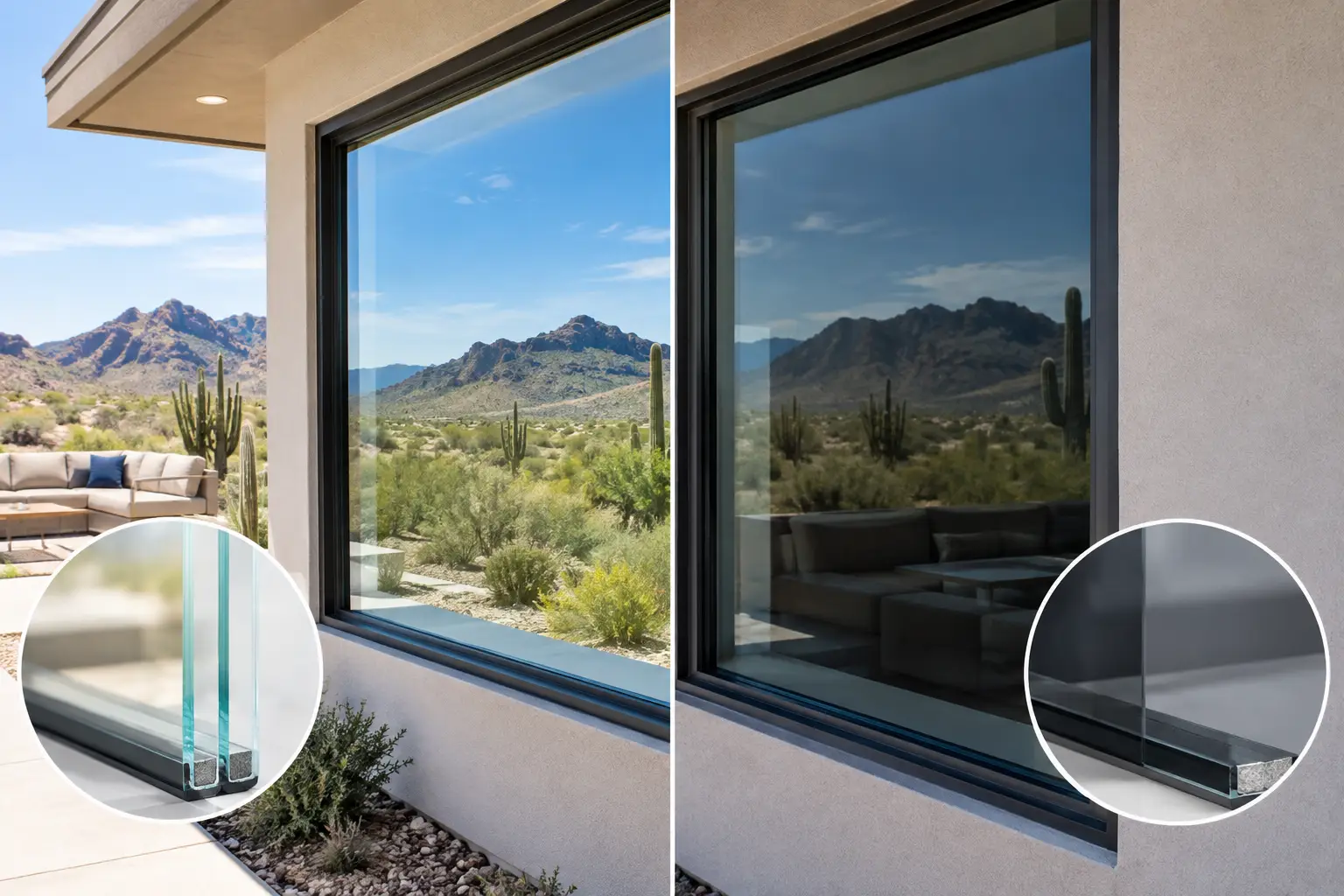
Low-E stands for low emissivity. A low-E coating is a microscopically thin, nearly invisible metallic layer applied to glass. Its job is to manage heat transfer by reflecting infrared energy while allowing a useful amount of visible light into the room. In a hot climate, solar-control low-E glass is designed to limit the sun’s heat before it becomes a burden on your cooling system.
Tinted glass gets its performance from color added to the glass itself. Gray, bronze, green, and blue-gray tints reduce the amount of visible light entering the home. Because less sunlight comes through, tint can also reduce glare and solar heat. However, tint usually accomplishes this by making the view and interior daylight darker.
The distinction is simple but meaningful: low-E coatings are engineered to control heat while preserving clearer daylight, while tint relies primarily on reducing the amount of light passing through the glass. They can also be combined. A lightly tinted glass unit with a solar-control low-E coating may be an excellent fit for a large, exposed elevation when the goal is to control both brightness and heat.
Why Low-E Glass Is Often the Better Arizona Starting Point
Arizona homeowners are usually looking for relief from three connected problems: intense solar heat, uncomfortable glare, and furnishings that fade under prolonged sun exposure. A properly specified low-E glass package addresses all three without automatically giving every room a darkened appearance.
The performance number to watch is solar heat gain coefficient, or SHGC. A lower SHGC means less solar heat enters through the window. This is particularly valuable on large west- and south-facing openings, where afternoon sun can overwhelm a room. Low-E glass can provide a low SHGC while retaining a higher visible transmittance than heavily tinted glass, giving homeowners a brighter interior and a more natural-looking view.
Low-E coatings also help manage radiant heat. Stand near an older single-pane window on a summer afternoon, and the interior glass surface may feel hot. Modern insulated glass with the appropriate low-E coating helps reduce that effect. It does not eliminate the need for exterior shading, efficient HVAC equipment, or proper insulation, but it can substantially improve the comfort of the space beside the window.
UV protection is another important benefit. Low-E coatings can help reduce the ultraviolet light that contributes to fading in hardwood floors, upholstered furniture, artwork, and window coverings. No glazing eliminates fading completely, especially in homes with expansive sun exposure, but the added protection is a practical advantage in rooms with valuable finishes.
For homeowners who want daylight, open views, and a more neutral exterior appearance, low-E is frequently the more versatile choice. It is available in clear-looking options as well as subtle tints, allowing the glass package to be tailored rather than treated as an all-or-nothing decision.
Not All Low-E Coatings Perform the Same
“Low-E” is not one universal product. Coating placement, glass construction, and manufacturer options affect performance. A glazing package suited to a cold northern climate may prioritize retaining indoor heat, while a package intended for Arizona should focus more strongly on limiting solar heat gain.
This is why the label matters more than the sales phrase. Review the National Fenestration Rating Council performance values for U-factor, SHGC, and visible transmittance. U-factor measures how readily heat moves through the window assembly, with lower values generally indicating better insulation. SHGC describes solar heat entry, and visible transmittance indicates how much daylight comes through.
A homeowner should not choose the lowest SHGC possible without considering the room. Extremely low solar gain and dark glass can make a shaded north-facing room feel dim. A balanced specification considers where each opening faces, how much roof overhang or landscaping shades it, and how the family uses the room.
When Tinted Glass Makes Sense
Tinted glass remains a useful option, especially when glare is the primary frustration. A family room with wide west-facing windows, a home office with direct afternoon exposure, or a front elevation with limited exterior shade may benefit from a bronze or gray tint. The darker glass can soften harsh light and reduce the need to keep interior shades closed during the brightest hours.
Tint also has an architectural role. On certain contemporary homes, a restrained gray or bronze tint can create a more unified exterior appearance. It can complement dark aluminum frames, desert-toned stucco, or modern door systems with large glass panels. The right selection should look intentional from the street, not like an afterthought that changes one elevation more than another.
The trade-off is visible light. Tint that is effective at muting glare may make the interior feel less open, particularly in smaller rooms or on elevations that receive limited direct sun. Darker glass can also alter how landscape colors and skies appear through the window. Homeowners who value clear views or rely on natural daylight may find a strong tint too restrictive.
Tinted glass should also be evaluated as part of a complete insulated glass unit. A tinted pane alone is not a substitute for modern double-pane construction, an appropriate low-E coating, quality spacers, and a well-built frame. In many cases, a light tint paired with low-E provides better all-around performance than a darker tint selected by itself.
Choose Glass by Elevation, Not by Habit
Using the same glass specification throughout the house is sometimes the right choice for appearance and budget, but it is not always the best-performing approach. Glass selection should begin with a careful look at each elevation.
West-facing windows often need the strongest solar control because they receive low-angle afternoon sun when outdoor temperatures are already high. South-facing windows can also receive significant sun, although properly designed overhangs may provide useful seasonal shading. East-facing openings can create intense morning glare, while north-facing windows generally receive softer, more consistent light and may not need the same level of solar control.
Large picture windows, stacking doors, and bi-fold door systems deserve special attention. Their glass area can have a major effect on room comfort. The goal is not to avoid expansive views or indoor-outdoor living. It is to specify a door or window system with glass performance that supports the way the opening will be used.
A thoughtful consultation also accounts for interior shades, exterior screens, covered patios, mature trees, and HOA appearance requirements. These details can change whether low-E glass alone is sufficient or whether a light tint and lower SHGC are worth considering.
The Installation Is Part of Energy Performance
Even excellent glass cannot compensate for an opening that is poorly prepared or inadequately sealed. Replacement windows must be properly sized, secured, flashed, insulated, and integrated with the surrounding wall assembly. This is particularly significant in established Arizona homes, where aging frames, stucco conditions, block construction, and prior alterations can complicate the work behind the trim.
A complete installation may require removal of deteriorated materials, vapor barriers or weather-resistant layers where appropriate, foam insulation, lath, stucco restoration, and interior drywall or finish repair. These steps help control air leakage and water intrusion around the window perimeter. They also protect the clean, finished appearance homeowners expect after a modernization project.
Frame material influences the final result as well. Quality vinyl, fiberglass, wood-frame, and thermally improved aluminum systems each offer different strengths in durability, sightlines, maintenance, and thermal performance. The glazing package should be selected alongside the frame rather than in isolation.
A Better Way to Make the Decision
Bring a few practical questions to your window consultation: Which rooms become uncomfortable first? Which windows create glare on televisions or computer screens? Do you want more daylight, more privacy, or a darker exterior look? Are you replacing windows strictly for efficiency, or are you also enlarging openings, adding natural light, or updating doors?
Those answers lead to a more accurate recommendation than choosing clear, tinted, or low-E glass from a sample board. Greco Roman Windows and Doors evaluates the whole project, including the condition of the opening and the finish work required to make the improvement feel complete.
The most satisfying window projects do more than lower the visual intensity of the desert sun. They preserve the light you enjoy, reduce the heat you do not, and leave your home looking carefully finished from the wall structure to the final trim. Schedule a free in-home consultation to compare glass options in the rooms where performance matters most.