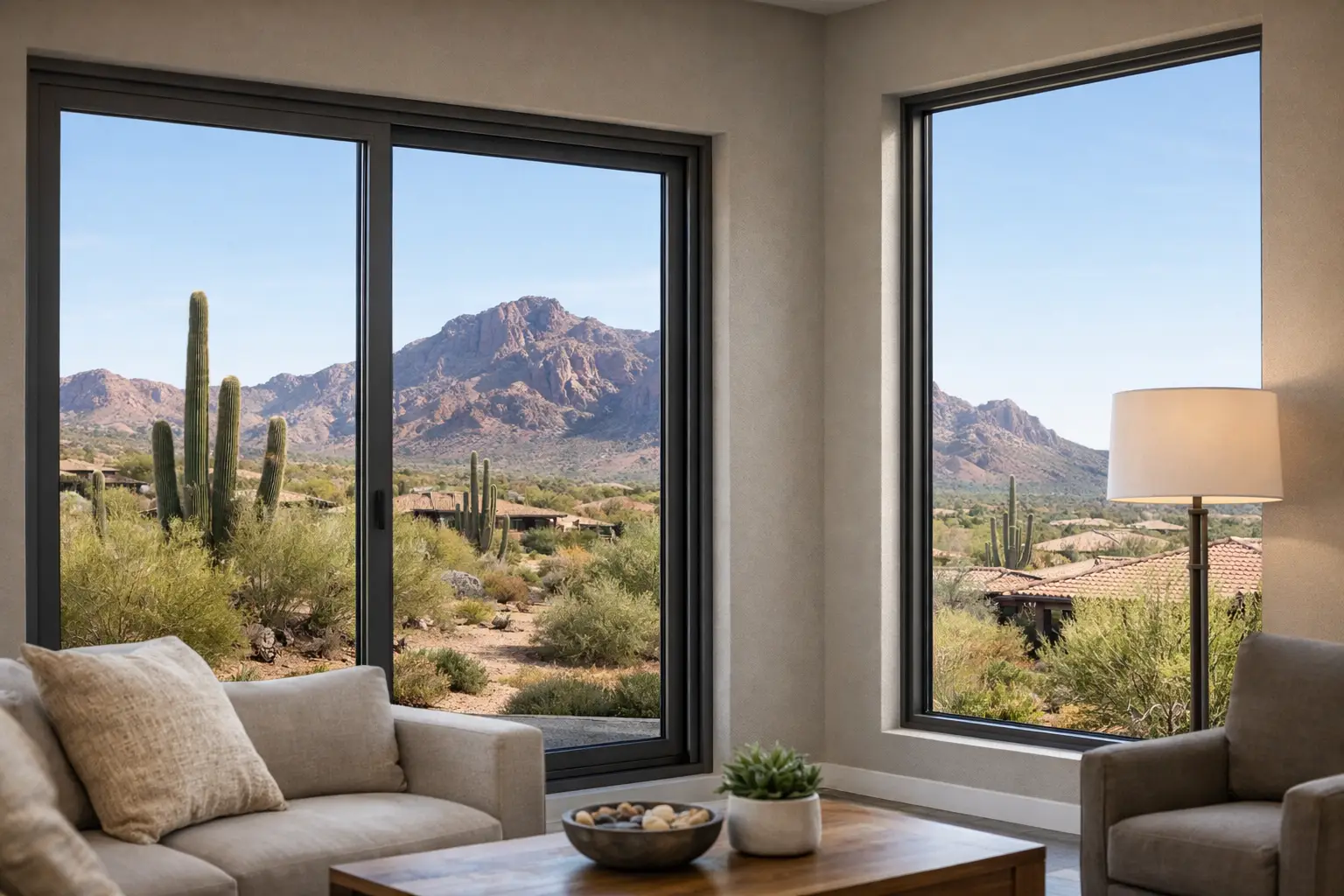
A west-facing window in Phoenix does not get an easy assignment. It absorbs intense afternoon sun, faces dramatic temperature swings, and must continue operating smoothly long after a typical summer day has pushed exterior materials to their limit. Fiberglass windows are often a strong answer to that challenge, but they are not automatically the right answer for every home, opening, or budget.
For homeowners planning a serious replacement project, the better question is not simply whether fiberglass is “better” than another frame material. It is whether its long-term performance, appearance, and installation requirements fit the home you own and the result you expect.
What Makes Fiberglass Windows Different?
Fiberglass window frames are made from glass fibers and resin formed into a dense, durable composite. That construction gives the material a notable advantage in heat: it expands and contracts at a rate closer to the insulated glass it surrounds than many other frame materials. In Arizona, where windows can move substantially between a cool desert morning and a hot afternoon, that stability matters.
A stable frame helps maintain the relationship between the sash, weatherstripping, glazing, and hardware. Over time, that can support easier operation, a more consistent air seal, and a cleaner appearance. Fiberglass also has a naturally strong profile, which can allow for narrower sightlines than some alternatives while retaining a substantial, architectural feel.
The frame alone does not determine energy performance. Glass selection, low-emissivity coatings, insulated glass construction, solar heat gain coefficient, and air infiltration ratings all deserve equal attention. Still, a fiberglass frame provides a durable foundation for a high-performing window system.
Why Fiberglass Performs Well in Arizona Heat
Extreme sun exposes weaknesses that may remain hidden in milder climates. Frames can become uncomfortably hot, seals can be stressed, and poorly installed openings can allow unwanted air and moisture to travel behind the exterior finish. A premium window only performs as intended when the entire opening is prepared and sealed correctly.
Fiberglass is valued for its resistance to warping, swelling, and deterioration. It does not rely on painted wood for protection, and it typically holds its shape well through repeated heat cycles. For homeowners replacing aging units that stick, rattle, leak air, or show visible frame movement, this can be a meaningful improvement.
Its insulating qualities are also attractive. Fiberglass is not a metal conductor like standard aluminum, so it does not transfer heat as readily through the frame. Thermally improved aluminum can be an excellent choice for certain large-format or modern designs, but fiberglass often offers a stronger combination of insulation and dimensional stability for conventional replacement windows.
That does not mean fiberglass eliminates summer cooling costs. The most effective approach considers the whole elevation of the home. A large wall of west-facing glass may need a different glazing package from shaded north-facing windows. Exterior overhangs, interior comfort goals, window size, and the direction each opening faces all influence the right product specification.
The Benefits Homeowners Notice Most
The strongest benefits of fiberglass windows are usually felt over years, not just on installation day. Homeowners often choose them for their long service life, their refined appearance, and their ability to handle demanding conditions without requiring constant attention.
A well-selected fiberglass window can offer excellent strength without making the frame look heavy. That is particularly valuable when replacing older windows with designs that preserve more visible glass area or when a homeowner wants a more traditional wood-like profile without the maintenance demands of a wood frame.
Color options are another consideration. Many fiberglass products are available in durable factory finishes, including darker exterior colors that complement contemporary desert architecture. Dark finishes can become extremely hot under direct sun, so product quality and proper installation are essential. A material’s ability to remain stable under those conditions helps protect the fit and visual consistency of the window.
Homeowners also appreciate the potential for quieter interiors. While noise reduction depends heavily on glass configuration and the quality of the seal around the opening, a tightly installed, well-engineered window can reduce the intrusion of traffic, neighborhood activity, and outdoor equipment.
The Trade-Off: Cost and Project Scope
Fiberglass usually costs more than entry-level vinyl replacement windows. For a homeowner focused on replacing several standard-sized windows at the lowest initial price, vinyl may be the more practical material. Quality vinyl can deliver meaningful improvements in comfort and efficiency when it is properly specified and installed.
Fiberglass tends to make the most sense when long-term stability, premium finishes, narrow profiles, or a particular architectural look are priorities. It can also be a sensible investment for homes with substantial sun exposure, larger openings, or a resale strategy centered on visible quality and durable upgrades.
The project itself may influence the material decision. Replacing a window in a straightforward, sound opening is different from modifying an opening, correcting deteriorated framing, matching existing stucco, or adding a new window to bring daylight into a dark room. Those conditions require planning beyond the product selection.
For example, a full-frame installation may call for removal back to the rough opening, inspection of the framing, new weatherproofing layers, vapor barrier integration, foam, lath, and careful stucco restoration. In some Arizona homes, block frames, older construction methods, and exterior finish details create constraints that should be evaluated before a final quote is prepared. Choosing a fine window without accounting for those conditions can leave the project incomplete at its most vulnerable point: the perimeter where window and wall meet.
Fiberglass vs. Vinyl, Wood, and Aluminum
Each frame material has a place. The right choice comes from matching the product to the home rather than forcing every project into one category.
Vinyl offers strong value, low maintenance, and good thermal performance for many standard replacement applications. It is often a smart option for homeowners balancing a full-house project with a defined budget. Its profile, finish options, and structural capabilities can be more limiting than fiberglass in some custom or design-led applications.
Wood provides natural warmth and can be the right choice for historic character or interiors where authentic wood detailing is central to the design. It requires a greater commitment to finish maintenance, especially on exposed elevations. Wood-clad products can provide a useful middle ground, though details vary by manufacturer.
Thermally improved aluminum is known for crisp, contemporary lines and its ability to support expansive glass. It can be an excellent fit for large picture windows, multi-panel door systems, and modern renovations. Fiberglass may be preferable when the project calls for greater frame insulation and a more traditional or transitional profile.
Fiberglass sits in a premium middle position: stronger and more dimensionally stable than many homeowners expect, more insulated than conventional aluminum, and generally lower-maintenance than wood. Whether that added performance justifies the investment depends on your opening sizes, architectural goals, exposure, and timeline for staying in the home.
Installation Is Part of the Window System
A replacement window should look intentional from every angle. That means plumb and level operation, clean interior trim transitions, properly integrated exterior weather protection, and finish work that respects the home rather than treating it as an afterthought.
Before work begins, an experienced installer should assess the existing frame condition, the wall assembly, the exterior finish, access requirements, and any HOA guidelines that affect color, grid patterns, or visible exterior changes. Measurements should account for more than width and height. The team needs to understand whether the opening is square, whether the sill is sound, how drainage is managed, and what will be required to produce a finished appearance after installation.
For projects involving stucco, the work can require careful removal, moisture management, lath integration, and color-matched restoration. Interior drywall and trim may also need attention. This is why a replacement proposal should clearly distinguish a simple insert installation from a full-frame, construction-grade approach. They are different scopes of work with different outcomes.
At Greco Roman Windows and Doors, that full-project perspective guides recommendations. A tailored installation package can account for the window material, the condition of the opening, exterior finish restoration, and the level of weatherproofing needed to protect the investment.
How to Decide if Fiberglass Is Worth It
Fiberglass is worth serious consideration if your current windows face prolonged direct sun, operate poorly, or no longer provide the comfort and appearance your home deserves. It is also a compelling choice when you want long-lasting exterior color, thinner frame profiles, or a material that complements a higher-end renovation.
Start with the windows that create the greatest discomfort. A hot west-facing living room, a noisy front bedroom, or a dated picture window at the center of the home can reveal the value of a premium system more clearly than a basic comparison chart. Then consider the full plan: glass package, frame color, opening condition, installation scope, and the finish work needed to make the result look original to the house.
A free in-home consultation gives you the opportunity to compare materials against the actual conditions of your home, not a generic showroom display. The right window should serve the way you live now, hold up to Arizona’s climate, and leave the home looking more considered than it did before the work began.